
Real-time AI alerts in CX are automated notifications that help businesses detect customer experience issues as they happen, enabling faster response, reduced churn, and improved service quality. By combining AI customer experience analytics, real-time sentiment analysis, and proactive monitoring, organisations can identify problems early and act before customer dissatisfaction escalates into churn.
Customer experience has become a real-time discipline. Customers no longer wait for companies to “catch up” with their problems, and businesses can no longer rely on monthly reports or delayed dashboards to understand what is happening on the ground.
A single service failure, a recurring operational issue, or a sudden shift in sentiment can escalate quickly. What used to be a minor complaint can now become a public review thread or a churn decision within hours.
This is why organisations are increasingly turning to real-time AI alerts in CX. Instead of reacting after the fact, they are building systems that detect issues as they emerge and notify teams immediately.
The result is a fundamental shift: from reactive customer service to proactive customer experience monitoring powered by artificial intelligence.
Meet the AI That Knows Your Customers
Staffino AI Cortex acts as a generative AI consultant for CX. It understands your feedback, identifies trends, and helps teams make smarter decisions faster.
What Are AI Alerts in CX?
AI alerts in customer experience are automated notifications generated when artificial intelligence detects meaningful changes in customer feedback, sentiment, or behaviour.
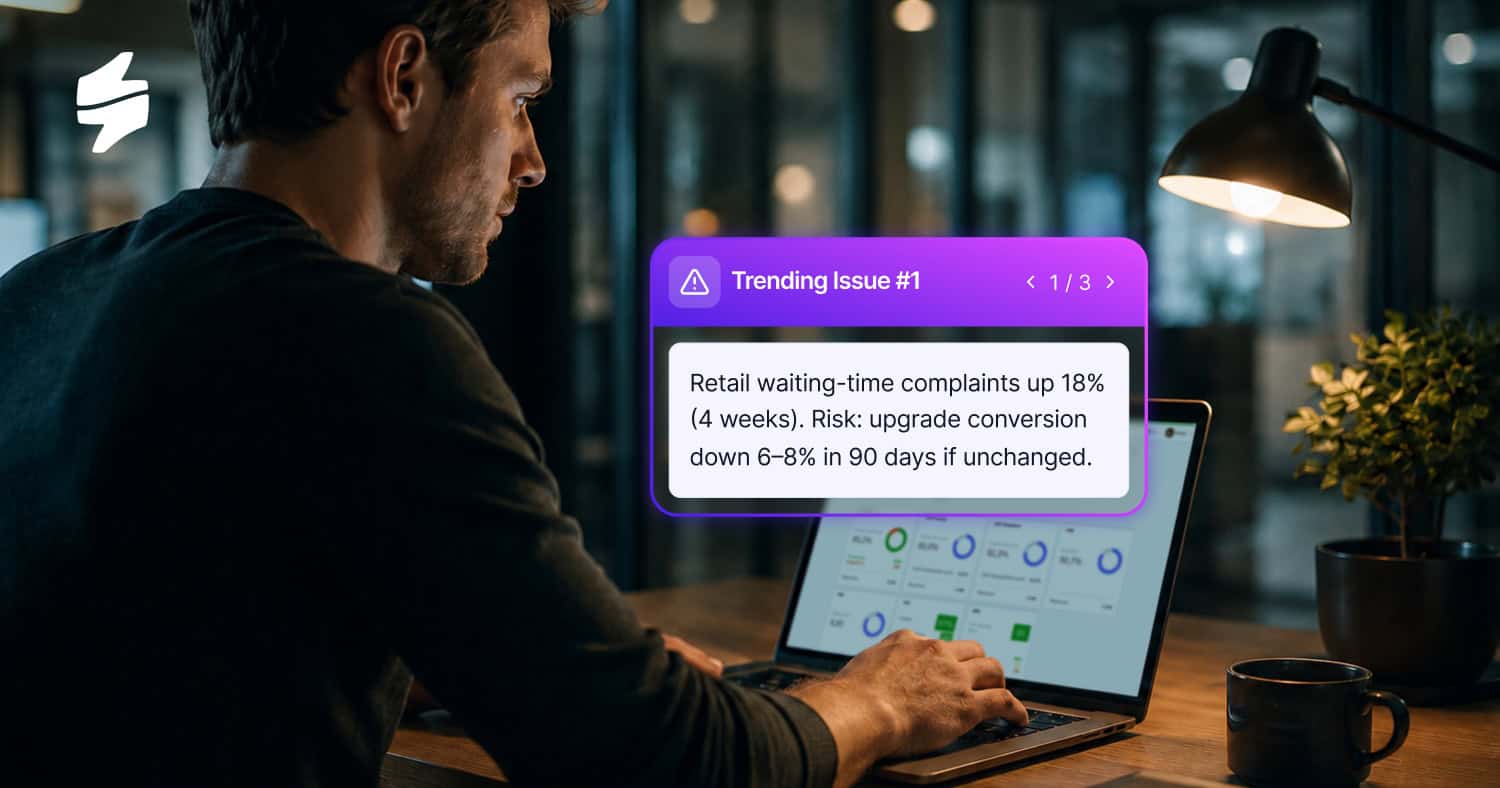
Rather than waiting for manual analysis or periodic reporting, AI systems continuously scan incoming data from customer surveys, public reviews, support tickets, chats, and other feedback channels. When something unusual happens, such as a spike in negative sentiment or a recurring complaint pattern, the system triggers a customer experience alert and sends it to the relevant team.
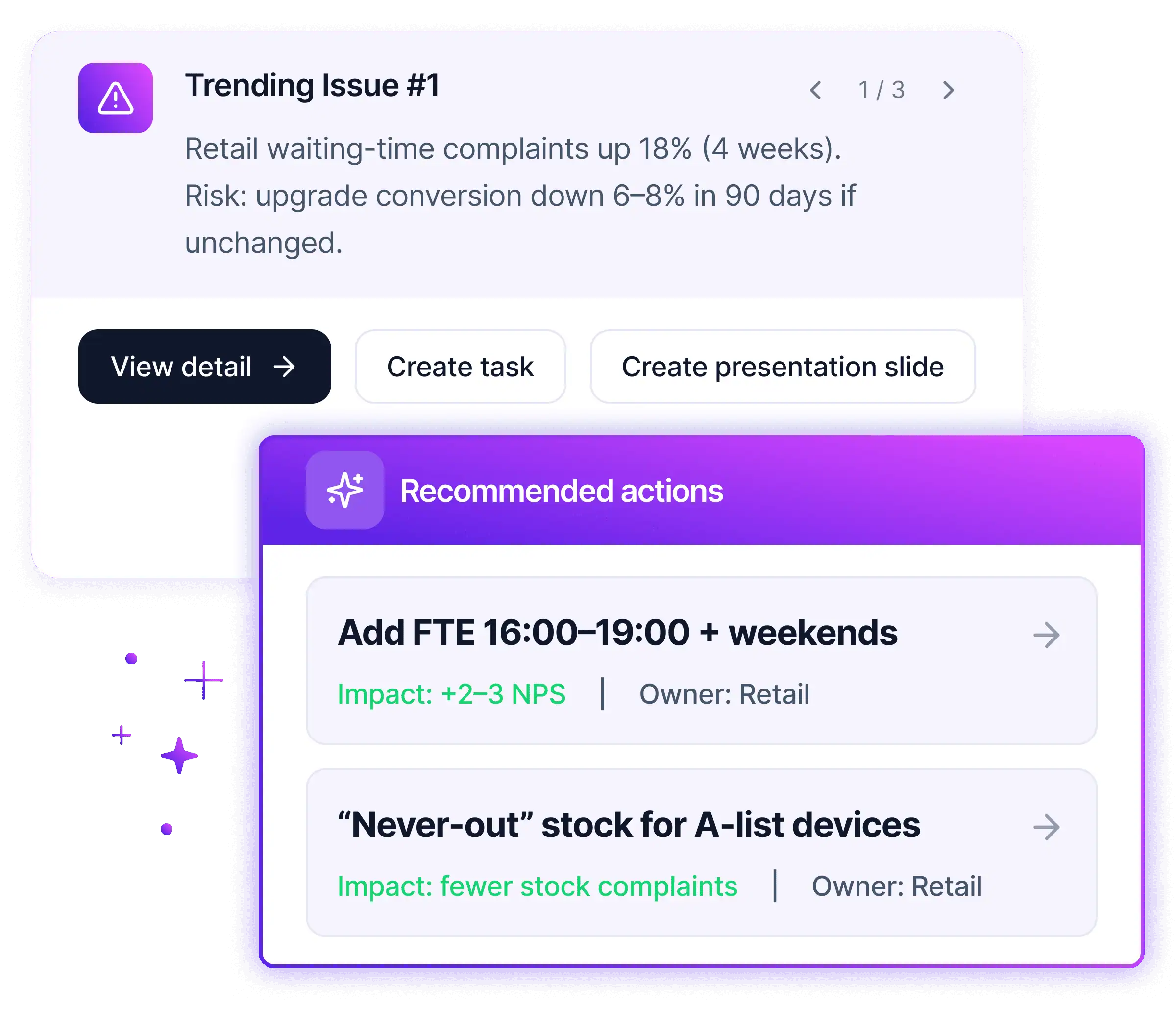
These alerts act as an early warning system for CX teams. Instead of discovering problems weeks later, organisations can respond while issues are still developing.
How Real-Time CX Monitoring Works
Real-time CX monitoring combines several AI capabilities to continuously analyse customer feedback and operational signals.
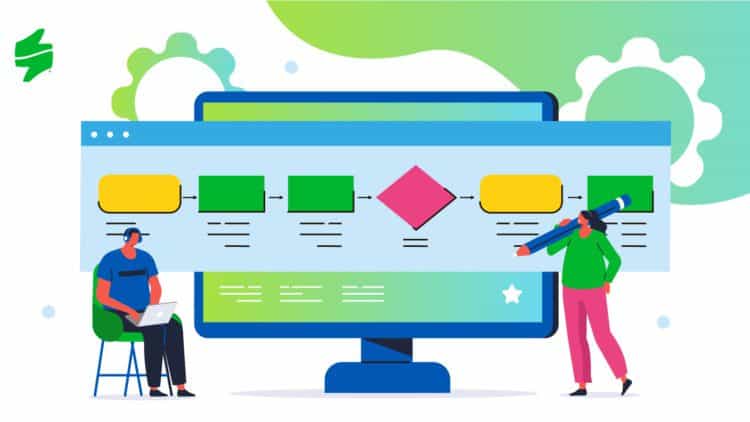
At a high level, the process looks like this:
- First, customer data is collected across multiple touchpoints, including customer surveys, support interactions, and online reviews. This creates a continuous stream of Voice of Customer data.
- Next, AI models process this data using natural language processing and machine learning. They identify customer sentiment, detect themes, and recognise patterns across large volumes of feedback.
- Finally, when the system detects a meaningful change, such as a sudden increase in complaints or a drop in satisfaction, it generates real-time AI alerts for CX teams.
This allows organisations to respond in hours rather than weeks.
Stay on Top of Public Reviews
Review Radar monitors and analyzes public online reviews from Google, Facebook, and other platforms so you always know what customers are saying about your brand.
Why AI Alerts for Customer Experience Matter
Customer experience is no longer static. It changes constantly across channels, locations, and teams. Traditional CX reporting tools often struggle to keep pace because they are retrospective. By the time insights are reviewed, the customer experience may have already shifted. AI alerts for customer experience solve this problem by providing continuous visibility.
Instead of asking “What happened last month?”, CX teams can ask “What is happening right now?”
This shift enables faster decision-making, better prioritisation, and more effective resource allocation.
What Triggers AI-Powered CX Alerts?
Not every signal becomes an alert. AI systems are designed to filter noise and highlight meaningful changes.
Common triggers for AI-powered CX alerts include:
- Sudden drops in customer satisfaction scores
- Spikes in negative sentiment across feedback channels
- Repeated complaints about the same issue
- Unusual increases in support requests
- Sudden changes in service quality in specific locations
These patterns are often invisible when viewed in isolation, but AI can connect them across time and channels to identify emerging risks. The key advantage is timing. Instead of reacting after customer dissatisfaction becomes widespread, teams can intervene early.
How AI Improves Customer Experience
Artificial intelligence improves customer experience by transforming unstructured feedback into structured, actionable insights. Organisations collect huge amounts of data from customer satisfaction surveys, chats, emails, call transcripts, and public reviews. Without AI, this information is difficult to analyse at scale.
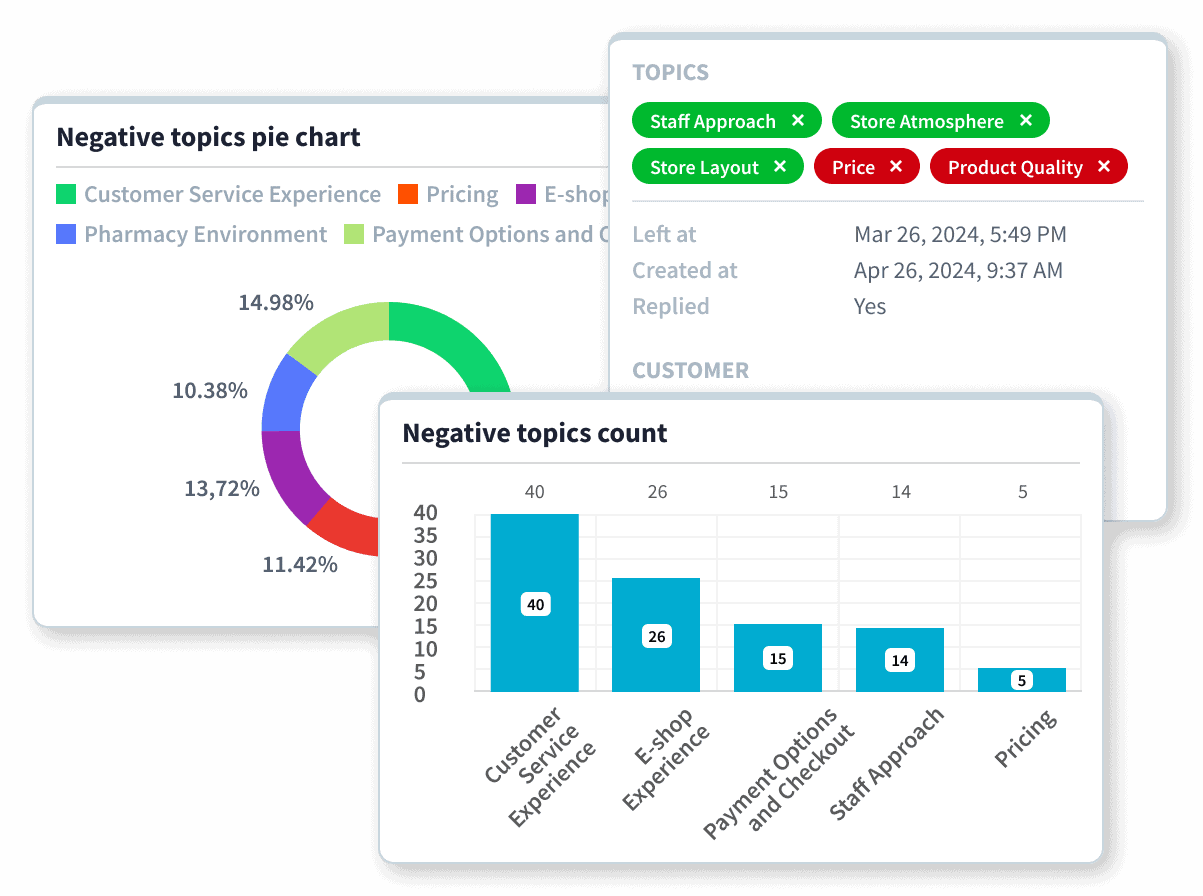
AI customer experience analytics solves this by automatically identifying patterns, themes, and sentiment trends. Instead of manually reading thousands of comments, CX teams receive summarised insights that highlight what matters most.
This leads to:
- Faster understanding of customer needs
- More accurate identification of recurring issues
- Reduced time spent on manual analysis
- Better alignment between teams
More importantly, it closes the gap between feedback and action.
Real-Time Sentiment Analysis in Customer Service
One of the most valuable components of AI-driven CX is real-time sentiment analysis in customer service. Sentiment analysis evaluates the emotional tone of customer feedback, whether it is positive, neutral, or negative. Advanced models can also detect frustration, urgency, or dissatisfaction.
This matters because customers do not always explicitly state when something is wrong. A neutral rating may hide strong frustration, while a negative comment may indicate a critical service failure.
With real-time sentiment tracking, organisations can identify emotional shifts as they happen and escalate cases accordingly.
This ensures that high-risk interactions are not lost in general support queues.
How Real-Time Alerts Reduce Churn
Customer churn is rarely random. It is usually the result of multiple unresolved issues over time. The challenge is that these signals often appear small individually.
A customer may submit a complaint, then another a week later, and then express frustration in a survey. Without connecting these signals, the risk is easy to miss.
Real-time AI alerts help identify churn risk early by linking behavioural and sentiment signals across interactions.
When a pattern emerges, such as repeated dissatisfaction or declining engagement, the system generates a customer dissatisfaction alert. This allows teams to intervene before the customer leaves, often through proactive outreach, faster resolution, or escalation.
AI Alerts for Support Teams
Support teams are one of the primary beneficiaries of AI-driven CX systems.

In high-volume environments, it is impossible to manually prioritise every case effectively. Some customers require immediate attention, while others can wait. AI alerts for support teams help solve this by identifying high-risk or high-impact cases automatically.
These alerts often consider:
- Severity of sentiment
- Frequency of contact
- Customer value or history
- Urgency of issue type
Instead of treating all tickets equally, teams can focus on what truly matters. This improves efficiency while also increasing customer satisfaction.
Is Customer Experience Issue Detection the Same as AI Alerts?
In short, yes. Many CX problems develop gradually across multiple interactions and locations. Without continuous monitoring, these issues can remain hidden until they affect large segments of customers.
Customer experience issue detection uses AI to identify recurring patterns in feedback data. For example, multiple customers across different stores may mention long wait times. Individually, these comments may not appear urgent, but together they indicate a systemic issue.
By detecting these patterns early and alerting the right teams, organisations can address root causes instead of reacting to isolated complaints.
Why AI Anomaly Detection in CX Matters
Not all problems follow predictable patterns. Some appear suddenly and unexpectedly. AI anomaly detection in CX focuses on identifying unusual changes in customer data.
These may include:
- Sudden spikes in customer complaints
- Unexpected drops in satisfaction scores
- Sharp sentiment changes after updates
- Regional performance inconsistencies
Because anomaly detection does not rely on predefined rules, it can uncover issues that teams were not actively monitoring. This helps eliminate blind spots in CX management.
How AI Alerts Work in Real-Time Voice of Customer Analytics
Voice of Customer (VoC) programs collect valuable feedback, but the challenge is turning that data into timely insight.
Real-time Voice of Customer analytics solves this by continuously analysing feedback as it arrives.
Instead of waiting for monthly reports, organisations receive ongoing AI-driven customer insights that reflect current customer sentiment. This supports faster and more informed decision-making across departments, from operations to marketing to customer service.
The Future Is Predictive Customer Experience Monitoring
While real-time alerts focus on what is happening now, and real-time service quality monitoring helps organisations identify performance issues as they occur, predictive systems focus on what is likely to happen next.
Predictive customer experience monitoring uses historical data and behavioural patterns to forecast customer risk.
For example, certain combinations of behaviours, such as repeated complaints and declining engagement, may indicate a high likelihood of churn. This allows organisations to intervene even earlier in the customer journey. It represents a shift from detection to prevention.
AI Tools for Customer Experience Teams
Managing today’s customer experience requires more than manual reporting.
AI tools for customer experience teams bring together sentiment analysis, anomaly detection, predictive modelling, and automated alerting into a unified system. These tools allow organisations to scale CX operations without losing visibility or speed.
For a broader overview of CX analytics approaches, see our article on customer experience analytics tools and strategies.
How Staffino AI Cortex Enables Real-Time CX Alerts
Staffino AI Cortex is designed to help organisations act on customer feedback in real time.
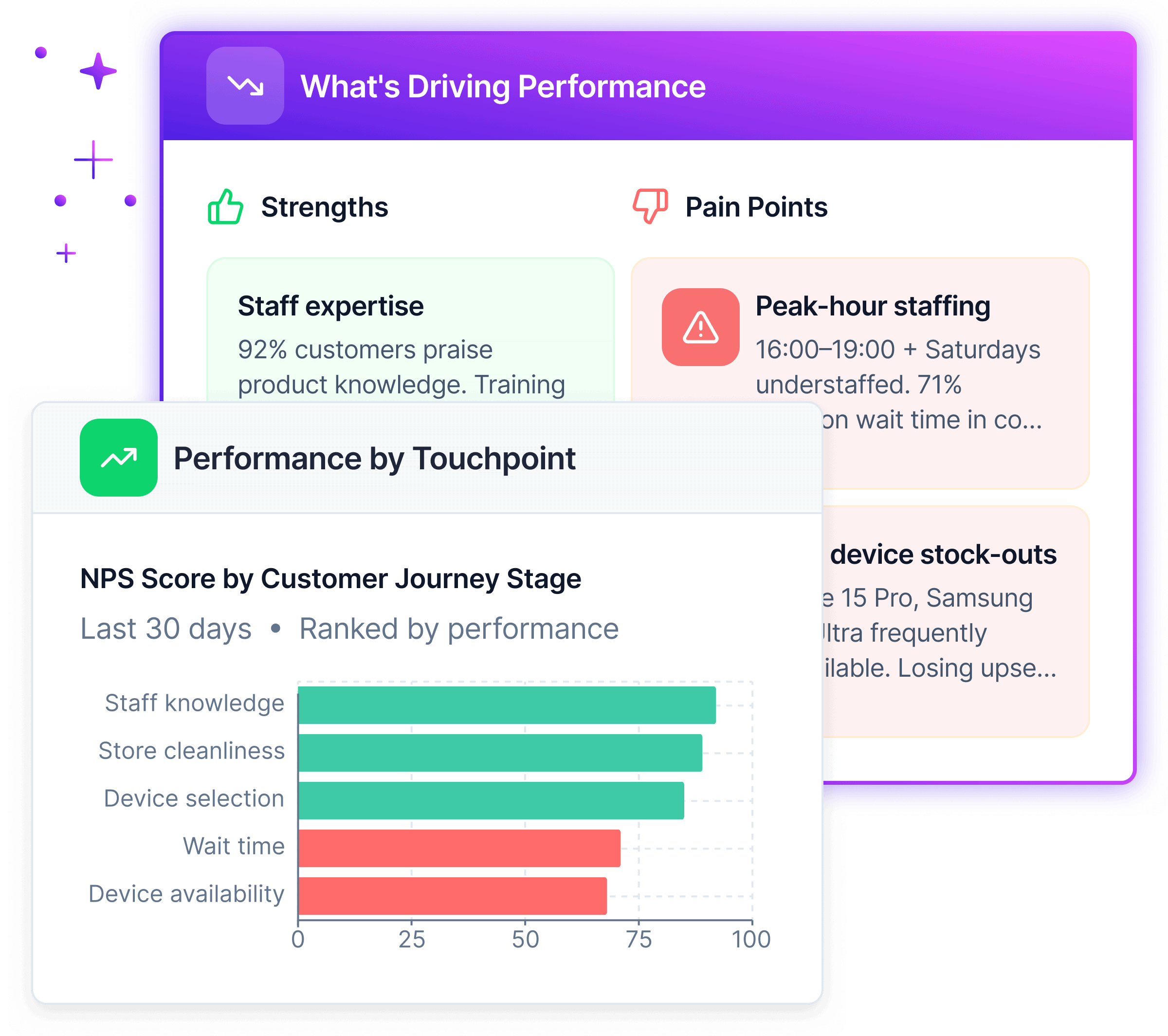
Instead of manually reviewing large volumes of feedback, teams receive automated AI-powered CX alerts that highlight emerging issues, sentiment shifts, and operational risks.
The system continuously analyses feedback data and turns it into actionable insights, helping teams focus on what matters most.
This includes:
- Early detection of customer dissatisfaction
- Identification of recurring issues
- Real-time sentiment tracking
- Proactive churn risk detection
By connecting feedback directly to action, Staffino AI Cortex supports a more proactive and data-driven approach to customer experience management.
As a result, our clients:
- Improve sales and customer retention, increasing revenue by up to 25%
- Reduce time spent analysing data by up to 40%
- Achieve 3x higher ROI on CX initiatives
Get Started With Automated CX Alerts Today
Customer experience is moving into a real-time era.
Organisations can no longer rely solely on historical reporting to understand customer needs or detect operational problems. They need systems that identify issues as they emerge and enable immediate action.
Real-time customer experience alerts provide exactly that capability.
From sentiment tracking and anomaly detection to churn prediction and issue identification, AI is transforming how businesses understand and manage customer experience.
The companies that will lead in CX are not those with the most data, but those that can act on it the fastest. Timing is everything, and real-time AI makes that timing possible.
Book a free demo with us to see how Staffino AI Cortex can make a huge difference for your business

Let AI Handle the Heavy Lifting in CX
With Staffino’s AI, you can respond with empathy at scale, understand customer feedback faster, boost upsell, and make smarter decisions with almost no effort.
FAQ
AI alerts in CX are automated notifications generated by artificial intelligence when it detects changes in customer sentiment, feedback patterns, or service performance. They help CX teams identify issues such as rising complaints, declining satisfaction, or operational problems in real time.
AI improves customer experience by analysing large volumes of customer feedback and identifying patterns, trends, and sentiment changes that are difficult to detect manually. This enables faster decision-making, better personalisation, and more proactive issue resolution across the customer journey.
Real-time alerts reduce churn by identifying early warning signs of customer dissatisfaction, such as repeated complaints, negative sentiment shifts, or increased support interactions. This allows businesses to intervene quickly, resolve issues, and prevent customers from leaving.
Real-time AI alerts are typically triggered by sudden drops in customer satisfaction, spikes in negative sentiment, recurring complaints, unusual changes in service quality, or abnormal increases in support requests across channels.
Real-time sentiment analysis in customer service uses AI to evaluate customer emotions in feedback and interactions as they happen. It helps businesses understand whether customers are satisfied, frustrated, or at risk of churn, enabling faster and more targeted responses.
Real-time customer feedback alerts are important because they shift customer experience management from reactive reporting to proactive monitoring. They help CX teams detect issues early, prioritise critical problems, and improve overall service quality and customer satisfaction.