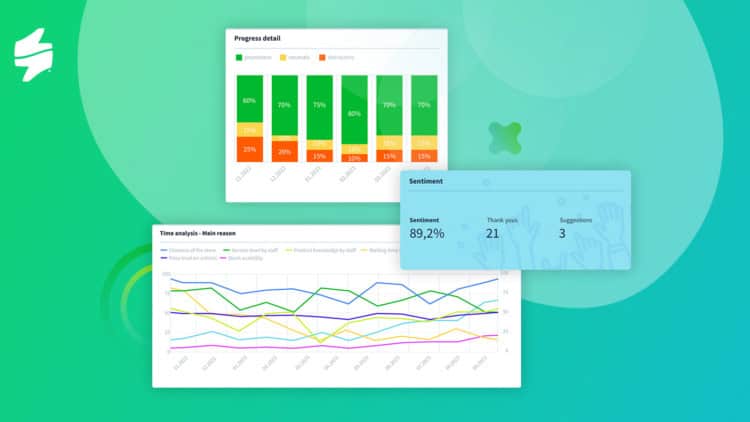


The top Voice of the Customer solutions in 2026 include Staffino AI Cortex, Medallia, Qualtrics XM, SurveyMonkey CX, Forsta, InMoment, Clarabridge, Zendesk CX Suite, NICE Satmetrix, and AskNicely. While many of these Voice of the Customer platforms focus on collecting feedback and analysing it, the leading VoC solutions now go further, combining predictive insights with execution to support a more effective Voice of the Customer strategy.
In 2026, the Voice of the Customer (VoC) is no longer just about collecting feedback. It’s about understanding context, predicting behaviour, and turning insight into action. While many companies have implemented Voice of the Customer programs, few are truly extracting value from them.
The difference lies in the tools they use and how those tools support their Voice of the Customer strategy.
This article explores the top 10 Voice of the Customer solutions in 2026, but first, it’s important to understand what VoC really means today.

Let AI Handle the Heavy Lifting in CX
With Staffino’s AI, you can respond with empathy at scale, understand customer feedback faster, boost upsell, and make smarter decisions with almost no effort.
What Is the Voice of the Customer?
At its core, what is Voice of the Customer? It refers to the process of capturing, analysing, and acting on customer feedback to improve experience and business outcomes.
Modern Voice of the Customer research goes far beyond simple surveys. It combines:
- Direct feedback (e.g. Voice of the Customer survey)
- Behavioral data
- Operational metrics
- External signals like reviews and social sentiment
The goal is to build a complete picture of customer expectations and experiences.
Why Is the Voice of the Customer Important?
Understanding why Voice of the Customer is important comes down to one thing: relevance. Without structured VoC data, organisations make decisions based on assumptions. With it, they can align products, services, and operations with real customer needs.
Effective Voice of the Customer programs help companies:
- Reduce churn
- Improve customer satisfaction
- Identify operational inefficiencies
- Strengthen competitive positioning
But these outcomes depend on how well the Voice of the Customer process is designed and executed.
What Ways Can You Get the Voice of the Customer?
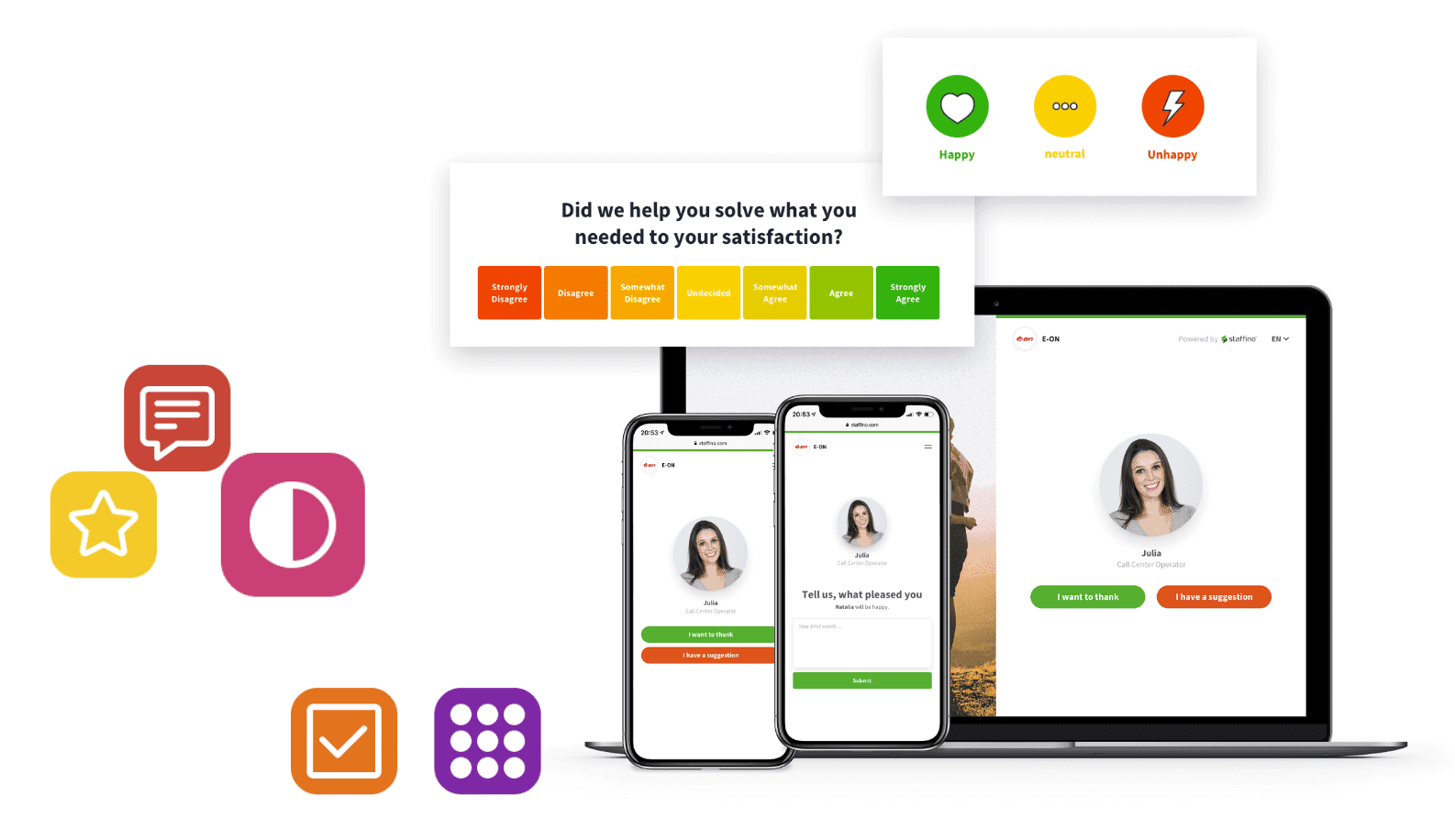
There are multiple ways to capture Voice of the Customer insights, and most organisations combine several methods:
- Surveys using structured voice of the customer survey questions
- Interviews and qualitative voice of the customer research
- Customer reviews and social listening
- Support interactions and call transcripts
- Behavioural and journey analytics
Many companies start with a Voice of the Customer survey template, but quickly realise that collecting feedback is only the first step.
The real challenge lies in the Voice of the Customer analysis.
What Is Voice of the Customer Analysis?

Voice of the customer analysis is the process of turning raw feedback into actionable insight. This includes:
- Identifying key themes and drivers
- Connecting feedback to operational issues
- Measuring impact using VoC metrics
- Prioritising actions based on business value
Advanced Voice of the Customer analytics now leverage AI to automate much of this process. However, the real differentiator in 2026 is not just analysis, but execution.
What Is the Voice of the Customer VoC Strategy?
A strong VoC strategy defines how organisations collect, analyse, and act on feedback. It typically includes:
- Clear voice of the customer goals
- Defined voice of the customer metrics
- Standardised voice of the customer questions
- A scalable voice of the customer process
The most mature organisations treat VoC as a core business capability, not just a CX initiative. They integrate it into operations, product development, and decision-making.
What Are the Best Voice of the Customer Solutions to Adopt in 2026?
The landscape of Voice of the Customer solutions has matured significantly. While many tools still focus on customer surveys and reporting, the leading platforms in 2026 differentiate themselves through analytics, automation, and their ability to drive action.
Below are ten leading VoC tools and VoC solutions shaping the future of customer experience.
1. Staffino AI Cortex
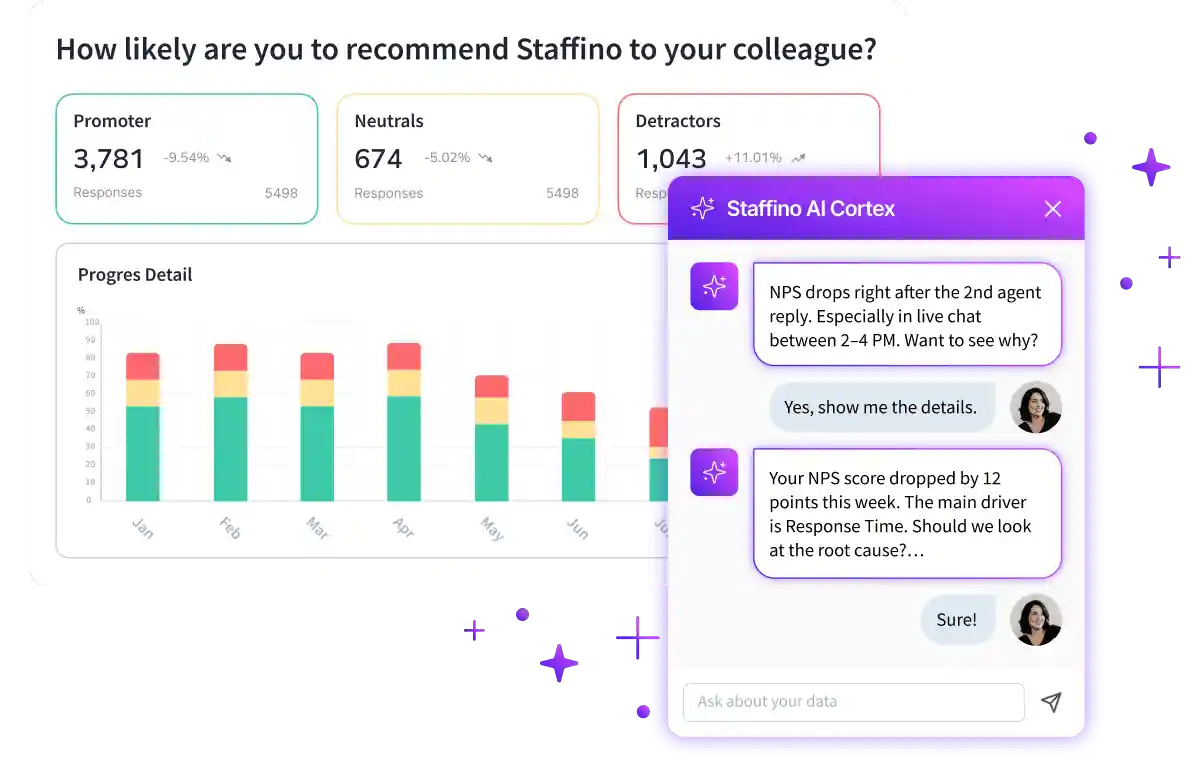
Staffino AI Cortex combines a full-scale Voice of the Customer platform with an advanced decision and execution layer. It covers all core Voice of the Customer capabilities, including real-time feedback collection, surveys, benchmarking, journey tracking, and robust VoC analytics. On top of that, AI Cortex adds a new layer of intelligence. It not only analyses VoC data, but also interprets it, predicts future trends, and recommends clear next steps. It can automatically assign tasks, track execution, and validate whether actions actually improved customer experience.

Launch Smarter CX with Staffino Core
Start collecting customer feedback, managing responses in real time, and visualising what drives satisfaction. Build experiences that make people come back. All in one core solution.
Medallia is one of the most established enterprise-grade VoC tools, designed for large organisations managing complex customer journeys. It offers robust Voice of the Customer analysis, real-time feedback collection, and strong benchmarking capabilities. Its strength lies in scale and depth, though it often requires significant resources to implement and manage effectively.
3. Qualtrics XM
Qualtrics XM is a comprehensive experience management platform that integrates Voice of the Customer research with employee and product insights. It provides advanced Voice of the Customer survey capabilities, flexible data modelling, and powerful analytics. It’s a strong choice for organisations building a structured VoC strategy, although its complexity can be a barrier for smaller teams.
4. SurveyMonkey CX
SurveyMonkey CX focuses on simplicity and speed, making it one of the most accessible Voice of the Customer platforms. It enables teams to quickly deploy Voice of the Customer survey questions and gather feedback using ready-made templates. While easy to use, it lacks the predictive capabilities of more advanced platforms.
5. Forsta (Confirmit)
Forsta combines traditional market research with Voice of the Customer programs, making it a strong option for organisations that prioritise structured VoC research. It excels in survey design and data collection, offering advanced Voice of the Customer template capabilities.
6. InMoment
InMoment focuses on customer journey analytics and experience optimisation. It provides tools for customer journey mapping and linking feedback to operational performance, supporting a more holistic VoC process.
7. Clarabridge (Qualtrics)
Clarabridge specialises in text analytics and natural language processing, making it a strong solution for organisations dealing with large volumes of unstructured VoC data. It enhances Voice of the Customer analysis by identifying sentiment and themes across channels. However, it is primarily focused on analysis rather than action.
8. Zendesk CX Suite
Zendesk CX Suite integrates VoC survey capabilities directly into customer support workflows. This makes it particularly useful for capturing feedback at key service touchpoints and improving frontline employee performance. Its strength lies in operational integration.
9. NICE Satmetrix
NICE Satmetrix is known for its strong focus on NPS and benchmarking, making it a reliable choice for organisations prioritising Voice of the Customer metrics. It provides structured analysis and industry comparisons.
10. AskNicely
AskNicely is designed for frontline teams, focusing on real-time feedback and action. It enables the collection of feedback through Voice of the Customer surveys and supports immediate follow-up. This makes it ideal for service-driven organisations.
Top 10 Voice of the Customer Solutions Summarised
Solution | Standout Feature | Pros | Cons |
Staffino AI Cortex | Full VoC platform + AI-driven decision & execution layer | Covers surveys, analytics, benchmarking, predictive, closes the loop | Requires organisational alignment |
Medallia | Enterprise-scale VoC platform | Strong analytics, global capabilities | Complex, expensive |
Qualtrics XM | Experience management ecosystem | Advanced surveys, flexible | Steep learning curve |
SurveyMonkey CX | Easy-to-use survey platform | Fast deployment, simple UX | Limited advanced analytics |
Confirmit (Forsta) | Research + VoC integration | Strong research tools | Less intuitive interface |
InMoment | Customer journey analytics | Good journey mapping | Less predictive capability |
Clarabridge (Qualtrics) | Text & sentiment analytics | Strong NLP capabilities | Limited execution support |
Zendesk CX Suite | Support-driven VoC | Integrated with support workflows | Narrow CX scope |
Nice Satmetrix | NPS-focused VoC | Strong benchmarking | Less flexible beyond NPS |
AskNicely | Frontline feedback tools | Simple and action-oriented | Limited enterprise depth |
Voice of the Customer Best Practices
Building effective Voice of the Customer programs is not just about collecting feedback. It’s about designing a system that consistently turns customer insight into business impact. The most successful organisations follow these Voice of the Customer best practices that ensure their VoC strategy delivers measurable results:
1. Define Clear Voice of the Customer Goals
Every successful strategy starts with clearly defined objectives. Without specific Voice of the Customer goals, feedback quickly becomes noise.
Organisations should align their VoC efforts with business priorities, whether that’s improving customer retention, increasing customer satisfaction, or identifying operational inefficiencies. This ensures that every piece of VoC data collected has a clear purpose.
2. Ask the Right Voice of the Customer Questions
The quality of your insights depends on the quality of your questions.

Well-designed Voice of the Customer survey questions should be simple, relevant, and tied to specific moments in the customer journey. Using a structured Voice of the Customer survey template can help standardise this process, but it’s important to continuously refine questions based on evolving business needs.
3. Combine Multiple Data Sources
Relying solely on surveys limits your understanding of customer experience.
Effective Voice of the Customer research combines multiple inputs, including feedback, behavioural data, operational KPIs, and external signals like public reviews. This creates a more complete foundation for VoC analytics and allows organisations to move beyond surface-level insights.
4. Turn Voice of the Customer Analysis into Action
One of the most common challenges in VoC initiatives is the gap between insight and execution.
A strong VoC analysis should always lead to clear next steps. This means prioritising issues based on impact, assigning ownership, and ensuring follow-through. Without this, even the most advanced VoC analysis will fail to deliver results.
5. Establish a Scalable Voice of the Customer Process
Consistency is key to long-term success. A structured Voice of the Customer process ensures that feedback is collected, analysed, and acted upon in a repeatable way across the organisation. This includes standardising workflows, defining responsibilities, and aligning teams around shared VoC metrics.
Scalability becomes especially important as organisations grow and customer interactions increase.
6. Measure What Matters with the Right VoC Metrics
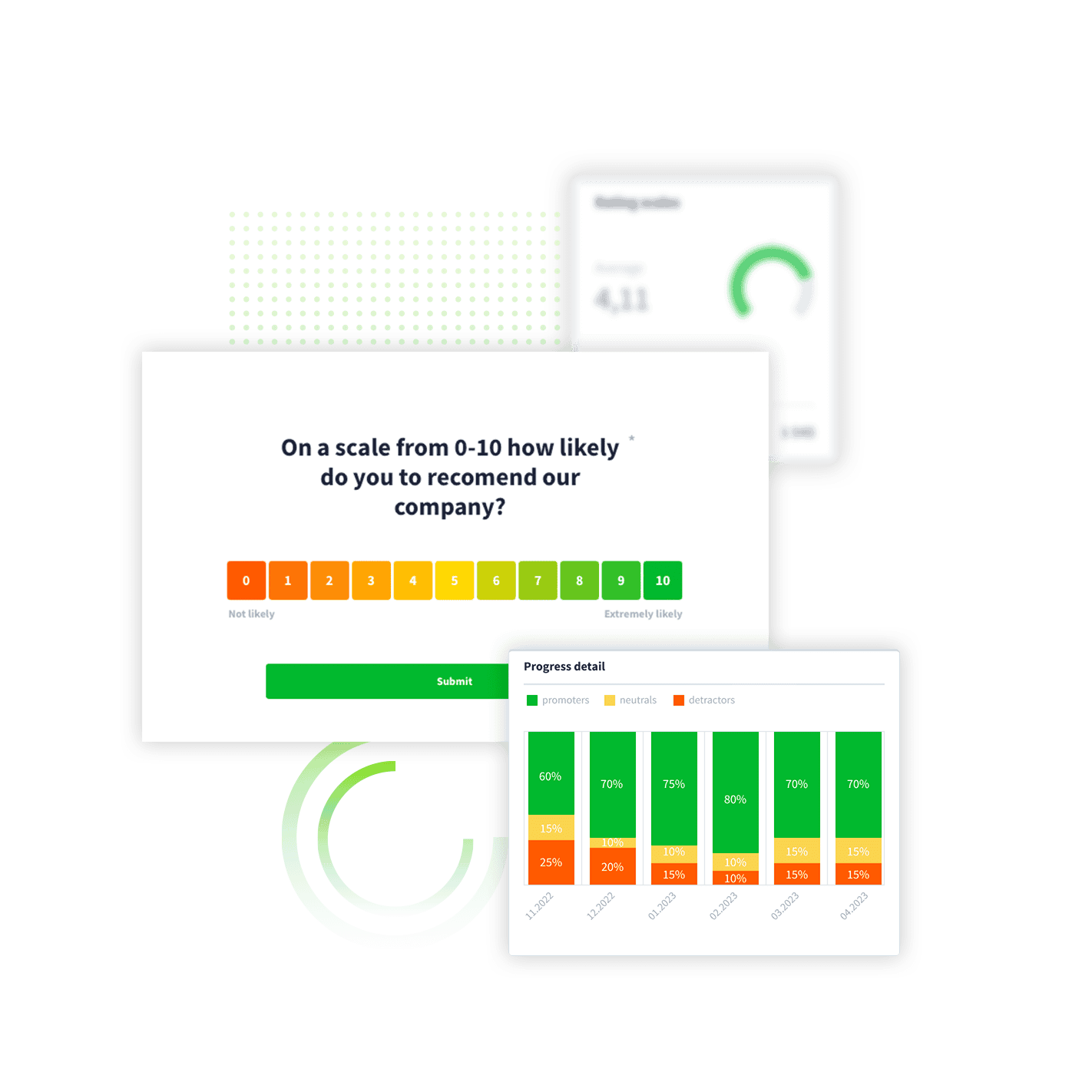
Tracking the right Voice of the Customer metrics is essential for understanding progress and impact. While traditional VoC metrics like NPS, CSAT, and CES remain important, organisations should also connect these indicators to operational and financial outcomes. This helps transform VoC analytics into a strategic decision-making tool.
7. Close the Loop and Validate Impact
Collecting feedback and analysing it is only part of the equation. The most effective Voice of the Customer programs ensure that actions are taken and that their impact is measured. This means closing the loop with both customers and internal teams, and continuously validating whether changes actually improve the experience.
This is where many organisations fall short, but it is also where the greatest value lies.
Make VoC Your Competitive Advantage with Staffino!
The tools you choose will define how effectively you turn customer feedback into results.
While many Voice of the Customer platforms can help you collect data, only a few can help you act on it. Because in 2026, the real value of the voice of the customer is not in what customers say. It’s in what you do next.
Want to see how a modern, AI-driven approach to VoC works in practice? Discover how Staffino AI Cortex transforms feedback into clear decisions, accountable execution, and measurable business impact. Contact us for a free demo!
Let AI Handle the Heavy Lifting in CX
With Staffino’s AI, you can respond with empathy at scale, understand customer feedback faster, boost upsell, and make smarter decisions with almost no effort.
FAQ
Voice of the customer (VoC) refers to the process of capturing, analysing, and acting on customer feedback to understand their expectations, needs, and experiences. Modern Voice of the Customer programs combine survey data, behavioural insights, and operational metrics to create a complete picture of customer experience and support better decision-making.
Understanding why Voice of the Customer is important comes down to business impact. A well-defined voice-of-the-customer strategy helps organisations improve customer satisfaction, reduce churn, and align internal teams around real customer needs. Without structured VoC data, decisions are often based on assumptions rather than evidence.
There are multiple ways to capture the Voice of the Customer (VoC) insights, including:
- Voice of the customer surveys with targeted voice of the customer survey questions
- Customer interviews and qualitative voice of the customer research
- Online reviews and social listening
- Customer support interactions
- Behavioural and journey analytics
Most organisations combine these methods as part of a broader Voice of the Customer process.
Voice of the customer analysis is the process of turning feedback into actionable insight. It involves identifying trends, measuring VoC metrics, and linking feedback to business outcomes. Advanced voice-of-the-customer analytics uses AI to automate this process and highlight the most critical issues and opportunities.
A VoC strategy defines how an organisation collects, analyses, and acts on customer feedback. It typically includes:
- Clear voice of the customer goals
- Standardised voice of the customer questions
- Defined voice of the customer metrics
- A structured voice of the customer process
The most effective strategies ensure that insights lead to measurable action, not just reporting.
The best voice-of-the-customer solutions in 2026 go beyond surveys and dashboards. Modern VoC tools combine voice-of-the-customer analytics, predictive capabilities, and workflow integration to help organisations act on feedback. Platforms like Staffino AI Cortex represent this shift by turning insight into decisions and execution.
A Voice of the Customer survey is a structured method of collecting customer feedback, often using predefined Voice of the Customer survey questions. It is one of the most common tools in Voice of the Customer research, helping organisations gather consistent and measurable feedback at key touchpoints.
A Voice of the Customer template provides a predefined structure for collecting or analysing feedback. This can include survey formats (e.g., a voice-of-the-customer survey template), reporting frameworks, or analysis models. Many companies start with a Voice of the Customer template free, but later move to more advanced systems as their VoC business matures.
Effective voice-of-the-customer best practices focus on more than just collecting feedback. They include:
- Asking the right voice-of-the-customer questions
- Combining multiple data sources
- Using the Voice of the Customer analytics for deeper insight
- Ensuring accountability and follow-through
The most important practice is closing the loop, turning insight into action.
Voice of the Customer metrics (or VoC metrics) are used to measure customer experience and track improvements over time. Common examples include NPS, CSAT, and CES, but more advanced organisations also track operational and behavioural indicators to get a fuller view of performance.
AI enhances voice-of-the-customer programs by automating VoC analysis, identifying patterns, and predicting future trends. Modern VoC solutions use AI to prioritise actions, reduce manual work, and ensure that feedback leads to measurable outcomes, making voice of the customer analytics faster, smarter, and more impactful.