

The modern customer journey is a dynamic, multi-channel experience that spans digital and physical touchpoints, shaped by real-time data, personalisation, and customer expectations. Mapping the modern customer journey means identifying key interactions, understanding customer intent and emotions at every stage, and using data-driven insights to optimise experiences from awareness to post-purchase.
Today, customers move fluidly between digital and physical channels, expect personalisation at scale, and judge brands based on every single interaction. To keep up, organisations need more than intuition or isolated metrics. They need a customer journey map that reflects a modern, data-driven reality.
This is where customer journey mapping becomes a strategic discipline rather than a one-off CX workshop exercise. In this article, we explore the definition and importance of customer journey mapping, key journey phases, the role of data, AI, and analytics, and provide practical customer journey map examples across industries, from SaaS and retail to banking and B2B.
Transform Your Customers' Experiences
Create a bulletproof customer journey with tailored CX products and services that will foster loyalty and reduce churn.
What Is Customer Journey Mapping and Why Does It Matter?
A customer journey map is a visual representation of the end-to-end experience a customer has with a brand—across channels, touchpoints, and time. An example of a customer journey map typically shows customer goals, actions, emotions, pain points, and opportunities for improvement at each stage of the journey.

Organisations that actively manage customer journeys outperform their peers. According to McKinsey, companies focusing on customer journey optimisation can achieve up to 15–20% higher customer satisfaction and 10–15% revenue growth.
For a deeper look at customer experience fundamentals, see What Is Customer Experience? A Comprehensive Guide.
Key Phases of the Modern Customer Journey
While journeys vary by industry, most customer journey experience map examples include the following core phases:
Journey Phase | Description | Typical Touchpoints |
Awareness | The customer realises a need or problem | Ads, social media, website, reviews |
Consideration | Customer compares options | Product pages, demos, support chats |
Purchase | The transaction takes place | E-commerce, POS, sales reps |
Post-purchase | Usage, support, loyalty | Onboarding, customer surveys, support, upsell |
A retail customer journey map example may emphasise omnichannel touchpoints, while a SaaS customer journey map example focuses heavily on onboarding and adoption. Similarly, a bank customer journey map example must address trust, compliance, and long decision cycles.
Ready-Made XM Solutions for Your Industry
Looking for Experience Management solutions for a particular industry or team within your company? Staffino's got you covered! Check out our comprehensive XM solutions and find the right fit for your business.
How to Create a Customer Journey Map Example and Best Practices
Creating an effective journey map requires more than sticky notes. Below is a how to create a customer journey map example approach used by high-performing organisations:
1. Define the Scope and Persona
Start with a clear persona and a specific journey (e.g. onboarding, complaint resolution, renewal).
2. Identify Touchpoints Across Channels
Map interactions across:
- Websites and mobile apps
- In-store or branch visits
- Customer support and feedback channels
3. Collect Experience Data
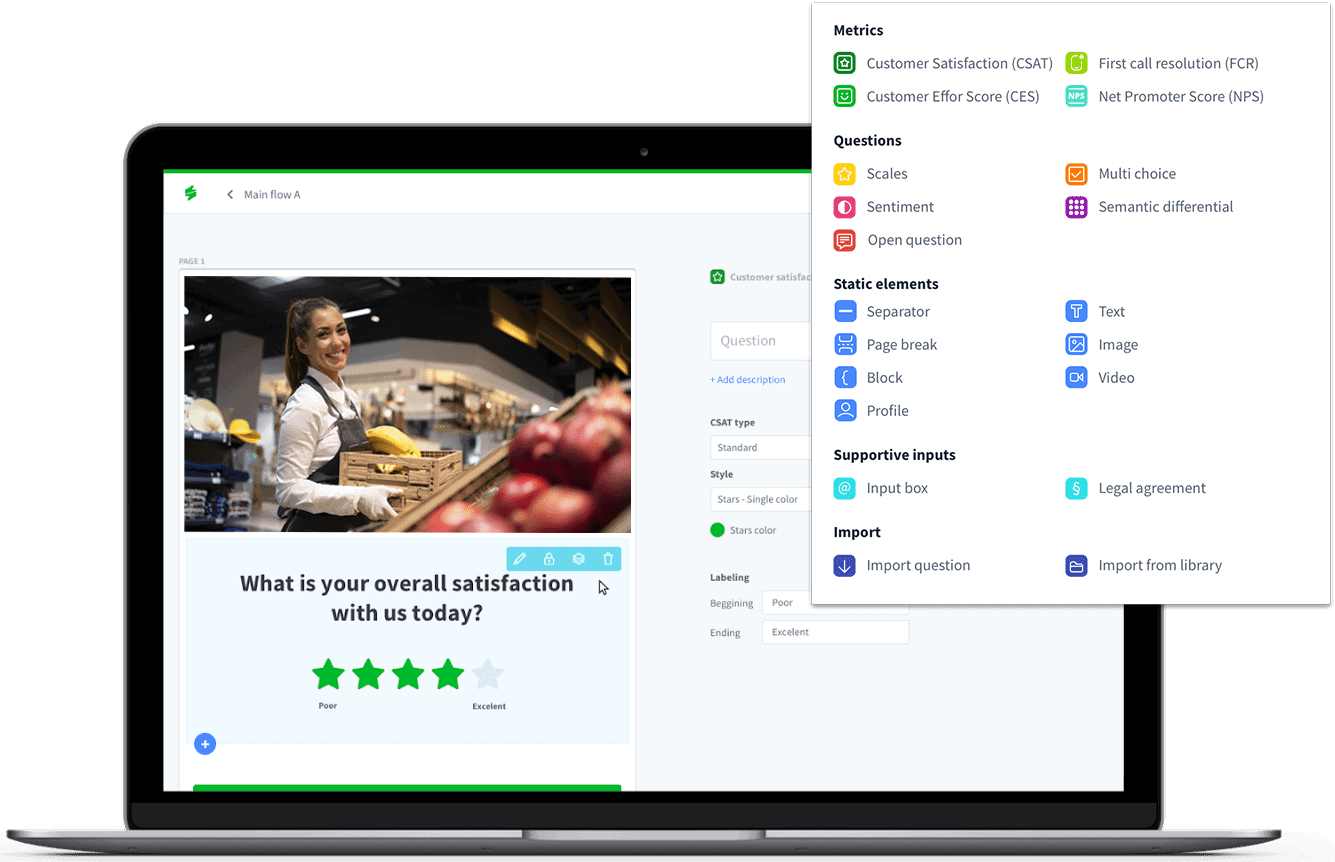
Use customer satisfaction surveys, reviews, behavioural data, and operational metrics. Tools like Staffino help centralise feedback from multiple touchpoints into one actionable view. Explore more in our article on Customer Experience Management: Examples & Solutions.
How to Create Customer Journey Map Example Using Data and AI
A modern customer journey map should be dynamic, not static. AI and analytics now play a crucial role in:
- Detecting friction points in real time
- Predicting churn or dissatisfaction
- Identifying high-impact improvements
For example, AI-driven text analytics can surface recurring complaints in post-purchase feedback, helping teams optimise key moments that matter. This approach is especially valuable in customer journey map B2B examples, where journeys are longer and involve multiple stakeholders.
Let AI Handle the Heavy Lifting in CX
With Staffino’s AI, you can respond with empathy at scale, understand customer feedback faster, boost upsell, and make smarter decisions with almost no effort.
How to Map Customer Journey Example Across Industries
While the core principles of customer journey mapping remain consistent, the structure, touchpoints, and priorities of a customer journey map vary significantly by industry. A strong example of a customer journey map always reflects the specific business model, customer expectations, and decision-making context.
Below are several customer journey map examples across industries, highlighting what to focus on in each case.
Customer Journey Map Ecommerce Example
A customer journey map ecommerce example typically prioritises speed, convenience, and frictionless digital interactions. The journey is often shorter but highly sensitive to micro-moments.
Key focus areas include:
- Product discovery and search usability
- Cart abandonment and checkout friction
- Payment options and trust signals
- Delivery communication and tracking
- Returns and post-purchase support
Mapping these touchpoints helps identify where customers drop off and why. Many e-commerce brands use behavioural data combined with feedback surveys to continuously optimise conversion and retention.
Customer Journey Map B2B Example
A customer journey map B2B example is usually more complex and non-linear. Decision-making involves multiple stakeholders, longer sales cycles, and a strong emphasis on relationship management.
Important journey elements include:
- Awareness driven by thought leadership and referrals
- Evaluation through demos, consultations, and trials
- Onboarding and implementation phases
- Ongoing support, renewals, and upselling
In B2B, mapping internal handovers (sales → onboarding → support) is just as important as mapping the customer-facing touchpoints. For sector-specific differences, see our article on B2C vs B2B: Definitions & Best Practices.
SaaS Customer Journey Map Example
A SaaS customer journey map example builds on the B2B model but places even more emphasis on product adoption and usage. The post-purchase phase is critical, as value realisation determines churn or expansion.
Typical focus points:
- Trial-to-paid conversion
- In-app onboarding and guidance
- Feature adoption and usage milestones
- Customer success interactions
- Feedback loop and product improvements
SaaS companies increasingly rely on real-time experience data and analytics to detect friction early and proactively intervene.
Retail Customer Journey Map Example
A retail customer journey map example must account for both online and offline experiences. Customers may research online, purchase in-store, and seek support through digital channels, or vice versa.
Key touchpoints include:
- Digital discovery and promotions
- In-store experience and staff interaction
- Checkout and payment experience
- Loyalty programs and repeat visits
Integrating feedback from physical locations with digital touchpoints is essential for a truly omnichannel view of the journey.
Banking Customer Journey Map Example
A banking customer journey map example focuses heavily on trust, clarity, and compliance. Journeys are often long and emotionally charged, especially for complex products.
Critical moments include:
- Account opening and identity verification
- Product comparison and advisory interactions
- Digital banking usability
- Issue resolution and complaint handling
In financial services, journey mapping helps reduce friction while maintaining regulatory requirements.
Simple Customer Journey Map Example
A simple customer journey map example is ideal for smaller teams or organisations starting their journey mapping efforts. It usually focuses on:
- One persona
- One journey
- The most critical touchpoints only
While less detailed, this approach creates alignment and can later be expanded into more advanced journey models.
Understanding these differences is crucial when deciding how to map customer journey scenarios effectively. Industry context determines which moments matter most and which data sources should be prioritised.
Practical Tips for Building Your Own Journey Map
When creating your own customer journey map, keep these best practices in mind:
- Base decisions on real customer data, not assumptions
- Connect experience data to operational KPIs
- Update the map continuously, not annually
- Align teams around shared insights
Staffino enables organisations to collect, analyse, and act on customer feedback across the entire journey, turning journey maps into living management tools rather than static visuals. Learn more about improving CX execution in Ways to Improve Customer Experience.
Conclusion: From Mapping to Action
Mapping the modern customer journey is a strategic necessity. Organisations that combine journey mapping with real-time feedback, AI customer feedback analytics, and cross-functional collaboration gain a measurable competitive advantage.
With CX platforms like Staffino, customer journey mapping becomes actionable, scalable, and directly linked to business outcomes.
Ready to turn your customer journey maps into measurable impact? Book a free demo with Staffino and discover how real-time experience insights can transform every stage of your customer journey.
Get a First-Hand Experience Today!
Staffino is the perfect tool for creating engaging surveys, tracking performance, responding to customer feedback, and rewarding top employees. Get started today with our FREE demo!
FAQ
An example of a customer journey map visualises customer actions, emotions, and touchpoints across journey phases, often supported by data and KPIs.
That depends on your goal. A simple customer journey map example works for alignment, while advanced maps support optimisation and automation.
Journey mapping aligns closely with customer success initiatives by identifying moments that impact retention and loyalty.
While Staffino does not offer a ready-made customer journey map example PDF, we help organisations create their own tailored customer journey maps based on real customer feedback and data. Using Staffino’s experience management platform, teams can continuously collect insights across touchpoints and transform them into actionable journey maps that reflect real customer behaviour, not static templates.