
Public reviews can reveal customer experience issues that surveys may overlook. While surveys measure specific aspects of satisfaction, public reviews capture what customers choose to share in their own words. Analysing both sources together helps businesses uncover overlooked problems, understand customer expectations, and gain customer experience insights that matter.
Customer surveys are a valuable CX measurement tool, but they have limitations. Customers may ignore survey invitations, and predefined questions cannot cover every possible experience. Public reviews on platforms such as Google and Trustpilot offer another perspective, highlighting recurring frustrations, unexpected expectations, and experiences customers consider worth sharing publicly.
Neither source tells the whole story. The opportunity lies in understanding what each does best and combining them to build a more complete picture of the customer experience.
In this article, we explore the difference between public reviews and customer surveys, what each can reveal, and how businesses can combine both sources with AI-powered customer review analytics to uncover insights that matter.

Stay on Top of Public Reviews
Review Radar monitors and analyzes public online reviews from Google, Facebook, and other platforms so you always know what customers are saying about your brand.
What Is the Difference Between Public Reviews and Customer Surveys?
Customer surveys are usually solicited: businesses invite customers to answer specific questions about a purchase, interaction, or service. This makes surveys useful for tracking metrics such as CSAT and NPS over time.
Public reviews are generally unsolicited. Customers decide whether to leave feedback, where to publish it, and what to discuss. This freedom can reveal topics a company never thought to include in a survey.
Customer surveys | Public reviews | |
Main strength | Measuring defined aspects of CX | Discovering unexpected issues and expectations |
Feedback format | Structured questions and ratings | |
Typical insights | Satisfaction, effort, loyalty | Recurring complaints, praised experiences, competitor differences |
Main limitation | Nonresponse and question design | Self-selection and potentially unrepresentative feedback |
Both sources can be biased. Survey results may reflect who chooses to respond, while public reviews may overrepresent customers particularly motivated to share their experiences. Neither should be treated as a complete representation of all customers.
Why Do Customers Leave Public Reviews Instead of Answering Surveys?
Customers may choose public reviews because they want to help others make informed decisions, recognise excellent service, or express frustration. A public platform also gives them room to describe an experience in their own words rather than select from predefined answers.
For example, a customer might give a store a positive overall rating but explain in a review that a promotional price was not honoured at checkout. If the company’s survey only asks about staff helpfulness and overall satisfaction, this specific issue may go unnoticed.
This is where public reviews add value: they can introduce topics businesses did not know they needed to measure.
What Can Public Reviews Reveal That Surveys May Miss?

Public reviews can expose recurring friction points, explain the reasons behind customer sentiment, and highlight differences between locations or competitors.
A retailer might receive good survey scores for staff helpfulness while reviews repeatedly mention products being out of stock. A hotel might score well on cleanliness but receive complaints about unclear parking information. These comments do not automatically prove a widespread problem, but they provide a signal worth investigating.
Customer review analytics helps businesses identify recurring topics and sentiment patterns across large volumes of feedback. Instead of reading every review manually, CX teams can see which issues appear repeatedly, where they occur, and how customer perceptions change over time.
Public reviews can also reveal what competitors do well. Consistent praise for another brand’s delivery experience, product range, or customer service can help businesses identify opportunities to improve their own offering.
Should Companies Analyse Reviews and Surveys Together?
Yes. Surveys help businesses measure known CX priorities, while public reviews can reveal new questions worth investigating. Comparing both sources helps teams distinguish isolated comments from potentially broader patterns.
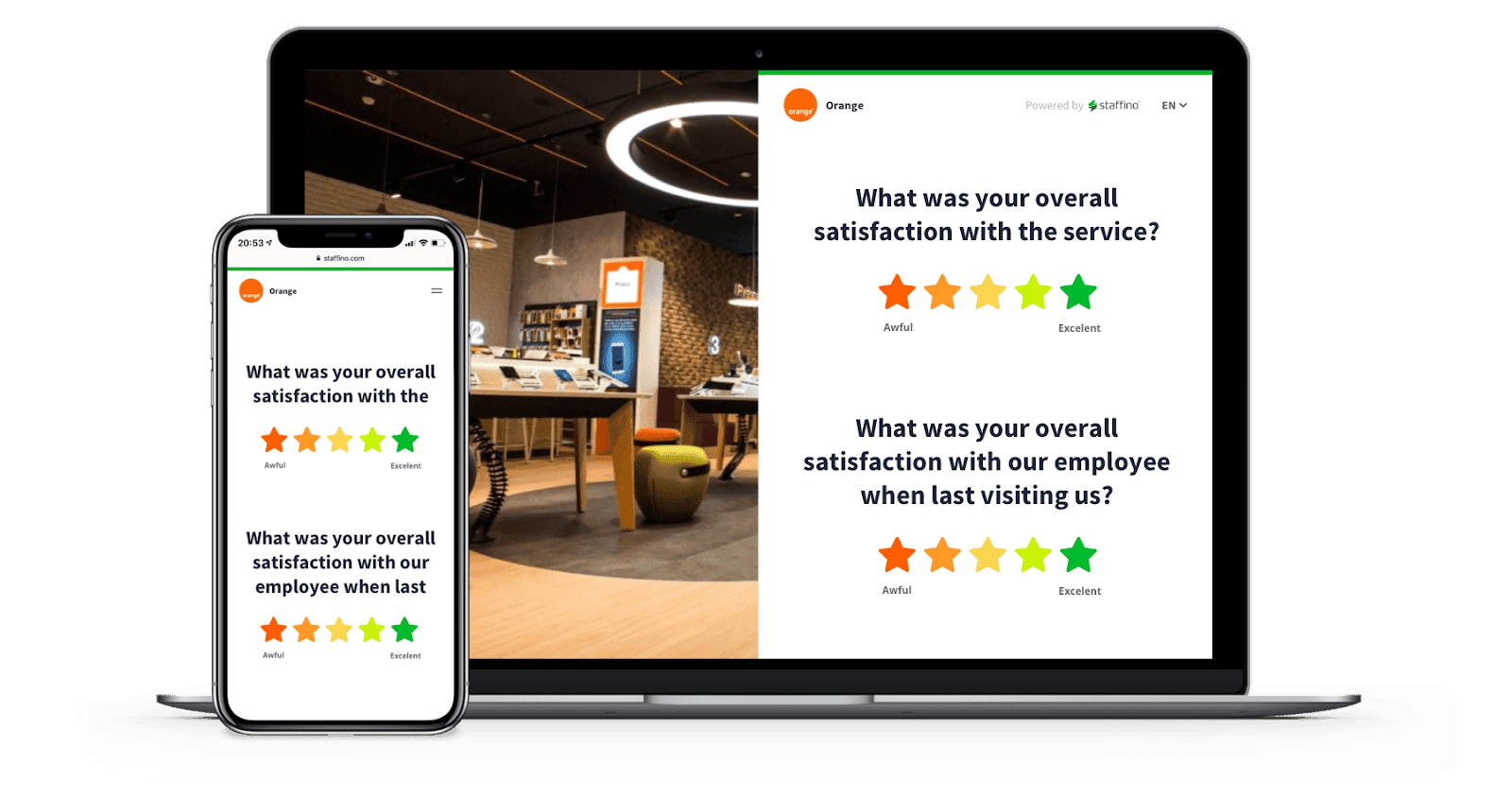
A practical framework has four steps:
- Collect: Bring together survey scores, open-text responses, and public reviews from relevant platforms.
- Identify themes: Look for recurring topics such as waiting times, staff behaviour, pricing, or product availability.
- Compare and validate: Check whether the same themes appear across sources and, where possible, compare them with operational data.
- Act and monitor: Address the underlying issue and track whether customer feedback improves.
For example, declining satisfaction scores combined with an increase in reviews mentioning long queues could justify investigating staffing levels and peak-hour demand. The feedback identifies a possible problem; further analysis helps establish its cause and scale.
Launch Smarter CX with Staffino Core
Start collecting customer feedback, managing responses in real time, and visualising what drives satisfaction. Build experiences that make people come back. All in one core solution.
How Can AI Combine Public Reviews With Direct Feedback?
Manually comparing survey results with thousands of public reviews can quickly become impractical, particularly for businesses with multiple locations, brands, or competitors. AI can make this analysis more manageable by processing large volumes of text, categorising recurring topics, identifying sentiment patterns, and highlighting changes over time.
The goal is not to replace human judgement. It is to help teams find relevant signals faster and spend more time investigating what those signals mean. AI can:
1. Identify Shared Topics Across Different Feedback Sources
AI-powered topic analysis can group comments around common subjects, even when customers use different words to describe similar experiences.
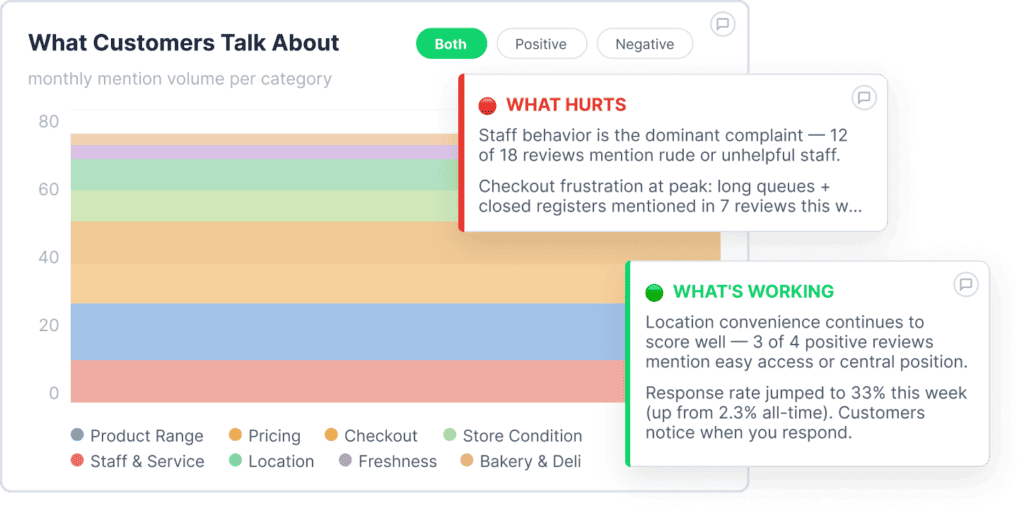
For example, survey respondents might mention “waiting too long,” while public reviewers refer to “slow service,” “long queues,” or “having to wait at checkout.” A consistent topic framework can help CX teams recognise these as related signals.
The same principle applies to positive feedback. Reviews that praise employees for being helpful, knowledgeable, or proactive can reveal service behaviours worth reinforcing across the organisation.
2. Detect Emerging Issues and Changes in Customer Sentiment
AI can help teams spot increases in particular review topics, shifts in sentiment, or differences between locations and competitors. This is especially useful when the volume of feedback makes manual monitoring difficult.
For example, a growing number of reviews mentioning delivery delays could signal a developing issue. Comparing this pattern with survey feedback about delivery satisfaction and available operational data can help the team determine whether further investigation is needed.
AI should flag the pattern, not automatically declare its cause. A change in review volume may reflect seasonality, a recent campaign, a change in the mix of reviewers, or an isolated incident rather than a broader decline in service quality.
3. Combine Analysis With the Right Tools
A practical approach is to make outputs available for comparison within a single platform.

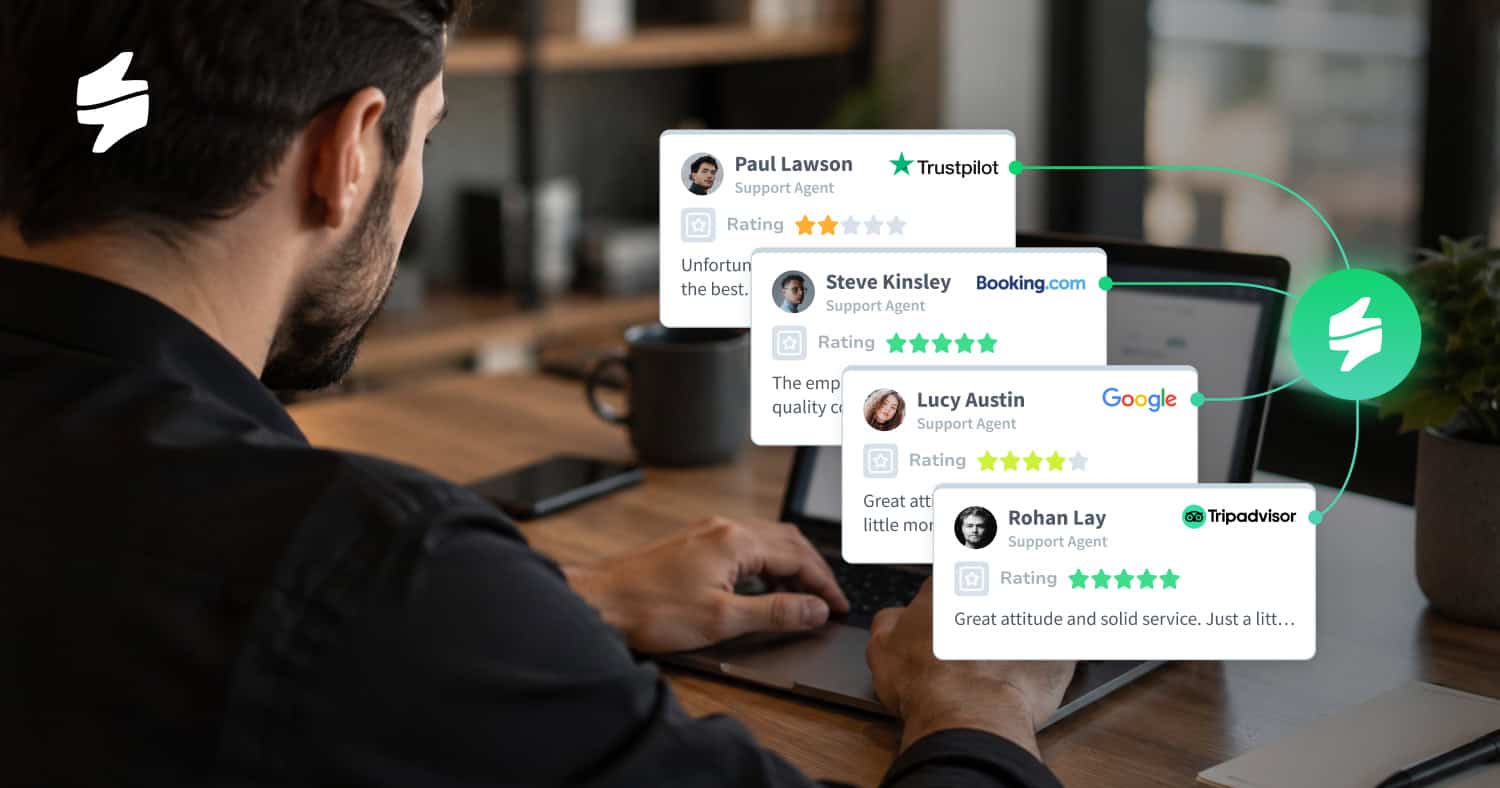
Staffino centralises public feedback from platforms such as Google and Trustpilot within one interface, helping teams monitor reviews and manage feedback without switching between platforms. Review Radar adds a layer of AI-powered public review analysis, helping businesses explore sentiment, recurring topics, location-level performance, and competitor differences.
Together with survey results and other CX data, these insights can help teams move from isolated observations to a more informed view of the customer journey.
The key is to keep the interpretation grounded. AI can surface patterns and summarise large volumes of feedback, but CX professionals still need to validate findings, consider the context, and decide which issues deserve action.
Gaining Customer Experience Insights That Matter
Customer surveys and public reviews answer different questions.
→ Surveys help companies measure specific aspects of the experience and track performance over time.
→ Public reviews reveal what customers voluntarily choose to discuss, including practical problems, unexpected expectations, and experiences that predefined questions may overlook.
Neither source is a complete representation of every customer. Both are shaped by who provides feedback, when they provide it, and the context in which it is collected.
The strongest approach is to analyse them together. Use customer experience surveys to measure and investigate known CX questions, public reviews to discover emerging themes and external perceptions, and operational data to validate what the feedback suggests. AI-powered customer review analytics can make this process more scalable, helping teams identify patterns across large volumes of feedback and prioritise areas for investigation.
Turn Public Reviews into Competitive Intelligence with Staffino
With the right combination of data, you can move beyond tracking satisfaction scores and gain a clearer understanding of what customers experience, what matters to them, and where improvements can have the greatest impact.
Want to make public feedback easier to analyse? Explore Staffino Review Radar or the Public Reviews Connector to see how public reviews can complement your existing CX measurement.
Get a First-Hand Experience Today!
Staffino is the perfect tool for creating engaging surveys, tracking performance, responding to customer feedback, and rewarding top employees. Get started today with our FREE demo!
FAQ
Customer surveys are usually requested by a business and use predefined questions to measure specific aspects of the customer experience. Public reviews are generally initiated by customers, who choose what to share and where to publish it. Surveys offer structure and consistency, while public reviews can reveal unexpected issues and customer expectations.
Surveys can only directly measure the topics they ask about, although open-text questions can capture additional feedback. Public reviews allow customers to introduce subjects the company may not have anticipated, such as unclear policies, product availability, or recurring problems at a particular location.
Not necessarily. Both sources have limitations. Survey results can be affected by nonresponse, question wording, and response bias, while public reviews may overrepresent customers motivated to share particularly positive or negative experiences. Analysing both sources together can provide a broader perspective.
Generative AI can support feedback summarisation, topic and sentiment detection, response suggestions, churn-risk detection, CX recommendations, reporting, and other repetitive analysis tasks.
Companies can compare survey metrics and comments with public review topics, sentiment, and trends. They should investigate where the sources agree or differ, validate potential issues using additional data, and monitor the impact of any changes they make.
AI can process large volumes of review text, group similar topics, identify sentiment patterns, and highlight emerging issues across locations or competitors. When combined with direct customer feedback, these capabilities can help CX teams discover patterns faster and focus their attention on the issues that warrant further investigation.