
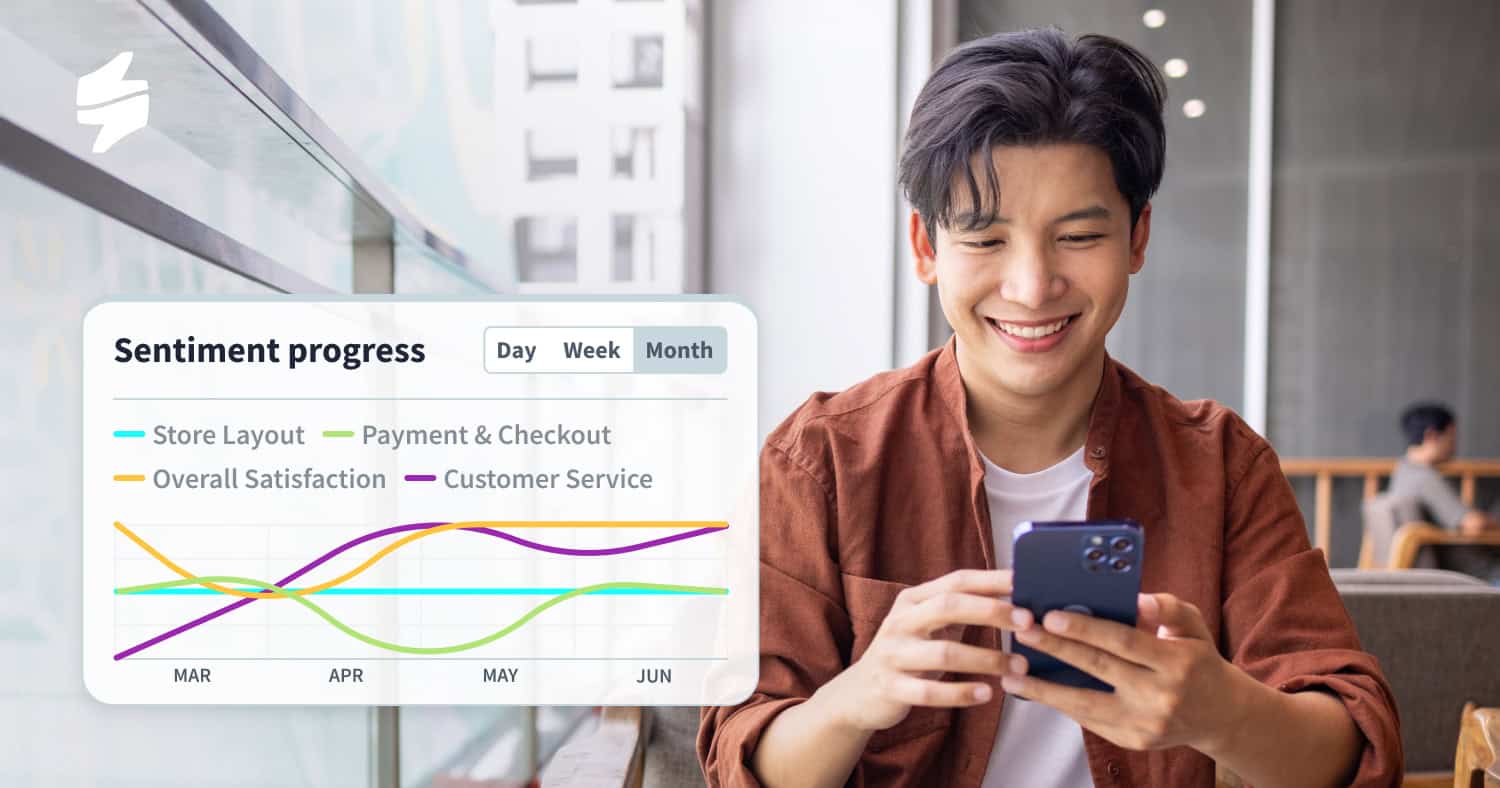

AI-based sentiment analysis goes beyond simply classifying customer feedback as positive, negative, or neutral. It uses artificial intelligence to detect sentiment linked to specific topics, understand emotions, and interpret context within customer feedback. This enables businesses to gain a deeper, more accurate understanding of what customers truly think and feel.
Customer feedback has become one of the most valuable sources of business intelligence. Yet, many organisations still rely on basic sentiment analysis models that classify comments as simply positive, negative, or neutral. While useful, this approach often misses the complexity of customer opinions and the insights hidden beneath the surface.
Today, AI-based sentiment analysis goes much further. By combining advanced natural language processing (NLP), machine learning, and context-aware models, businesses can uncover not only how customers feel, but also why they feel that way. This enables organisations to identify specific drivers of satisfaction and dissatisfaction, prioritise improvements, and deliver better customer experiences.

Let AI Handle the Heavy Lifting in CX
With Staffino’s AI, you can respond with empathy at scale, understand customer feedback faster, boost upsell, and make smarter decisions with almost no effort.
In this article, we’ll look beyond traditional sentiment scoring and explore how modern AI sentiment analysis goes beyond positive and negative labels to identify sentiment attached to specific topics, detect mixed emotions, understand context, and uncover the drivers behind customer feedback.
What Is AI-Based Sentiment Analysis?
AI-based sentiment analysis is the process of using artificial intelligence and sentiment analysis using NLP to automatically interpret customer feedback and determine the attitudes, emotions, and opinions expressed within it.
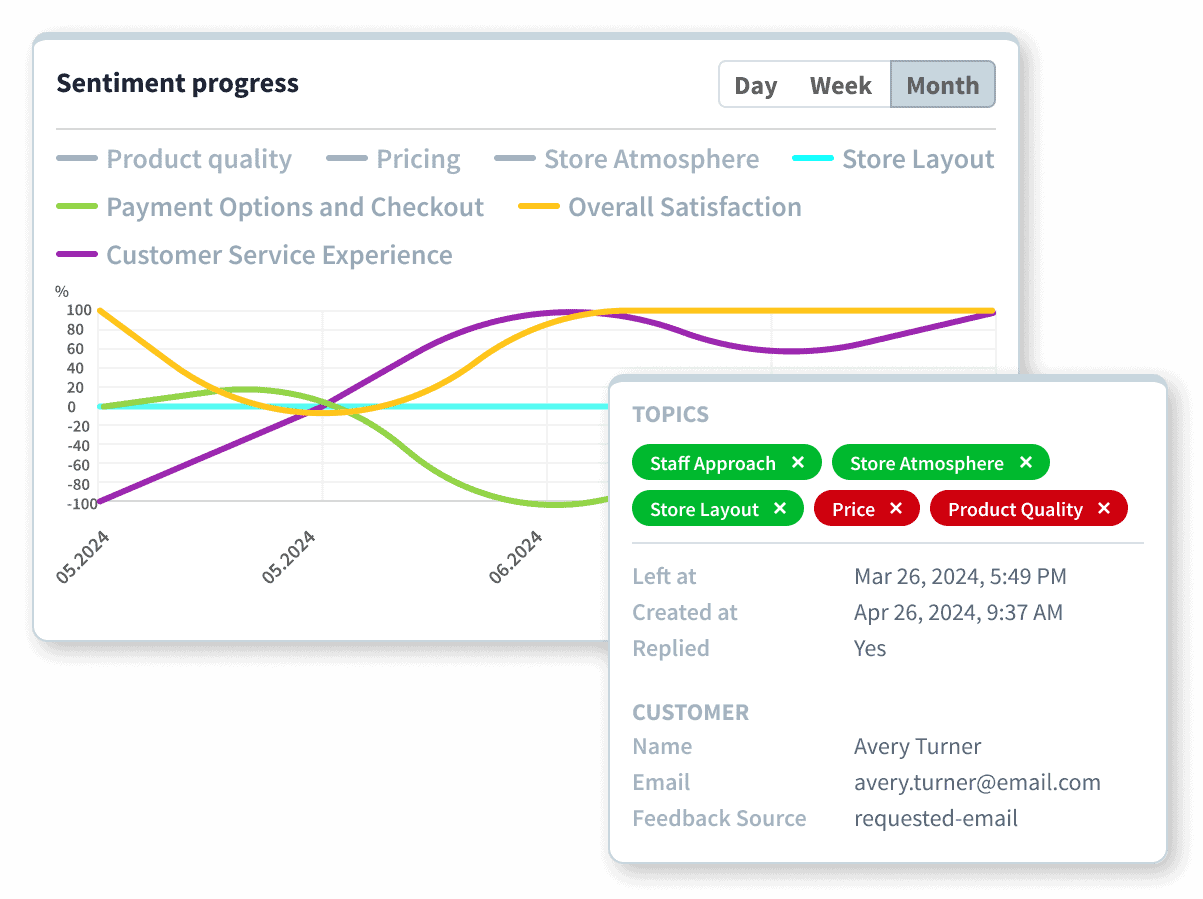
Unlike traditional keyword-based methods, modern AI sentiment analysis understands language in context. It can identify topics being discussed, detect emotional nuances, and analyse customer sentiment at a much more granular level.
Today, organisations use AI customer feedback analysis across multiple touchpoints, including customer surveys, reviews, customer support interactions, social media conversations, emails, and online chats. This allows businesses to transform large volumes of unstructured feedback into actionable insights.
How Does Aspect-Based Sentiment Analysis Work?
One of the biggest limitations of traditional sentiment analysis is that it treats an entire comment as a single unit. However, customer feedback often contains opinions about multiple aspects of a service or product. This is where aspect-based sentiment analysis comes in.
Aspect-based sentiment analysis identifies individual topics, attributes, or service elements mentioned in feedback and assigns sentiment to each one separately.
Consider the following customer comment:
“The staff were extremely friendly, but the waiting time was frustrating.”
A basic sentiment model may struggle to classify the overall sentiment accurately. An aspect-based approach, however, identifies two separate service attributes:
- Staff friendliness → Positive sentiment
- Waiting time → Negative sentiment
This combination of topic and sentiment analysis provides much deeper insights than an overall score alone.
Automated Topic Assignment and Custom Taxonomies
Advanced AI systems can automatically assign feedback to predefined categories such as staff behaviour, product quality, pricing, delivery, communication, or store cleanliness.
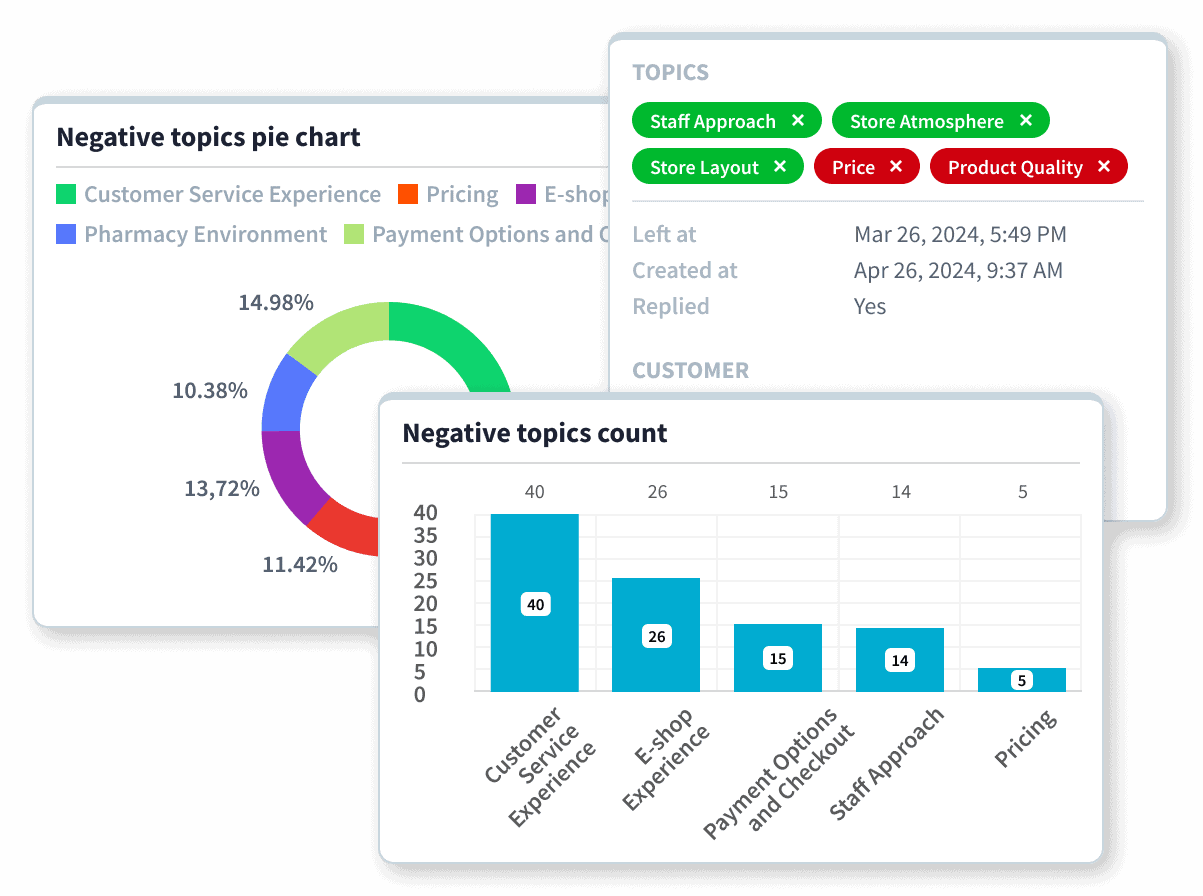
Organisations can also create custom taxonomies tailored to their business needs. This enables more precise customer feedback sentiment analysis and allows teams to monitor the areas that matter most to their customer experience strategy.
By connecting sentiment directly to specific topics, businesses can identify recurring issues, uncover improvement opportunities, and measure the impact of operational changes over time.
Can Sentiment Analysis Detect Emotions Beyond Positive, Negative and Neutral?
Yes. Nowadays, emotion detection in customer feedback goes far beyond three simple sentiment categories.
Customers express a wide range of emotions, including:
- Frustration
- Anger
- Disappointment
- Confusion
- Satisfaction
- Gratitude
- Excitement
- Delight
Advanced AI models can identify these emotional states and evaluate their intensity.
Measuring Emotional Intensity
Not all negative comments carry the same level of urgency. For example:
“The checkout process could be improved.”
and
“The checkout process was absolutely terrible and ruined the entire experience.”
Both comments are negative, but the emotional intensity differs significantly.
By measuring emotional strength, organisations can prioritise the feedback that has the greatest impact on customer satisfaction and loyalty. This deeper level of analysis helps CX teams focus resources where they will make the biggest difference.
How Does AI Analyse Mixed Sentiment in Customer Feedback?
Customers rarely provide feedback that is entirely positive or entirely negative. In fact, mixed sentiment analysis has become one of the most valuable capabilities of advanced AI systems. Consider this example:
“The product quality is excellent, and the staff were helpful, but delivery took far too long.”
The customer is expressing positive sentiment toward some aspects of the experience while criticising another.
Traditional sentiment models often struggle with these situations because they attempt to assign a single sentiment label to the entire comment. Modern AI-based sentiment analysis can separate different topics within the same piece of feedback and assign sentiment independently to each one.
This allows organisations to understand exactly what customers appreciate and what needs improvement. For businesses collecting feedback through short customer satisfaction surveys, this capability is particularly valuable because even brief comments often contain multiple opinions and insights.

Meet the AI That Knows Your Customers
Staffino AI Cortex acts as a generative AI consultant for CX. It understands your feedback, identifies trends, and helps teams make smarter decisions faster.
Understanding Context, Sarcasm and Ambiguity
Human language is rarely straightforward. Customers often use irony, indirect language, or ambiguous expressions that can confuse traditional sentiment models. For example:
“Well, that was a great way to spend 40 minutes waiting.”
Although the word “great” appears positive, the intended meaning is clearly negative.
This is where context-aware sentiment analysis becomes critical. Modern AI models analyse sentence structure, surrounding words, customer intent, and linguistic patterns to interpret meaning more accurately.
While sarcasm remains one of the most challenging tasks in natural language processing, recent advances in AI sentiment analysis have significantly improved the ability to detect context-dependent sentiment and reduce classification errors. As a result, businesses gain more reliable insights from customer conversations and feedback data.
Identifying Recurring Topics and Root Causes
Individual comments are valuable, but the real power of customer feedback analytics emerges when feedback is analysed at scale.
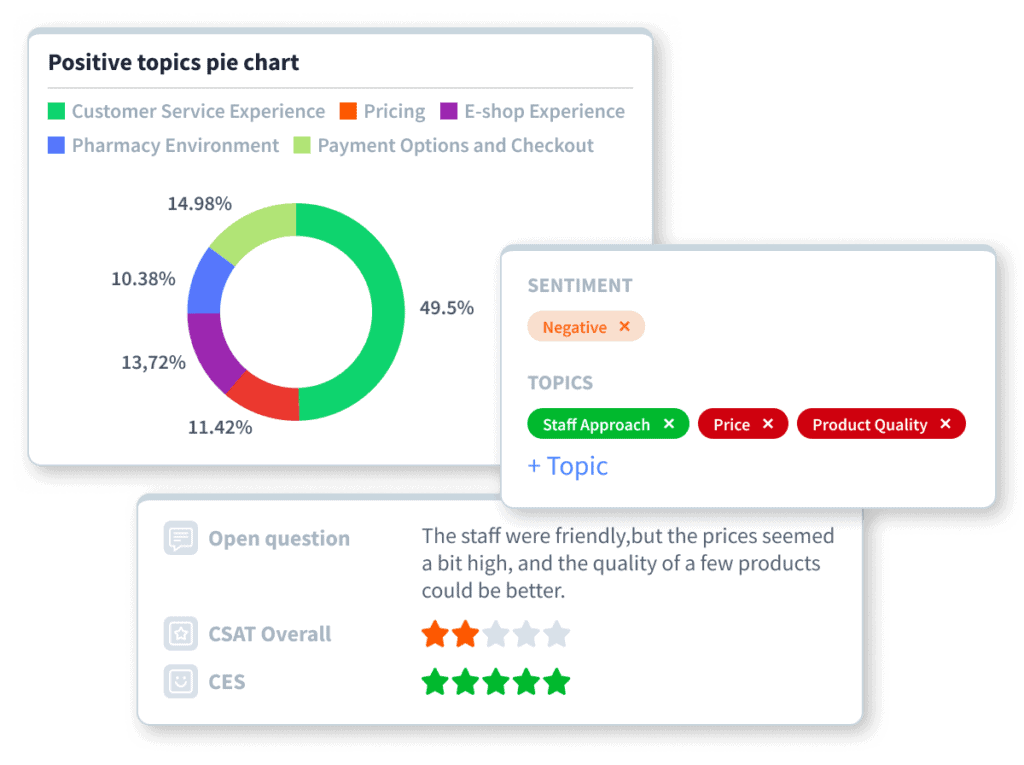
Present-day AI systems can automatically identify recurring topics across thousands of customer interactions and detect patterns that may not be visible through manual review.
For example, sentiment analysis for customer experience can reveal that:
- Negative sentiment frequently relates to delivery delays.
- Customer frustration is concentrated around a specific service process.
- Positive feedback consistently mentions employee helpfulness.
- Satisfaction drops after changes to a particular product feature.
By uncovering root causes behind customer sentiment, organisations can make more informed decisions and focus improvement initiatives where they will have the greatest impact.
Multilingual Sentiment Analysis Across Channels
Today’s customers interact with brands through numerous channels and in multiple languages.
Feedback may arrive through:
- Client surveys
- Online reviews
- Social media
- Customer support tickets
- Live chat
Multilingual sentiment analysis enables organisations to analyse feedback consistently across all these sources. Rather than maintaining separate processes for each language or channel, businesses can centralise insights and obtain a unified view of customer sentiment.
Combined with real-time sentiment analysis, organisations can identify emerging issues faster, respond proactively, and continuously monitor customer perceptions as they evolve.

Stay on Top of Public Reviews
Review Radar monitors and analyzes public online reviews from Google, Facebook, and other platforms so you always know what customers are saying about your brand.
How Can Sentiment Analysis Improve Customer Experience?
The ultimate purpose of sentiment analysis is not simply to understand customer opinions. It is to improve the customer experience. When implemented effectively, AI customer feedback analysis helps organisations:
- Detect issues before they escalate.
- Identify service strengths and best practices.
- Prioritise operational improvements.
- Understand customer emotions at scale.
- Monitor sentiment trends over time.
- Reduce manual analysis effort.
- Support data-driven decision making.
Most importantly, advanced customer feedback sentiment analysis provides the context needed to move beyond simple satisfaction scores and understand the drivers behind customer behaviour.
As AI continues to evolve, businesses that leverage advanced sentiment analysis capabilities will be better equipped to deliver personalised, responsive, and customer-centric experiences.
Final Word
The future of sentiment analysis is no longer limited to positive, negative, and neutral classifications.
Today, AI-based sentiment analysis combines aspect-based sentiment analysis, emotion detection in customer feedback, mixed sentiment analysis, multilingual sentiment analysis, and context-aware sentiment analysis to deliver a far more comprehensive understanding of customer opinions.
By connecting sentiment to specific topics, identifying emotional intensity, uncovering recurring issues, and analysing feedback across channels and languages, organisations can transform customer feedback into meaningful action.
For customer experience leaders, this shift represents an opportunity to move from measuring satisfaction to understanding the true drivers of customer loyalty and business performance.
FAQ
AI-based sentiment analysis uses artificial intelligence and natural language processing (NLP) to identify opinions, emotions, and attitudes expressed in customer feedback.
Aspect-based sentiment analysis detects specific topics or service attributes mentioned in feedback and assigns sentiment to each one separately.
Yes. Advanced sentiment analysis can identify emotions such as frustration, satisfaction, disappointment, gratitude, or excitement, as well as their intensity.
AI can identify multiple topics within a single comment and evaluate the sentiment associated with each one, revealing both positive and negative opinions.
Sentiment analysis helps businesses understand customer needs, identify improvement opportunities, prioritise actions, and make more informed CX decisions.
Context-aware sentiment analysis considers the meaning of words within a sentence, helping AI interpret ambiguity, irony, and customer intent more accurately.
Yes. AI can identify recurring topics and patterns across large volumes of feedback, helping businesses uncover root causes behind customer dissatisfaction.
Yes. Staffino uses AI-based sentiment analysis to automatically evaluate customer feedback, detect emotions, identify topics, and connect sentiment to specific aspects of the customer experience through advanced customer feedback analytics.
Staffino combines AI sentiment analysis with custom taxonomies, automated topic detection, and multilingual processing to deliver context-aware insights that go beyond basic positive, negative, and neutral classifications.