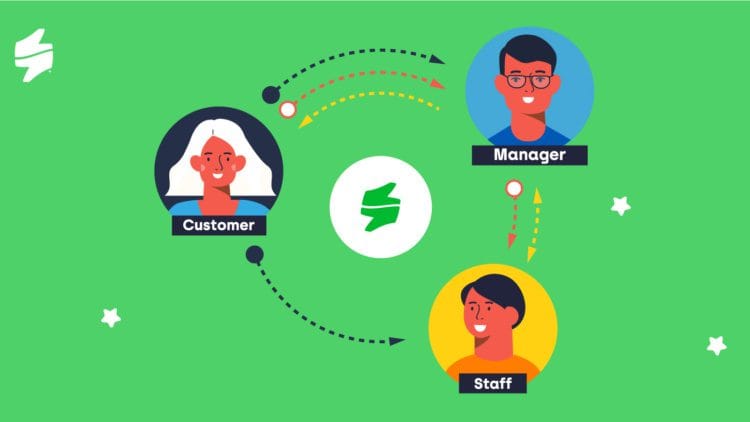


Customer motivation is driven by a mix of emotional, cognitive, and social factors that influence why people buy, engage, or stay loyal. By understanding these psychological drivers, you can design experiences that resonate deeply, improve engagement, and boost revenue.
Every customer interaction is influenced by more than just price or convenience. Behind every click, purchase, or inquiry lies a set of psychological triggers—needs, desires, and habits—that determine action. Businesses that understand what motivates their customers gain a clear competitive edge. This insight allows companies to tailor experiences, predict behaviour, and create a customer experience framework that drives loyalty and growth.
But what exactly shapes customer motivation, and how can you use this knowledge to improve both customer and employee performance? Let’s explore the psychology behind customer motivation.
Why Understanding the Psychology Behind Customer Motivation Matters
Understanding customer motivation is essential because it allows you to align products, services, and experiences with what customers truly value. Motivated customers are more likely to:
- Make repeat purchases
- Recommend your brand to others
- Engage positively with your content and platforms
Moreover, recognising these drivers supports a broader customer experience framework, enabling you to design customer journeys that anticipate needs and remove friction points. It also helps bridge the connection between employee motivation and employee performance, since employees who understand what drives customers can deliver more empathetic, effective service.

Let AI Handle the Heavy Lifting in CX
With Staffino’s AI, you can respond with empathy at scale, understand customer feedback faster, boost upsell, and make smarter decisions with almost no effort.
What Psychological Factors Influence Customer Motivation?
Customer motivation is shaped by multiple psychological principles. Key factors include:
1. Emotional Triggers

Customers often make decisions based on feelings rather than logic. Brands that tap into emotions like trust, excitement, or belonging can drive higher customer engagement and loyalty. For example, a heartfelt story or personalised messaging can make a product feel more relevant and desirable.
2. Social Influence
People are motivated by the behaviours and opinions of others. Social proof—like customer reviews, testimonials, and user-generated content—can significantly increase motivation to buy or engage.

Launch Smarter CX with Staffino Core
Start collecting customer feedback, managing responses in real time, and visualising what drives satisfaction. Build experiences that make people come back. All in one core solution.
3. Cognitive Biases
Psychological biases such as scarcity (“limited-time offers”) or loss aversion (“don’t miss out”) can guide customer decisions. Understanding these biases allows businesses to frame offers and messages in ways that align with human tendencies.
4. Goal-Setting and Self-Determination
Customers are motivated when their goals, values, or personal identity align with a product or service. Experiences that help them achieve milestones, learn something new, or reinforce self-image create lasting engagement.
5. Reward and Reinforcement

Just like employees respond to incentives, customers respond to rewards. Customer loyalty programs, exclusive content, and timely recognition reinforce positive behaviour and can strengthen long-term relationships.
How Can Businesses Use Motivation Theory to Improve CX?
A motivation theory is a psychological framework that explains why people behave the way they do, specifically, what drives them to take action, stay committed, or perform at certain levels. In simple terms, it’s about what makes people tick, what sparks effort, focus, and persistence. Applying motivation theory allows you to create more meaningful, effective and seamless customer experiences. Strategies include:
1. Personalisation and Relevance
Tailoring communications and offers based on past behaviour, preferences, and emotional triggers increases engagement. A customer experience framework that prioritises relevance can significantly boost conversion and satisfaction.
2. Employee Alignment

Motivated employees perform better, which directly affects customer experience. Training employees to understand customer psychology ensures that employees deliver interactions that satisfy emotional and cognitive needs.
3. Behavioural Design
Incorporate psychological principles into product design, website flows, and service touchpoints. For instance, leveraging scarcity, social proof, or reward cues can subtly guide customer decisions and enhance engagement.
4. Feedback and Adaptation
Use customer satisfaction surveys and real-time feedback to adjust experiences based on observed motivation patterns. This iterative approach ensures that the customer experience framework remains aligned with evolving customer needs.
5. Loyalty and Gamification
Incentive programs that tap into intrinsic and extrinsic motivation—like points, badges, or exclusive perks—encourage repeat engagement while making interactions enjoyable and rewarding.
How CX platforms Help Decode Customer Psychology
In the age of AI, a customer experience management platform does more than collect feedback. It provides actionable insights into the WHY behind customer behaviour. By centralising data from customer surveys, reviews, and interactions across channels, CX platforms help businesses identify patterns, trends, and emotional triggers that influence decisions.
AI-Driven Feedback Analysis
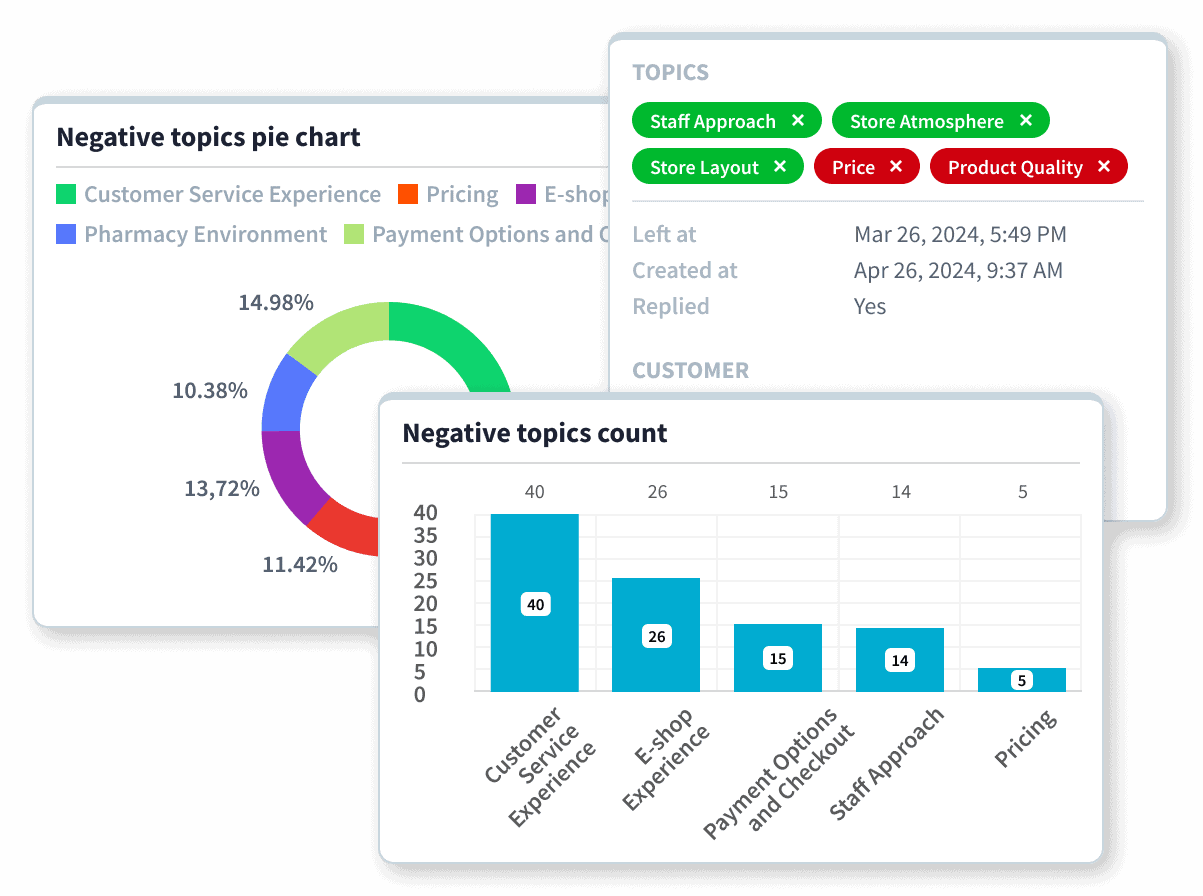
CX platforms like Staffino use AI to analyse open-text feedback in real time, detecting sentiment, recurring themes, and even the intensity of emotional responses. This allows teams to understand which aspects of a product, service, or experience motivate or frustrate customers, providing a psychological map of customer behaviour.
Predictive Responses and Engagement
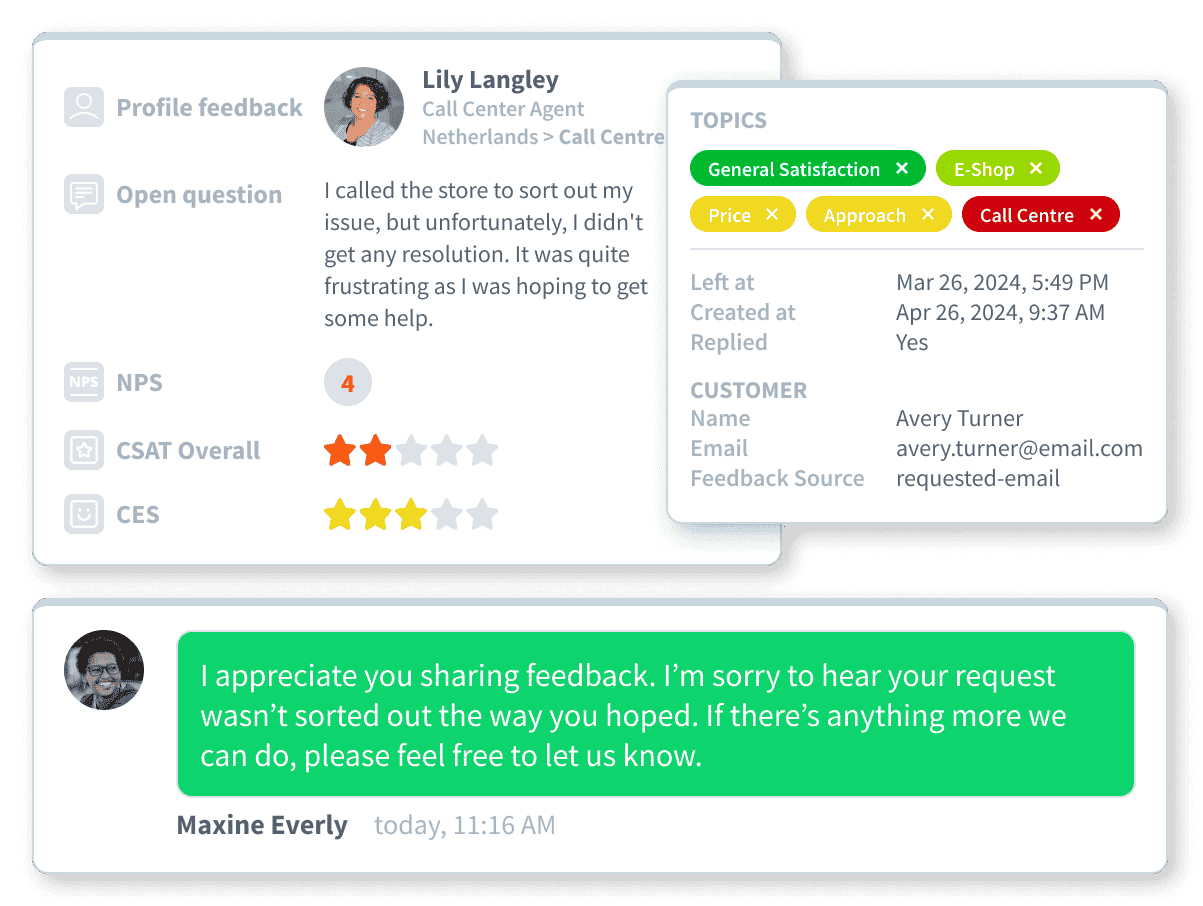
AI tools can also suggest next-best actions to respond to customer needs, ensuring that engagement is timely, personalised, and relevant. Staffino’s AI response generator, for example, helps businesses reply efficiently to feedback while maintaining a tone that aligns with the customer’s emotional context, helping to reinforce positive experiences and address dissatisfaction before it escalates.
Linking Customer Motivation to Experience Design
By combining AI insights with a customer experience framework, you can prioritise interventions, refine messaging, and design experiences that resonate with key psychological drivers. This makes CX initiatives not only more effective but also more closely tied to measurable outcomes, such as increased customer loyalty, satisfaction, and engagement.
Conclusion
The psychology behind customer motivation is a critical lens for understanding why people choose, stay, or advocate for a brand. By exploring emotional, social, and cognitive drivers, you can design experiences that are not only efficient but deeply resonant.
In 2026, organisations that integrate motivation theory into their customer experience program will stand out, foster loyalty, and drive sustainable growth.

Give Your Employees the Recognition and Motivation They Deserve
Does your team need a little extra motivation? Our platform provides powerful insights into your team’s performance and various recognition tools that help ensure everyone feels appreciated.
FAQ
Customer motivation refers to the internal and external factors that drive people to take action, such as making a purchase, engaging with a brand, or remaining loyal. These factors can be emotional, cognitive, or social and influence decision-making throughout the customer journey.
Understanding customer motivation helps businesses design experiences that resonate with customer needs and desires. It enables higher engagement, better satisfaction, increased loyalty, and more effective interventions within a structured customer experience framework.
Several psychological factors shape customer behaviour, including:
- Emotional triggers (trust, excitement, belonging)
- Social influence (peer recommendations, reviews)
- Cognitive biases (scarcity, loss aversion)
- Goal alignment and self-determination
- Rewards and reinforcement
Motivation theory is a set of psychological frameworks that explain why individuals act the way they do. It explores the underlying drivers of behaviour—both intrinsic (internal satisfaction) and extrinsic (rewards, recognition)—and is widely used in business to enhance both employee motivation and customer motivation.
Businesses can apply motivation theory by personalising experiences, aligning employee performance with customer needs, leveraging behavioural design, rewarding desired actions, and using feedback to continuously optimise interactions. These strategies make customer experiences more engaging and impactful.