
A successful customer experience strategy connects what customers need with what the business wants to achieve. By linking customer feedback, journey improvements, and measurable CX KPIs to goals such as retention, revenue growth, and operational efficiency, organisations can make customer experience a driver of business performance rather than a standalone initiative.
In this article, we explain how to align CX priorities with business objectives, build a practical customer experience strategy framework, and measure the impact of CX improvements. We also explore the role of digital customer experience, how to create a customer experience roadmap, and how customer experience strategy consulting can help turn strategic goals into measurable results.

Consult Your CX Strategy Today!
Power up your customer experience with cutting-edge insights from Staffino's CX consulting experts. Create a bulletproof CX strategy and turn one-time visitors into loyal advocates.
What Is Customer Experience Management Strategy?
A customer experience management strategy is a structured approach to understanding, measuring, and improving the experiences customers have with a business across their entire journey. It connects customer needs with the processes, people, and technology required to deliver consistent experiences.
However, a customer experience strategy should do more than improve satisfaction scores. It should support the organisation’s wider business objectives.

For example, if a company wants to increase customer retention, its CX strategy might focus on resolving recurring service issues, simplifying customer journeys, and improving post-purchase support. If the priority is reducing operational costs, the strategy might target unnecessary customer effort, repeated contacts with support, or inefficient processes.
The distinction matters: CX goals describe the experience you want to deliver, while business objectives explain why that improvement matters to the organisation. An effective strategy connects the two.
How to Create a Customer Experience Strategy With Business Objectives in Mind
Creating an aligned strategy starts with business priorities, not a list of CX initiatives. Rather than asking, “How can we improve customer satisfaction?”, begin with, “Which business outcomes can better customer experiences help us achieve?”
Follow these steps to build a strategy that connects customer needs with measurable business results.
1. Start With Clear Business Objectives
Identify the organisation’s most important goals. These may include increasing customer lifetime value, reducing customer churn, growing revenue, lowering service costs, or improving digital conversion rates.

Next, determine how customer experience influences each objective. For example, a high volume of repeat support contacts might indicate that customers struggle to resolve issues independently. Addressing the underlying problem could improve the experience while reducing the workload on customer service teams.
Keep the initial list focused. Trying to improve every CX metric simultaneously makes it difficult to allocate resources and demonstrate meaningful progress.
2. Understand What Customers Need and Where They Struggle
Once the business priorities are clear, use customer feedback and operational data to identify the experiences that have the greatest impact on those goals.

Customer surveys, support interactions, public reviews, and journey analytics can reveal friction points that might otherwise remain hidden. Combine these insights with relevant business data, such as repeat purchase rates, complaint volumes, retention, or contact centre costs.
For example, if customer retention is declining, investigate whether customers are experiencing recurring product issues, slow resolutions, inconsistent service, or unnecessary effort. The objective is to understand the reasons behind the business outcome before deciding which improvements to make.
3. Prioritise Initiatives by Business Impact
Not every customer pain point requires immediate investment. Prioritise initiatives based on their expected impact, the number of customers affected, implementation effort, and alignment with business goals.
A useful way to compare potential initiatives is to ask:
- How directly does this issue affect a business objective?
- How many customers experience it, and how seriously?
- What evidence supports the proposed improvement?
- Can the organisation realistically address it with its available resources?
- How will success be measured?
This helps teams focus on improvements that matter to customers and the business instead of choosing projects simply because they are easy to implement.
4. Assign Ownership and Build a Customer Experience Roadmap
A strategy needs a clear route from insight to execution. A customer experience roadmap translates strategic priorities into initiatives, milestones, responsibilities, and measurable outcomes.
For example, a roadmap focused on reducing customer effort might include simplifying a digital form, improving self-service content, and addressing the reasons customers contact support repeatedly. Each initiative should have an owner, a timeline, and a way to assess its impact.
A CX manager can help coordinate these efforts, align cross-functional teams, and ensure that customer experience initiatives remain connected to business priorities and measurable outcomes. However, CX is rarely the responsibility of one department alone. Depending on the initiative, customer service, marketing, operations, product, IT, and finance may all need to contribute. Assigning ownership helps prevent CX improvements from getting stuck between teams.
5. Measure Progress and Adjust the Strategy

A customer experience strategy should evolve as customer needs and business priorities change. Review performance regularly, compare results with your baseline, and assess whether the initiatives are producing the expected outcomes.
If satisfaction improves but retention does not, for example, investigate whether other factors influence customers’ decisions to stay. The relationship between CX and business performance is rarely explained by a single metric.
Use these findings to refine priorities, adjust initiatives, and ensure the strategy remains relevant.

Build a CX Strategy That Works for You
Whether you're just starting or ready to level up, we’ll help you build a CX strategy that works. Define goals, align with your business metrics, and get a clear roadmap to make CX your growth engine.
Which Customer Experience KPIs Should You Track?
Customer experience KPIs should measure both the quality of the experience and its contribution to business performance. Tracking satisfaction alone may show whether customers feel better about an interaction, but it does not necessarily demonstrate whether the improvement supports the organisation’s wider goals.
Business objective | Relevant CX KPIs | Potential business outcome |
Improve customer retention | NPS, CSAT, churn rate, retention rate | Stronger loyalty and longer customer relationships |
Increase revenue | Customer lifetime value, repeat purchase rate, conversion rate | More repeat business and improved revenue performance |
Reduce service costs | Customer Effort Score (CES), repeat contact rate, cost per contact | Fewer unnecessary interactions and more efficient service |
Improve digital performance | Digital CSAT, task completion rate, abandonment rate | Smoother journeys and fewer barriers to conversion |
Improve service quality | CSAT, complaint resolution time, first-contact resolution | More effective support and fewer unresolved issues |
These are examples, not guaranteed cause-and-effect relationships. Choose KPIs that fit your business model, establish a baseline, and consider other factors that may influence the results.
How Can You Measure CX ROI?
CX ROI, or, as we like to call it, ROCX (Return on Customer Experience), refers to the business value generated by investments in customer experience relative to their costs. Measuring it requires connecting specific CX initiatives with outcomes the business can track.
For example, if an organisation improves its complaint resolution process, it could monitor changes in repeat contacts, customer retention, and the cost of handling complaints. If it simplifies checkout, it could compare abandonment and conversion rates before and after the change.
A basic ROI calculation is:
CX ROI = (Financial benefits − Investment costs) ÷ Investment costs × 100
The challenge is identifying which benefits can reasonably be attributed to the CX initiative. Establish a baseline, define the measurement period, and account for other changes that might affect the result. Where direct financial attribution is difficult, operational indicators and customer outcomes can still help build a clearer picture of progress.
What Is Digital Customer Experience Strategy?
A digital customer experience strategy focuses on making interactions across digital channels useful, accessible, and consistent with customer expectations and business goals. These interactions may include websites, mobile apps, self-service portals, online purchases, and digital customer support.
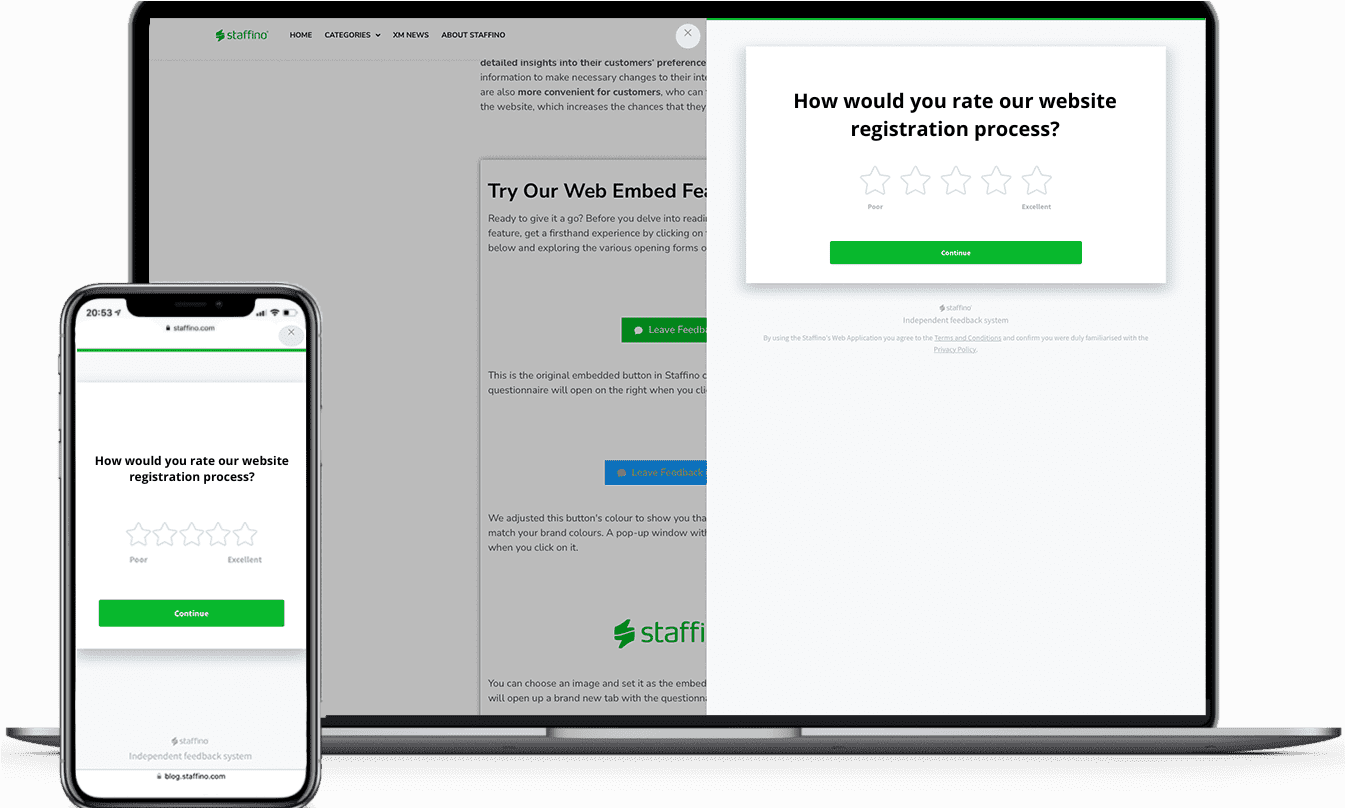
Digital CX should not operate separately from the broader customer experience strategy. Customers often move between digital and human channels, and problems in one part of the journey can affect their perception of the entire brand.
For example, a business aiming to increase online sales might focus on reducing checkout friction, improving product information, and making payment processes easier to navigate. A company seeking to lower support costs might prioritise clearer self-service guidance and better digital issue resolution.
Relevant metrics could include task completion, digital CSAT, conversion rates, abandonment rates, and repeat support contacts. Customer feedback helps explain why these metrics change and where improvements are needed.
The objective is not to digitise every interaction. It is to make each channel serve customers effectively while supporting the organisation’s business priorities.
What Is a Customer Experience Framework?
A customer experience framework provides a repeatable structure for designing, measuring, managing, and improving CX. It helps translate a broad strategy into everyday decisions, consistent processes, and clear accountability.
A practical customer experience strategy framework should include the following elements:
Framework component | Purpose |
Business objectives | Define the outcomes the CX strategy must support |
Customer insights | Identify needs, expectations, and pain points |
CX goals and KPIs | Set measurable targets and establish a baseline |
Priority initiatives | Select improvements based on customer and business impact |
Ownership and governance | Assign responsibilities across teams |
Customer experience roadmap | Set milestones, timelines, and resources |
Measurement and review | Track progress and adapt the strategy |
This framework can be adapted to different industries and business models. A B2B organisation, for instance, may need to focus on onboarding, account management, implementation, and ongoing support. A retailer may prioritise discovery, checkout, delivery, and returns.
What Are the Best Practices for Aligning CX With Business Goals?
Customer experience strategy best practices help teams maintain a clear connection between customer needs, business priorities, and execution.
- Involve leadership early. Secure support for CX priorities and agree on how success will be measured.
- Use evidence to guide decisions. Combine customer feedback with operational and financial data rather than relying on assumptions.
- Keep goals focused. Prioritise a manageable number of initiatives with clear ownership.
- Connect teams around shared outcomes. Encourage departments to work towards common goals instead of optimising isolated metrics.
- Review progress regularly. Reassess priorities when results, customer expectations, or business conditions change.
- Communicate improvements. Show teams how customer insights influence decisions and what has changed as a result.
These practices also apply to a B2B customer experience strategy, where relationships often involve multiple stakeholders, longer decision cycles, onboarding, and ongoing account support. In this context, customer retention, time to value, support quality, and account health may be especially relevant indicators.
How to Develop a Customer Experience Strategy With Staffino
Aligning CX with business objectives requires more than collecting feedback or monitoring scores. Organisations need to understand what drives customer experiences, identify the issues that matter most, and translate those insights into measurable improvements.
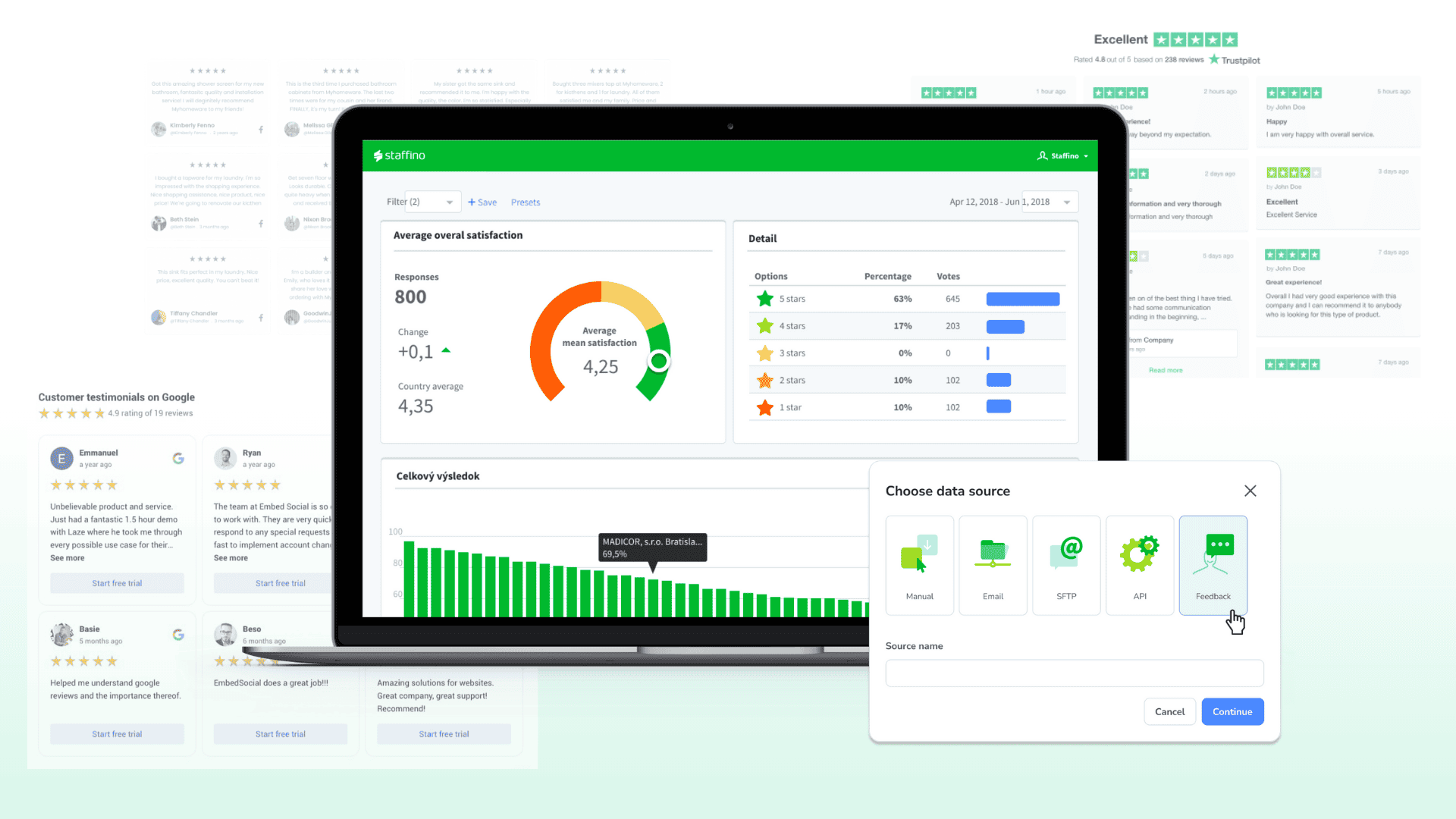
Staffino’s CX Strategy & Roadmap service helps businesses develop a data-driven customer experience strategy connected to business goals, financial targets, and operational priorities. The process can include assessing current CX performance, identifying improvement opportunities, defining KPIs, and building a roadmap for short- and long-term action.
Staffino’s CX Consulting also helps organisations interpret customer feedback and performance metrics, connect CX priorities with business outcomes, and determine where action is needed.
For businesses that already have a strategy in place, this approach can help identify gaps between their CX ambitions and everyday operations. For those starting from scratch, it provides a structured way to move from customer insights to priorities, ownership, and measurable progress.
The goal is to make CX a practical part of how the business operates, not a separate programme that is difficult to connect to results.
Turn Your CX Strategy Into Measurable Business Impact
A customer experience strategy is most valuable when it supports clear business objectives. By understanding customer needs, prioritising high-impact improvements, assigning ownership, and tracking the right KPIs, organisations can make better decisions about where to invest their CX resources.
The process requires ongoing measurement and collaboration across teams. A customer experience roadmap keeps initiatives focused, while a well-designed framework helps ensure that improvements are implemented consistently and assessed against meaningful outcomes.
Staffino helps organisations connect customer feedback, CX performance, and business priorities through data-driven strategy and consulting. If you’re ready to turn your CX goals into a practical roadmap, explore Staffino’s CX Strategy & Roadmap service.

Get a First-Hand Experience Today!
Staffino is the perfect tool for creating engaging surveys, tracking performance, responding to customer feedback, and rewarding top employees. Get started today with our FREE demo!
FAQ
A customer experience strategy is a plan for improving how customers interact with a business across their journey. It connects customer needs and experience improvements with business objectives, measurable KPIs, and clear responsibilities.
Alignment helps organisations prioritise improvements that matter to both customers and the business. It also makes it easier to secure resources, coordinate teams, and evaluate whether CX initiatives contribute to outcomes such as retention, revenue, or operational efficiency.
A CX strategy defines the goals, priorities, and intended outcomes. A customer experience framework provides the structure and processes for implementing, measuring, and improving that strategy.
Track relevant CX metrics, such as CSAT, NPS, and CES, alongside business indicators such as retention, churn, conversion, repeat purchases, or service costs. Establish a baseline and evaluate changes over time, while considering other factors that may influence results.
CX consulting can be useful when an organisation lacks a clear strategy, struggles to interpret feedback, cannot connect CX metrics to business results, or needs help prioritising initiatives and building a measurable roadmap.