

The top CX companies to watch in 2026 are those that consistently deliver seamless, personalised, and low-effort customer experiences across digital and human touchpoints. Brands such as Amazon, Apple, Starbucks, Zappos, Netflix, Costco, JYSK, Dr. Max, Cofidis, and E.ON stand out for embedding customer-centricity into their culture, operations, and decision-making, using data, feedback, and CX metrics to drive measurable business outcomes.
Today, a strong customer experience management strategy differentiates brands, drives retention, and transforms feedback into measurable business growth. In a world where products and prices are increasingly commoditised, the quality of interactions between companies and customers determines loyalty, advocacy, and long-term profitability.
This article examines companies known for great customer experience, explores what defines a top CX company, and explains how companies improve customer experience using proven strategies and metrics such as NPS, CSAT, CES and others. It also outlines future-facing customer experience trends and concludes with guidance on how to choose the right CX partner.
What Is Customer Experience (CX)?
Customer Experience (CX) refers to the sum of all interactions a customer has with a brand across the entire customer journey, including awareness, onboarding, support, retention, and advocacy. It encompasses digital touchpoints (websites, apps, chatbots), human interactions (call centres, sales teams), and emotional perceptions shaped by consistency, personalisation, and trust.

From a scientific and managerial perspective, CX is evaluated through structured CX metrics and measurement frameworks, most commonly:
- NPS (Net Promoter Score) – customer loyalty and advocacy
- CSAT (Customer Satisfaction Score) – satisfaction after specific interactions
- CES (Customer Effort Score) – ease of completing tasks
High-performing organisations consistently track and act on these customer experience metrics to understand how companies improve customer experience in a measurable and repeatable way.

Get a First-Hand Experience Today!
Staffino is the perfect tool for creating engaging surveys, tracking performance, responding to customer feedback, and rewarding top employees. Get started today with our FREE demo!
What Defines a Top CX Company?
What Makes a Company Great at Customer Experience?
A top CX company does not rely on isolated service excellence. Instead, it embeds customer-centricity into its culture, processes, and leadership decisions. Research across industries shows that companies delivering exceptional CX share several defining characteristics:
- A deep understanding of customer needs and expectations
- Seamless experiences across digital and physical channels
- Empowered employees who can resolve issues quickly
- Proactive service rather than reactive problem-solving
- Continuous feedback loops driving improvement
These organisations consistently appear among the top 10 companies for customer service because CX is treated as a strategic asset, not a support function.
Top CX Companies to Watch in 2026
The following companies are widely recognised for their strong customer-centric approach and serve as global examples of excellent customer experience across industries.
1. Amazon: Frictionless Convenience at Scale

Amazon remains a benchmark for CX excellence due to its relentless focus on customer convenience. Its strengths include:
- One-click purchasing and seamless returns
- Proactive issue resolution and fast refunds
- Highly responsive customer support
- Advanced personalisation driven by data
Amazon exemplifies how operational excellence directly translates into superior CX, reflected in consistently high CSAT and NPS scores.
2. JYSK: Consistent Retail Experience Across Markets

JYSK has established itself as a strong CX performer in international retail by focusing on consistency, accessibility, and customer-centric store operations. The brand prioritises predictable, reliable experiences regardless of location. Its strengths include:
- Standardised service quality across stores and regions
- Clear product presentation and in-store navigation
- Strong focus on customer feedback at the store level
- Continuous improvement driven by frontline insights
JYSK exemplifies how disciplined execution and feedback-driven optimisation support scalable customer experience excellence in large retail networks.
3. Apple: Experience as a Brand Philosophy

Apple is frequently cited when discussing what company has a strong customer-centric approach. Its CX leadership extends beyond products to every customer interaction. Key differentiators include:
- Intuitive product design that reduces customer effort (low CES)
- Consistent experience across online and in-store environments
- Highly trained support employees and Genius Bar services
- Emotional brand connection and trust
4. Starbucks: Personalisation and Emotional Connection

Starbucks has transformed everyday transactions into personalised experiences through:
- Mobile-first ordering and payment
- Customer loyalty programs driven by behavioural insights
- Consistent global service standards
- Community-driven brand engagement
Its ability to blend digital convenience with human connection makes Starbucks a CX leader in retail and hospitality.
5. Dr. Max: Personalised Care in a Regulated Environment

Dr. Max delivers a strong customer experience in a highly regulated healthcare and pharmacy environment, where trust, clarity, and empathy are critical. The company combines professional expertise with customer-centric service design to meet both emotional and functional needs. Key CX strengths include:
- Personalised customer interactions and advisory services
- High service standards across physical and digital channels
- Clear communication around products and treatments
- Strong emphasis on customer trust and safety
Dr. Max shows how CX leadership can be achieved even in complex regulatory contexts by prioritising human connection and consistent service quality.
6. Zappos: Customer Support as a Competitive Advantage

Zappos is often referenced in academic and professional CX literature for redefining customer service norms:
- No scripts for support agents
- Extended call times focused on problem-solving
- Free returns and transparent policies
- A company culture built entirely around CX
Zappos remains one of the most cited examples of excellent customer experience.
7. Netflix: Data-Driven Customer-Centricity

Netflix delivers exceptional CX through personalisation and ease of use:
- Predictive content recommendations
- Simple subscription management
- Minimal customer effort across devices
- Rapid adaptation to user behaviour
8. E.ON: Improving CX in the Energy Sector

E.ON has made significant investments in customer experience to modernise interactions within the energy and utilities sector, an industry often associated with low satisfaction levels. The company focuses on simplifying customer journeys and improving engagement through digital and service innovation. Its strengths include:
- Improved digital self-service and customer portals
- Proactive communication around usage, billing, and service issues
- Strong focus on sustainability and customer education
- Use of customer feedback to drive service improvements
9. Costco Wholesale: Trust, Value, and Consistency

Costco Wholesale is widely recognised for delivering exceptional customer experience through transparency, simplicity, and long-term value creation. Its CX strategy is built on trust, operational consistency, and member-centric policies rather than aggressive marketing tactics. Key strengths include:
- Clear and honest pricing with minimal complexity
- Generous return policies that reduce perceived risk
- Consistent in-store experience across locations
- Strong employee engagement that translates into better service

Unlock Your Team's Full Potential with Staffino's EX Products
Our EX platform can help you attract and retain top talent, track employee performance, and improve engagement and productivity – so your team can reach their highest potential.
10. Cofidis: Transparent and Customer-Centric Financial Services

Cofidis is recognised for its customer-focused approach within the financial services sector, where complexity and low trust often challenge experience quality. Its CX strategy centres on clarity, accessibility, and responsive support throughout the customer lifecycle. Key strengths include:
- Transparent communication and simplified financial products
- Responsive customer support and advisory services
- Digital-first interactions designed for ease and efficiency
- Continuous feedback collection to improve service journeys
Which Companies Have the Best Customer Support?
Organisations with the best customer support typically offer:
- Fast response times across multiple channels
- Knowledgeable, empathetic agents
- Consistent service quality
- Clear escalation paths
Companies like Amazon, Apple, and Zappos are frequently highlighted for support excellence because they integrate service quality into their core CX strategy.
How CX Leaders Improve Customer Satisfaction
The above companies do not improve satisfaction through isolated initiatives or superficial fixes. Instead, they rely on structured, evidence-based approaches that combine behavioural insight, operational discipline, and advanced analytics. These approaches allow CX leaders to design experiences intentionally, monitor performance continuously, and align customer outcomes with strategic business objectives. So, what do they do differently?
1. Mapping Customer Journeys to Identify Friction Points
CX leaders begin by developing a deep, end-to-end understanding of the customer journey. Rather than focusing solely on individual touchpoints, they examine how customers move across channels, departments, and stages of the relationship over time. This holistic view reveals where friction accumulates, where expectations are not met, and where emotional responses shift from confidence to frustration.

Customer journey mapping is increasingly supported by data derived from customer feedback systems, interaction logs, and customer sentiment analysis. By linking these insights to CX metrics and measurement frameworks such as CSAT and CES, organisations can objectively identify which moments in the journey have the greatest impact on satisfaction. This enables prioritisation based on customer impact rather than internal assumptions, transforming CX from reactive problem-solving into deliberate experience design.
2. Reducing Customer Effort Through Automation and Intuitive Design
One of the strongest predictors of customer satisfaction is the amount of effort required to achieve a desired outcome. CX leaders therefore focus relentlessly on simplification. They redesign processes to eliminate unnecessary steps, remove redundancies, and ensure that customers can move seamlessly between digital and human-assisted channels.
Automation plays a critical role in this effort, particularly when applied to repetitive or transactional interactions. However, automation alone is not sufficient. Leading organisations pair it with intuitive design principles that make interfaces easy to understand and interactions easy to complete. As customer effort decreases, improvements are reflected directly in Customer Effort Score, and over time in higher CSAT and NPS results.
3. Using Customer Feedback to Close the Loop
Top CX companies treat customer feedback as an operational asset rather than a reporting artefact. Feedback is collected continuously at key moments in the customer journey and analysed in near real time to detect dissatisfaction, emerging issues, and systemic weaknesses. What differentiates CX leaders is not the volume of feedback they collect, but how effectively they act on it.

Closing the loop involves responding to individual customers, investigating root causes, and implementing changes that prevent recurrence. When customers see that their input leads to tangible improvements, trust and loyalty increase. At an organisational level, closed-loop feedback systems drive improvement across teams and functions.

Get Actionable Insights with Closed Loop Feedback Management
With Staffino, you'll never leave a customer unhappy again! Streamline the process of collecting and responding to feedback, identify areas of improvement, and make sure that customer issues are addressed quickly and effectively.
4. Using Personalised Customer Engagement Powered by AI and Machine Learning
As customer expectations rise, generic experiences are increasingly perceived as inadequate. CX leaders address this challenge by using AI to personalise interactions at scale. These technologies analyse customer feedback behavioural patterns, historical interactions, and contextual data to predict needs and tailor responses in real time.
Personalisation powered by intelligent systems enables companies to engage customers proactively rather than reactively. Whether through tailored recommendations, context-aware messaging, or predictive service interventions, personalised engagement increases relevance and reduces friction.
When executed responsibly and transparently, AI-driven personalisation strengthens emotional connection and becomes a critical differentiator in modern customer experience strategies.
IVAN DVORAN
CO-FOUNDER & ChIEF AI OFFICER, STAFFINo
5. Empowering Frontline Teams With Data and Decision-Making Authority
Technology alone cannot deliver a great customer experience. CX leaders recognise that frontline employees remain central to customer perception, particularly in moments of complexity or emotional sensitivity. To enable high-quality interactions, organisations provide frontline teams with access to real-time customer feedback, journey context, and actionable insights.
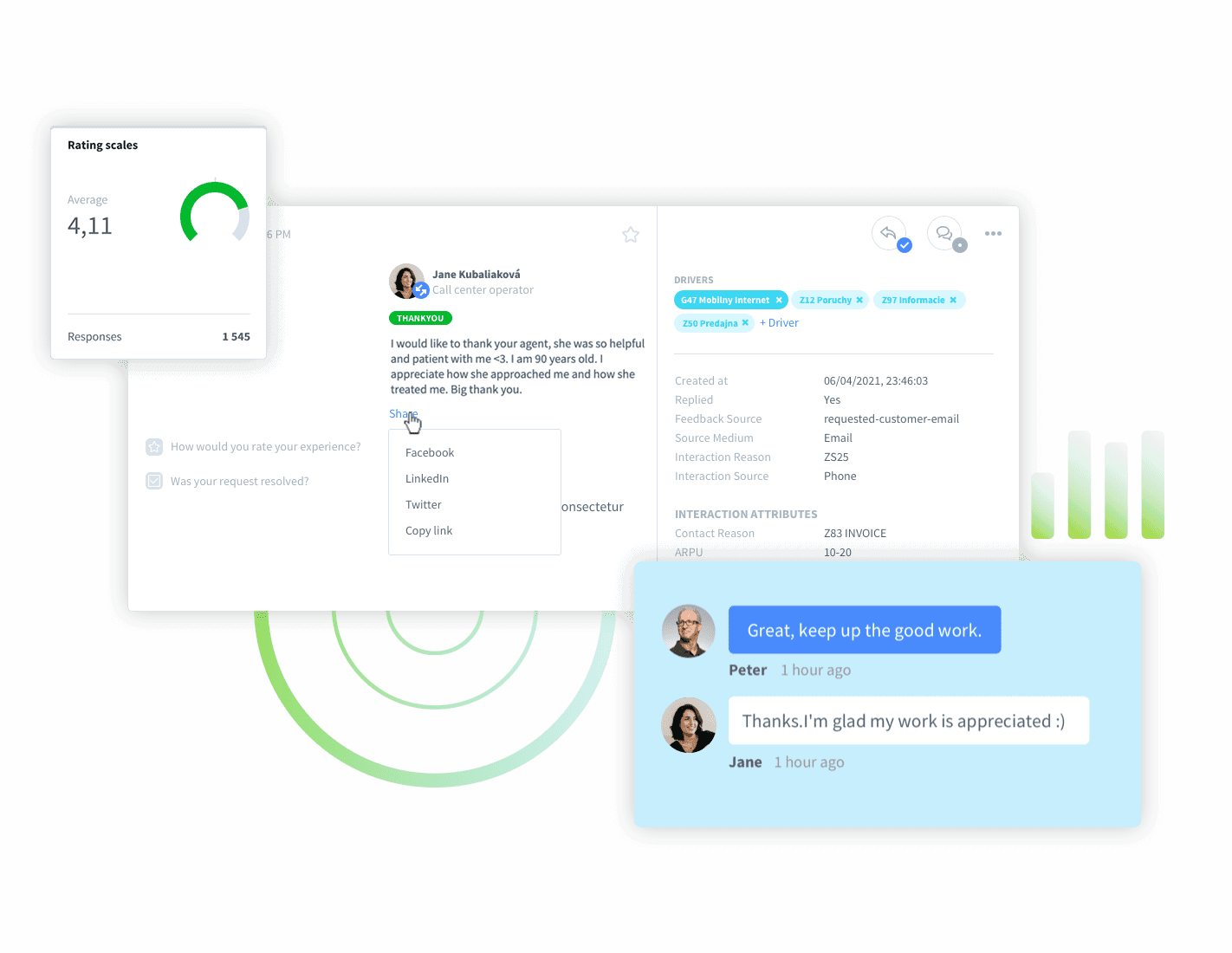
Equally important is decision-making authority. When employees are trusted to resolve issues without unnecessary escalation, resolution times decrease and customer confidence increases. This empowerment aligns employee experience with customer experience, creating consistency between what a company promises and what it delivers. Over time, this alignment contributes to sustainable improvements in satisfaction, loyalty, and advocacy.
6. Connecting CX Practices to Measurable Business Performance
The defining characteristic of CX leadership is the ability to demonstrate impact. By systematically linking experience improvements to customer experience KPIs such as NPS, CSAT, and CES, organisations establish a clear connection between CX initiatives and business outcomes. These metrics are analysed alongside retention, revenue growth, and operational efficiency to quantify value.
This evidence-based approach ensures that customer experience is treated not as a soft discipline, but as a strategic driver of performance. In doing so, CX leaders elevate customer experience from a support function to a core element of long-term competitive advantage.
How to Choose the Right CX Partner
While great CX is delivered by companies, it is enabled and scaled by CX platforms and partners. Choosing the right CX partner is essential for organisations aiming to emulate the leaders described above.
How to Choose a CX Company or a CX Platform?
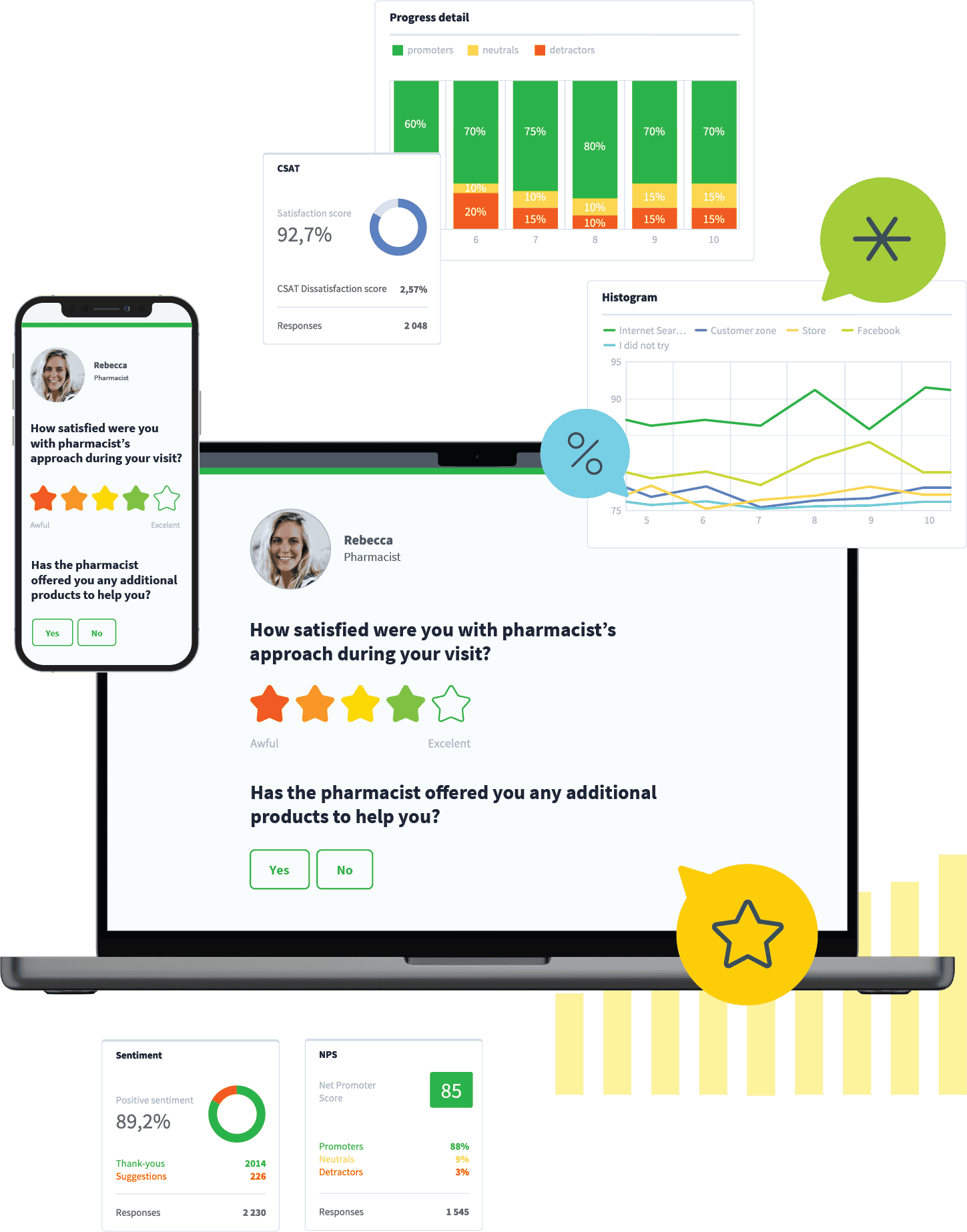
When evaluating how to choose a CX company, decision-makers should assess:
- Ability to collect and analyse feedback across channels
- Support for key CX metrics and measurement
- Actionable insights tied to operational improvements
- Scalability and industry relevance
What Is the Best CX Platform?
Among the leading CX platform providers, the following stand out:
Provider | Short Description | Main Features | Pros | Cons | Pricing |
Staffino | A flexible customer and employee experience platform that turns feedback into actionable insights across touchpoints to improve satisfaction, loyalty, and performance. | – real-time feedback collection | Strong feedback-to-action workflows; highly customisable; integrates CX & EX; recognised for ease of use and customer service. | Some advanced customisation may require setup time; enterprise pricing is custom. | Growth plan starts ~€350/month; Pro & Enterprise by quote. |
Qualtrics | Enterprise-scale experience management platform focused on deep analytics and predictive insights across CX, EX, PX, and more. | – advanced survey design | Extremely robust analytics; highly customisable; supports complex research and segmentation. | Higher learning curve; pricing and features may be overkill for smaller teams. | Custom enterprise pricing; online option ~$420/month for base survey plan. |
Zendesk | Customer support and engagement platform emphasising omnichannel ticketing, self-service, and workflow automation. | – multichannel ticketing | Easy setup and use; scalable from SMB to larger business; strong ecosystem. | Advanced analytics may require add-ons; larger plans needed for full CX suites. | Support plans start ~ $19/agent/month; Suite plans ~$55–$115+/agent/month. |
Genesys Cloud CX | Cloud-native omnichannel contact centre and engagement platform designed to orchestrate customer journeys and automate interactions. | – voice & digital routing | Comprehensive omnichannel support; built-in AI; scalable across contact centres. | Can be complex and feature-rich (steeper implementation). | Plans range roughly $75–$240/user/month (annual billing). |
Medallia Experience Cloud | An enterprise CX platform that captures feedback across channels and turns signals into real-time insights for action and closed-loop improvement. | – omnichannel feedback capture | Excellent analytics depth and enterprise governance; scalable signal capture. | Complex implementation; pricing and deployment geared toward large organisations. | Custom pricing based on the Experience Data Records model. |
These providers support organisations in implementing best practices in customer experience and turning CX into a competitive advantage.
CX Trends Shaping the Future
Several customer experience trends will shape CX leadership in 2026 and beyond:
- AI-driven personalisation and predictive service
- Omnichannel journey orchestration
- Emotion and sentiment analytics
- Proactive engagement models
- Stronger alignment between EX and CX
Companies that successfully adapt to these trends will continue to define what great customer experience looks like in the years ahead.
Become a CX Leader in 2026 with Staffino
The top CX companies to watch in 2026 are those that treat customer experience as a strategic discipline grounded in data, culture, and continuous improvement. From Amazon’s frictionless convenience to Apple’s emotional brand connection, these organisations demonstrate what makes a company great at customer experience.
As CX expectations rise, organisations seeking similar success must combine strong leadership with the right CX partners and platforms. By embracing proven CX strategies, measuring outcomes and adapting to emerging trends, businesses can deliver experiences that drive loyalty, growth, and long-term competitive advantage.
Transform Your Customers' Experiences
Create a bulletproof customer journey with tailored CX products and services that will foster loyalty and reduce churn.
FAQ
A company excels at customer experience when it embeds customer-centricity into its culture, processes, and leadership decisions. This includes understanding customer needs, reducing friction across journeys, empowering employees, and continuously improving experiences using data-driven CX metrics such as NPS, CSAT, and CES.
When choosing a CX company or platform, organisations should evaluate its ability to collect and analyse feedback across channels, support key CX metrics, deliver actionable insights, scale with business growth, and align with industry-specific needs.
The best CX platform depends on organisational size, complexity, and maturity. Platforms like Staffino stand out for turning customer and employee feedback into actionable insights, while others, such as Qualtrics, Zendesk, Genesys, and Medallia, address different enterprise and operational requirements.
A top CX company consistently delivers seamless, personalised, and low-effort experiences across touchpoints. It treats CX as a strategic asset, uses structured measurement frameworks, and links customer experience improvements directly to business outcomes.
CX leaders improve satisfaction by mapping customer journeys, reducing customer effort, closing the feedback loop, using AI-driven personalisation, empowering frontline teams, and measuring impact through CX KPIs such as NPS, CSAT, and CES.
A top CX company consistently delivers seamless, personalised, and low-effort experiences across touchpoints. It treats CX as a strategic asset, uses structured measurement frameworks, and links customer experience improvements directly to business outcomes.
There is no single “best” call center company, but leading CX-driven organisations often partner with providers like Teleperformance, Concentrix, and TTEC, which are known for combining operational scale with customer-centric service delivery.
Companies such as Amazon, Apple, Starbucks, and Zappos are widely recognised for their strong customer-centric approach, consistently prioritising ease, personalisation, and service quality across customer interactions.
While rankings vary by industry and methodology, companies often appearing among the top 10 for customer service include Amazon, Jysk, Apple, Dr. Max, Zappos, Netflix, Starbucks, Southwest Airlines, Costco, Ritz-Carlton, Nordstrom, and E.ON.
Top SaaS banking CX management companies include Staffino, Backbase, nCino, and Temenos, which support digital engagement, feedback management, and customer-centric transformation in regulated financial environments.
Leading CX BPO companies include Teleperformance, Concentrix, TTEC, Sitel Group, and Alorica, all of which provide outsourced customer experience services at a global scale across industries.