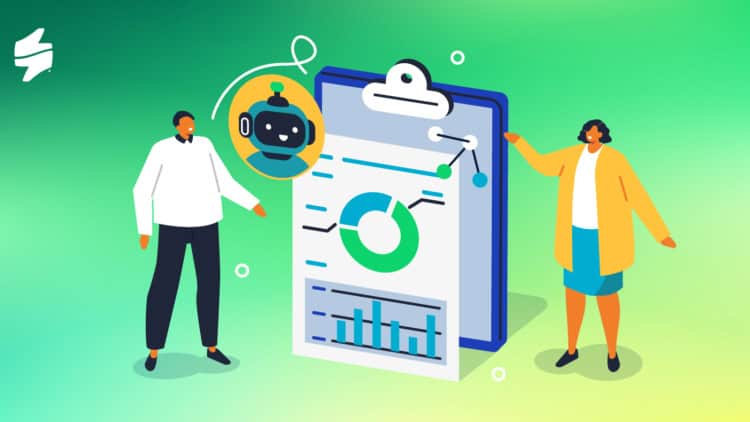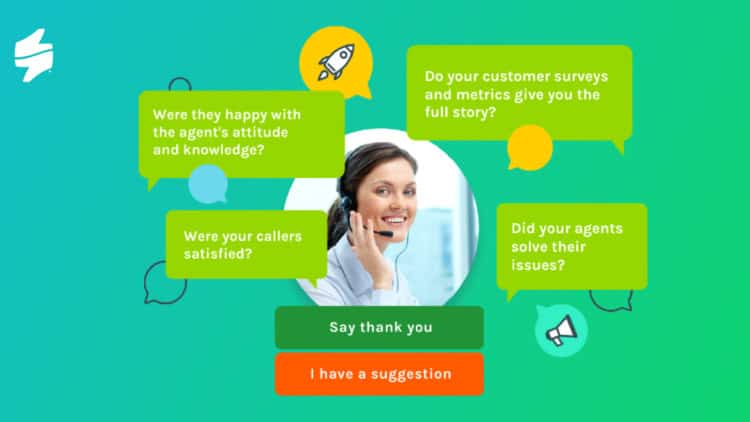


Frontline employee feedback improves customer experience by revealing operational issues, customer pain points, and service gaps at the moment they occur, allowing companies to act faster and more effectively. Through structured Voice of Employee (VoE) programs and continuous listening, businesses can understand the real employee experience impact on customer experience and use these insights to improve frontline employee experience, leading to better service quality, higher engagement, and improved customer satisfaction.
Organisations spend significant time and resources trying to understand their customers. They analyse surveys, track customer satisfaction metrics, and monitor online reviews in search of insights that can improve the customer experience.
Yet many businesses overlook one of their most valuable sources of customer intelligence: their frontline employees.
Frontline teams interact with customers every day. They hear complaints, answer questions, solve problems, and witness operational challenges firsthand. In many cases, employees identify customer pain points long before they appear in customer surveys or performance reports.
This is why the relationship between frontline employee experience and customer experience has become a growing focus for business leaders. Companies that actively listen to employees often gain a clearer understanding of what customers need, where service gaps exist, and how experiences can be improved.

Unlock Your Team's Full Potential with Staffino's EX Products
Our EX platform can help you attract and retain top talent, track employee performance, and improve engagement and productivity – so your team can reach their highest potential.
In this article, we’ll look at why frontline employee feedback is one of the most valuable sources of customer insight, how Voice of the Employee programs support business performance, and how organisations can transform employee feedback into measurable customer experience improvements.
The Connection Between Employee Experience and Customer Experience
The idea that employee experience influences customer experience is no longer just a theory. Across industries, organisations are recognising the direct employee experience impact on customer experience.
When employees feel supported, heard, and empowered, they are more likely to deliver consistent service and positive customer interactions. On the other hand, frustrated employees often struggle to provide the level of experience customers expect.
Think about a retail employee dealing with outdated processes, understaffing, or recurring operational issues. They may want to deliver excellent service, but organisational barriers make it difficult. Customers eventually feel the impact through longer wait times, inconsistent service, or unresolved issues.
This is why improving customer experience often begins internally.
Organisations that invest in employee listening programs gain visibility into operational challenges before they affect customers. By addressing employee concerns early, they can prevent many customer-facing issues from developing in the first place.
What Is Voice of Employee?
A Voice of Employee (VoE) program is a structured approach to collecting, analysing, and acting on employee feedback.
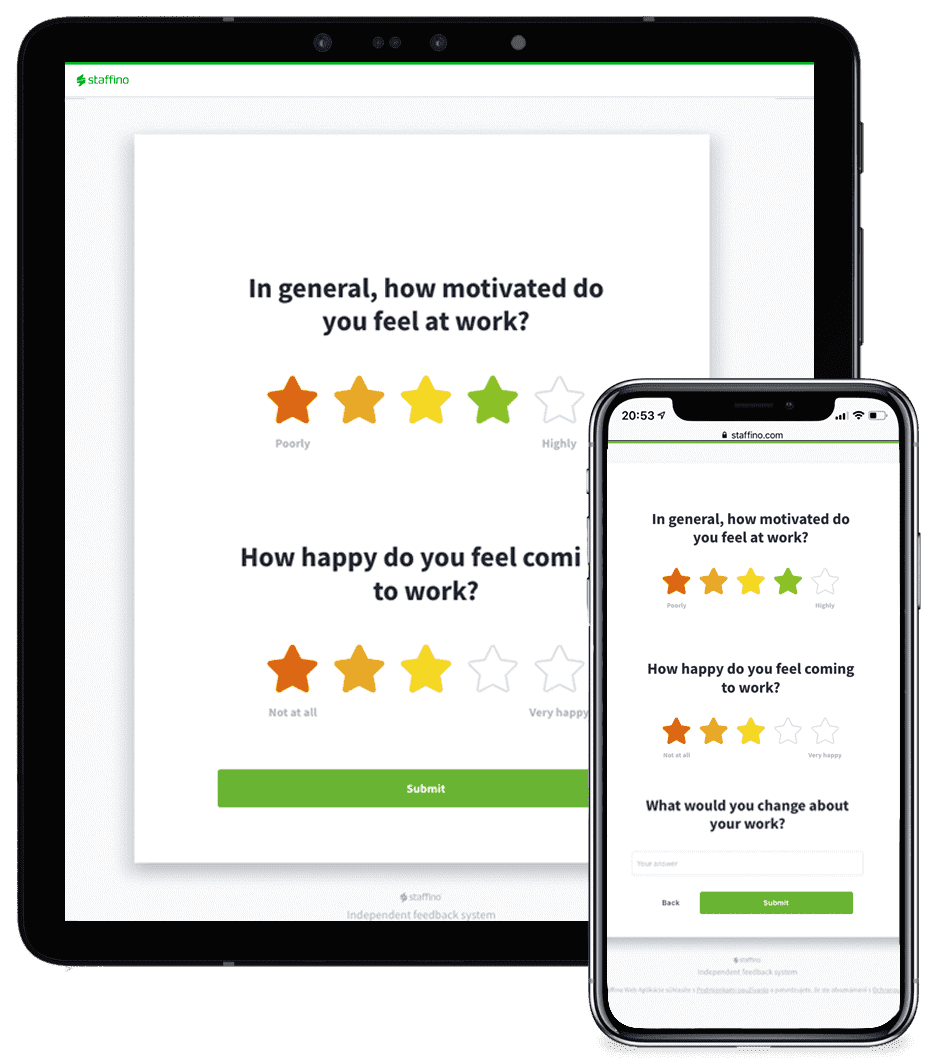
The goal is simple: understand how employees experience their workplace and use those insights to drive meaningful improvements.
A modern Voice of Employee program goes beyond annual surveys. It creates continuous opportunities for employees to share feedback, raise concerns, and suggest improvements.
Common Voice of Employee initiatives include:
- Employee surveys
- Pulse surveys
- Engagement assessments
- Feedback campaigns
- Anonymous suggestions
- Real-time listening tools
At its core, the Voice of Employee helps organisations understand what employees need to succeed. Just as Voice of Customer programs help businesses understand customer expectations, Voice of Employee programs help leaders understand the employee perspective.

Give Your Employees the Recognition and Motivation They Deserve
Does your team need a little extra motivation? Our platform provides powerful insights into your team’s performance and various recognition tools that help ensure everyone feels appreciated.
Why Frontline Employees Hold Valuable Customer Insights
Frontline employees occupy a unique position within an organisation.
Unlike senior leadership or back-office teams, they experience customer interactions directly. They see what frustrates customers, what delights them, and what prevents teams from delivering exceptional service.
As a result, frontline employees often identify issues before traditional customer experience metrics reveal them.
For example, a customer service representative may notice recurring complaints about a confusing process. A retail associate may observe customer frustration caused by inventory shortages. A branch employee may repeatedly encounter questions that indicate unclear communication.
These insights are incredibly valuable because they often highlight emerging issues before they become widespread customer experience problems. Organisations that actively listen to frontline employees gain access to a continuous source of practical, actionable intelligence.
Benefits of Employee Voice for Customer Experience
The benefits of employee voice extend far beyond employee engagement.
When organisations establish effective feedback mechanisms, they create a stronger connection between employee insights and customer outcomes.
Some of the most significant benefits include:
- Earlier identification of customer pain points
- Faster resolution of operational challenges
- Increased employee engagement
- Better customer service consistency
- Higher customer satisfaction levels
Employees who feel their opinions matter are also more likely to contribute ideas, share observations, and participate in improvement initiatives. Over time, this creates a culture where both employees and customers benefit from continuous improvement.
The Importance of Employee Voice in the Workplace
The importance of employee voice in the workplace has grown significantly as organisations face increasing pressure to improve both employee and customer experiences.
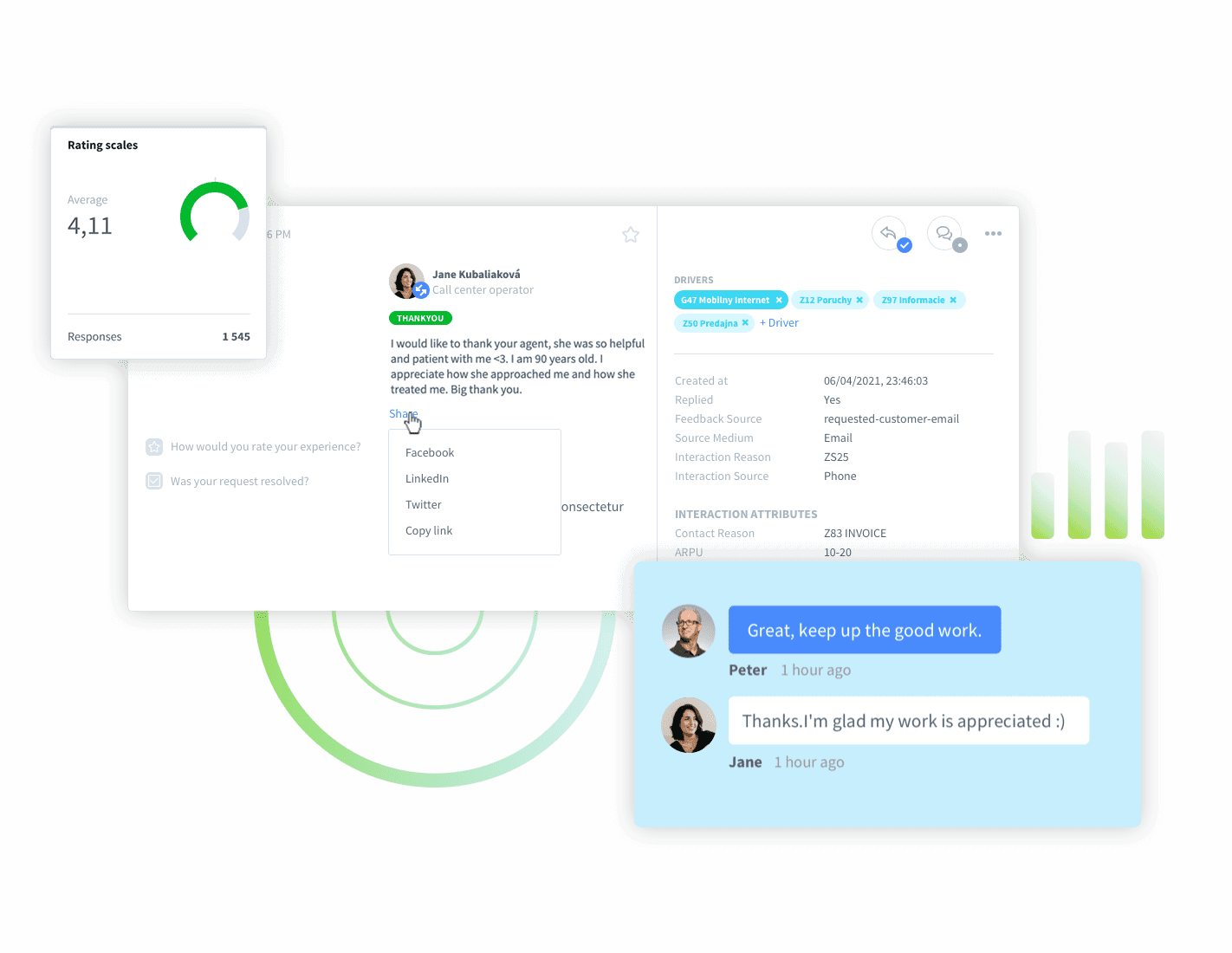
Employees want to know their feedback matters. They want transparency, communication, and evidence that leadership is listening.
Organisations that fail to provide these opportunities often struggle with disengagement and turnover. More importantly, they risk missing valuable insights that could improve operations and customer outcomes.
Creating opportunities for employee feedback is not simply about measuring engagement. It is about building trust and creating an environment where employees actively contribute to organisational success. When employees believe their voices are heard, they become more invested in delivering positive customer experiences.
Are There Any Disadvantages of Employee Voice?
While the benefits are substantial, organisations should also understand the potential disadvantages of employee voice programs.
One common challenge is survey fatigue. If employees receive too many requests for feedback, participation rates may decline.
Another issue occurs when organisations collect employee feedback but fail to act on it. Employees quickly lose confidence in the process if they do not see visible improvements resulting from their input.
Some organisations also struggle with fragmented feedback systems, making it difficult to analyse and prioritise employee concerns effectively.
These challenges do not diminish the value of employee listening. Instead, they highlight the importance of having a well-designed strategy that focuses on both collecting feedback and taking meaningful action.
How to Improve Frontline Employee Experience
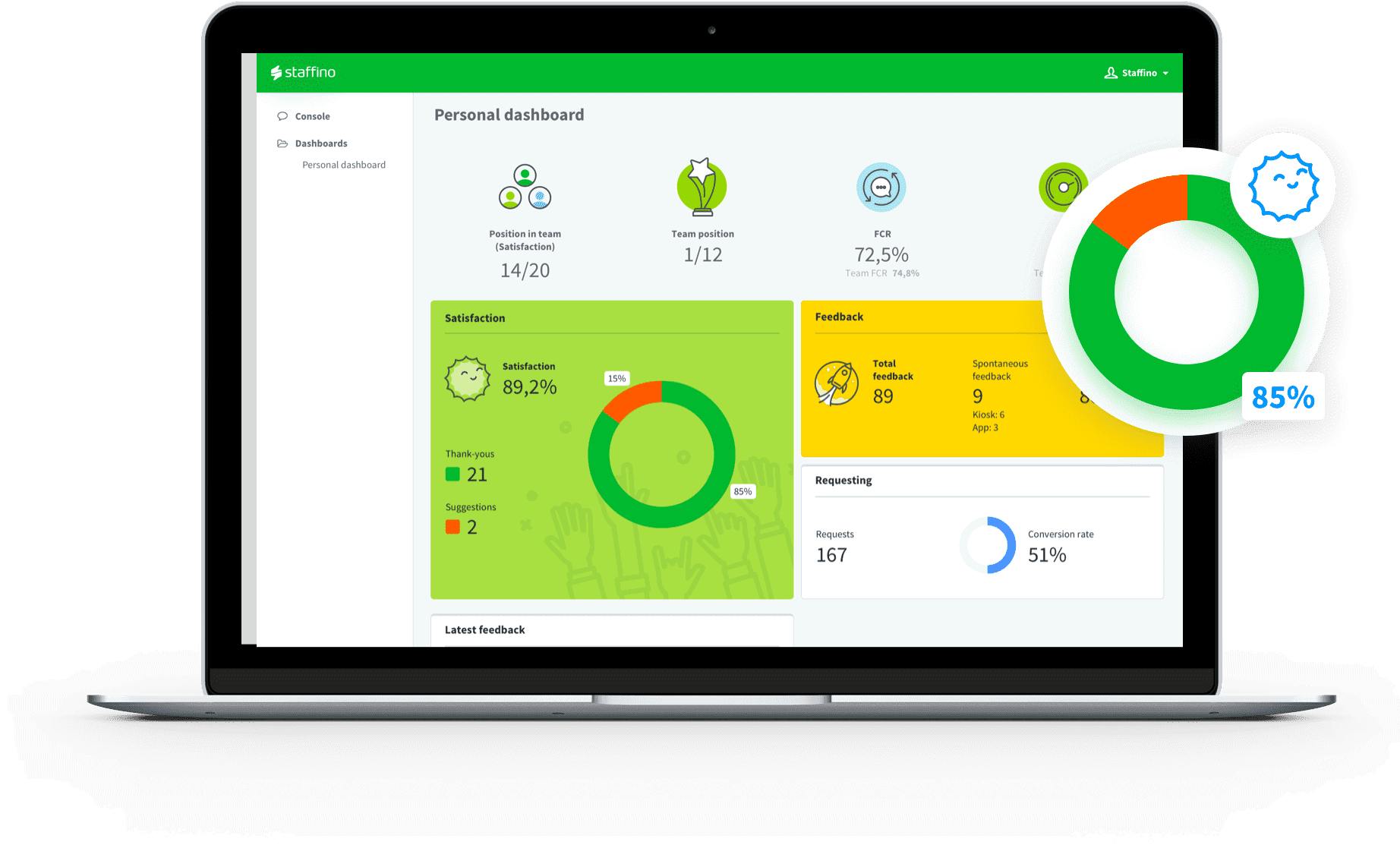
Organisations looking to improve employee experience for the frontline should start by creating structured opportunities for continuous feedback. A single annual survey is rarely enough to understand evolving employee needs and challenges.
Instead, organisations should focus on:
- Continuous listening initiatives
- Regular pulse surveys
- Transparent communication
- Action planning based on employee feedback
- Recognition and acknowledgment programs
The voice of employee survey should not be viewed as a standalone activity. It should be part of a broader feedback ecosystem that supports ongoing dialogue between employees and leadership.
The most successful organisations treat employee feedback as an ongoing conversation rather than a periodic measurement exercise.
Choosing an Employee Experience Solution for Frontline Teams
As organisations scale, managing employee feedback manually becomes increasingly difficult. This is why many businesses invest in an employee experience solution for frontline teams that can automate feedback collection, analysis, and reporting.
The right solution should help organisations:
- Collect feedback continuously
- Identify recurring themes and concerns
- Measure engagement trends
- Prioritise improvement opportunities
- Track progress over time
Importantly, employee experience initiatives should not exist in isolation. The strongest programs connect employee insights to customer experience outcomes, helping organisations understand how workforce improvements affect customer satisfaction and loyalty.
6 Leading Frontline Employee Experience Platforms
Many of today’s leading frontline employee experience platforms are designed to help organisations create stronger connections between employee and customer feedback. Rather than simply measuring engagement, these platforms provide insights that support operational improvements and better decision-making.
The best platforms go beyond traditional surveys, helping organisations collect continuous feedback, identify trends, and turn employee insights into action.
Below are some of the leading frontline employee experience platforms helping businesses strengthen both employee and customer experience:
1. Staffino
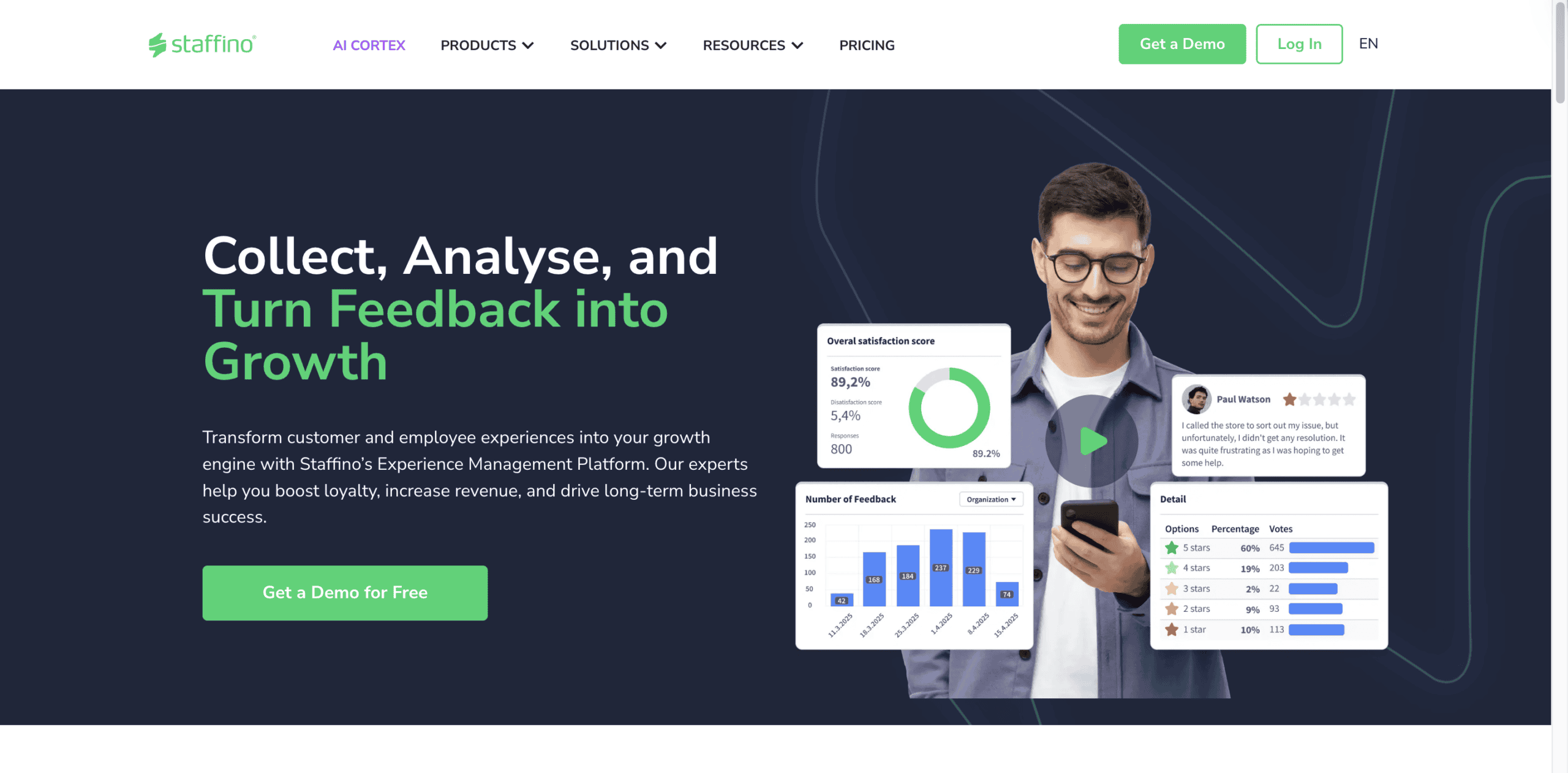
Staffino is designed to help organisations collect and act on feedback from both employees and customers. Its Employee Experience module enables continuous listening through employee surveys, employee performance tracking, recognition, and engagement initiatives tailored to frontline environments.
A key differentiator is Staffino’s ability to connect employee and customer insights, helping organisations understand how frontline employee experience impacts customer outcomes. The platform also offers advanced analytics, automated reporting, employee recognition programs, and AI-powered insights that help leaders identify improvement opportunities faster.
2. Qualtrics EmployeeXM
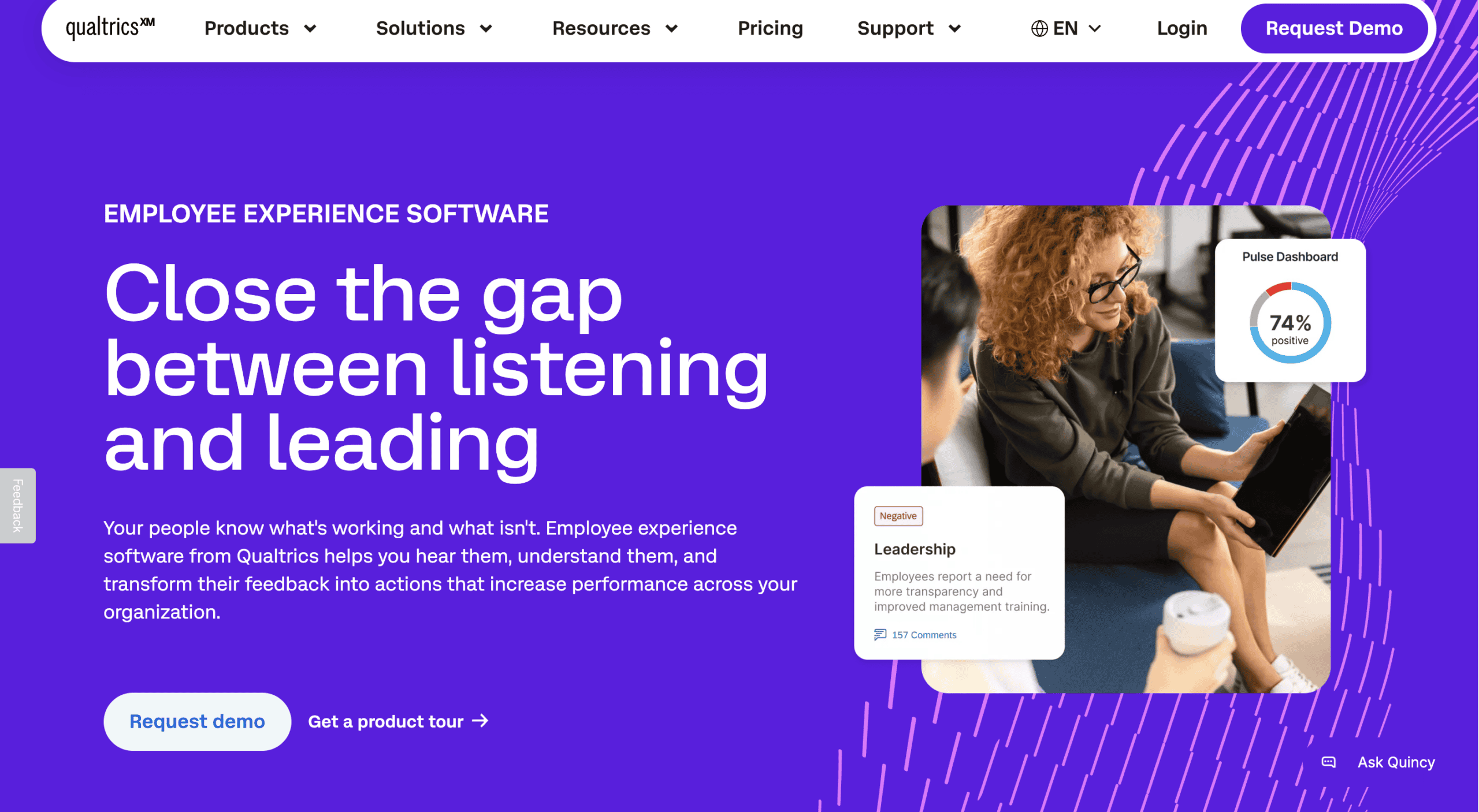
Qualtrics EmployeeXM is one of the most widely recognised employee experience platforms. It provides organisations with tools for measuring employee engagement, gathering feedback throughout the employee lifecycle, and analysing workforce sentiment.
The platform includes survey capabilities, predictive analytics, employee journey mapping, and reporting dashboards that help organisations identify key drivers of engagement and retention.
3. Culture Amp
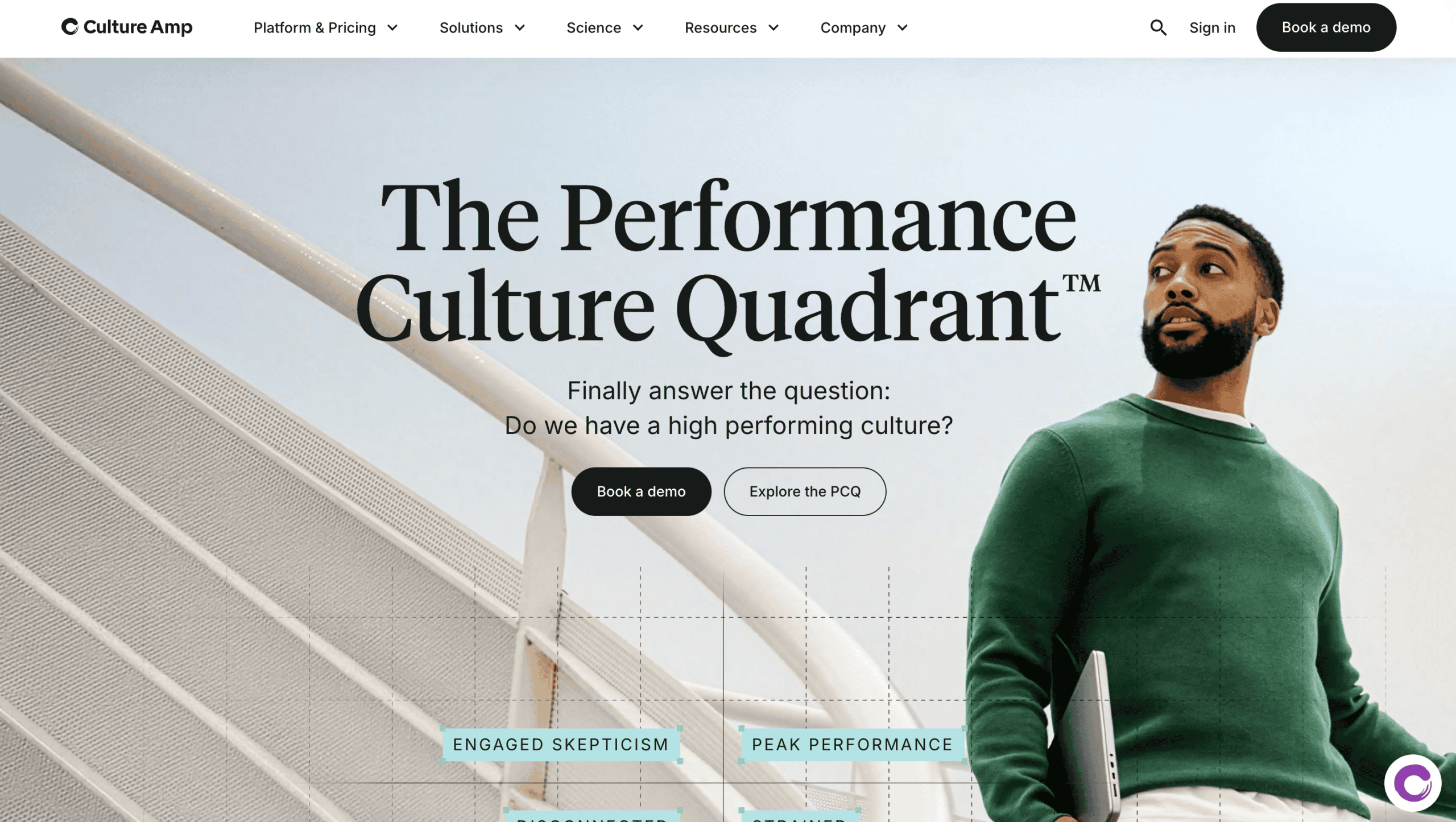
Culture Amp focuses on employee engagement, performance management, and employee development. The platform combines employee feedback collection with actionable recommendations designed to improve workplace culture.
Organisations use Culture Amp to conduct engagement surveys, measure employee sentiment, gather performance feedback, and support employee growth initiatives. Its benchmarking capabilities also allow companies to compare results against industry standards.
4. Workvivo
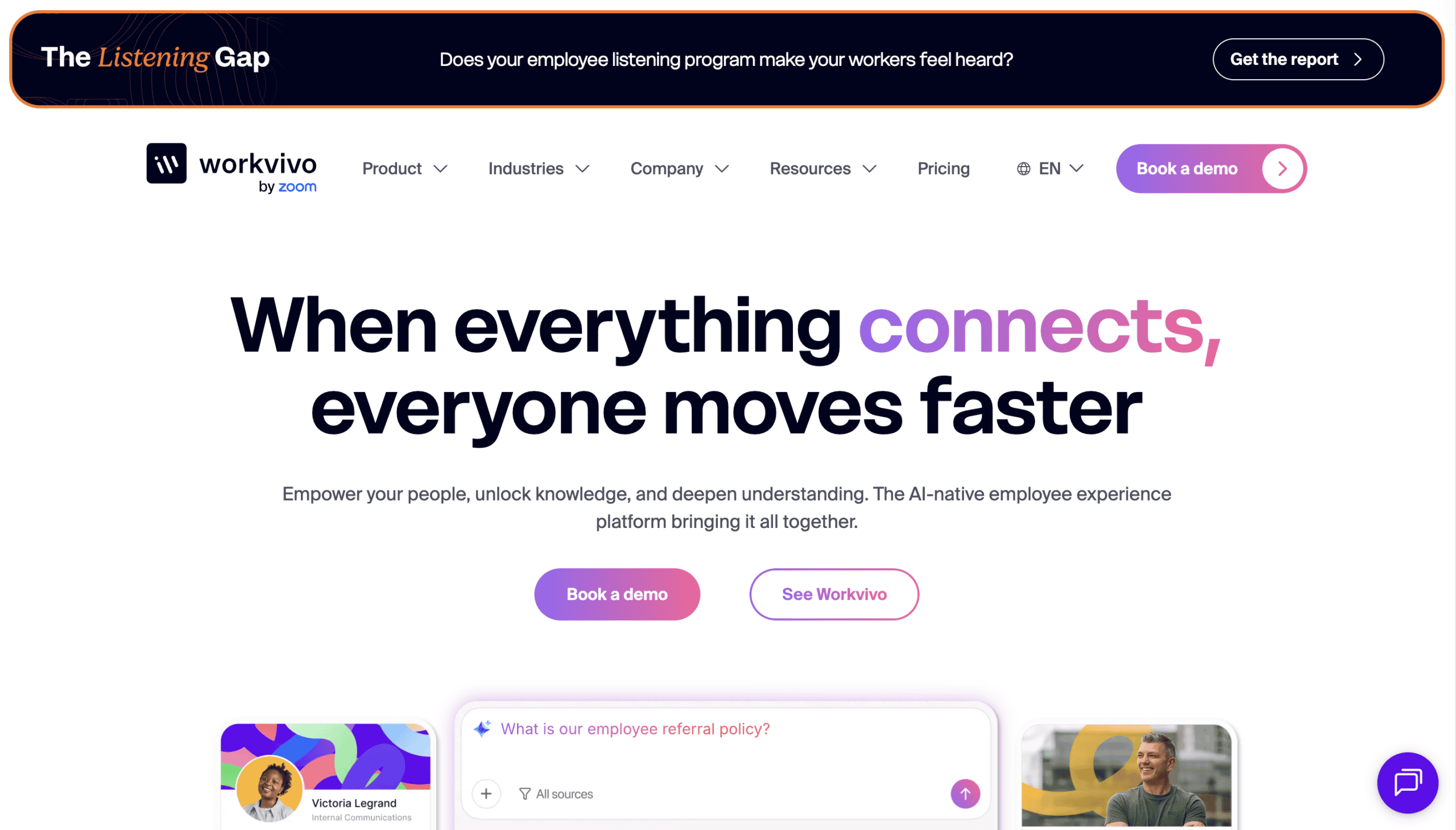
Workvivo combines employee engagement tools with internal communication and social collaboration features. Designed to create a stronger sense of connection within organisations, the platform helps employees stay informed, recognised, and engaged.
Its key features include employee surveys, pulse polls, recognition tools, company communication hubs, and analytics that provide insight into workforce engagement levels.
5. Peakon by Workday
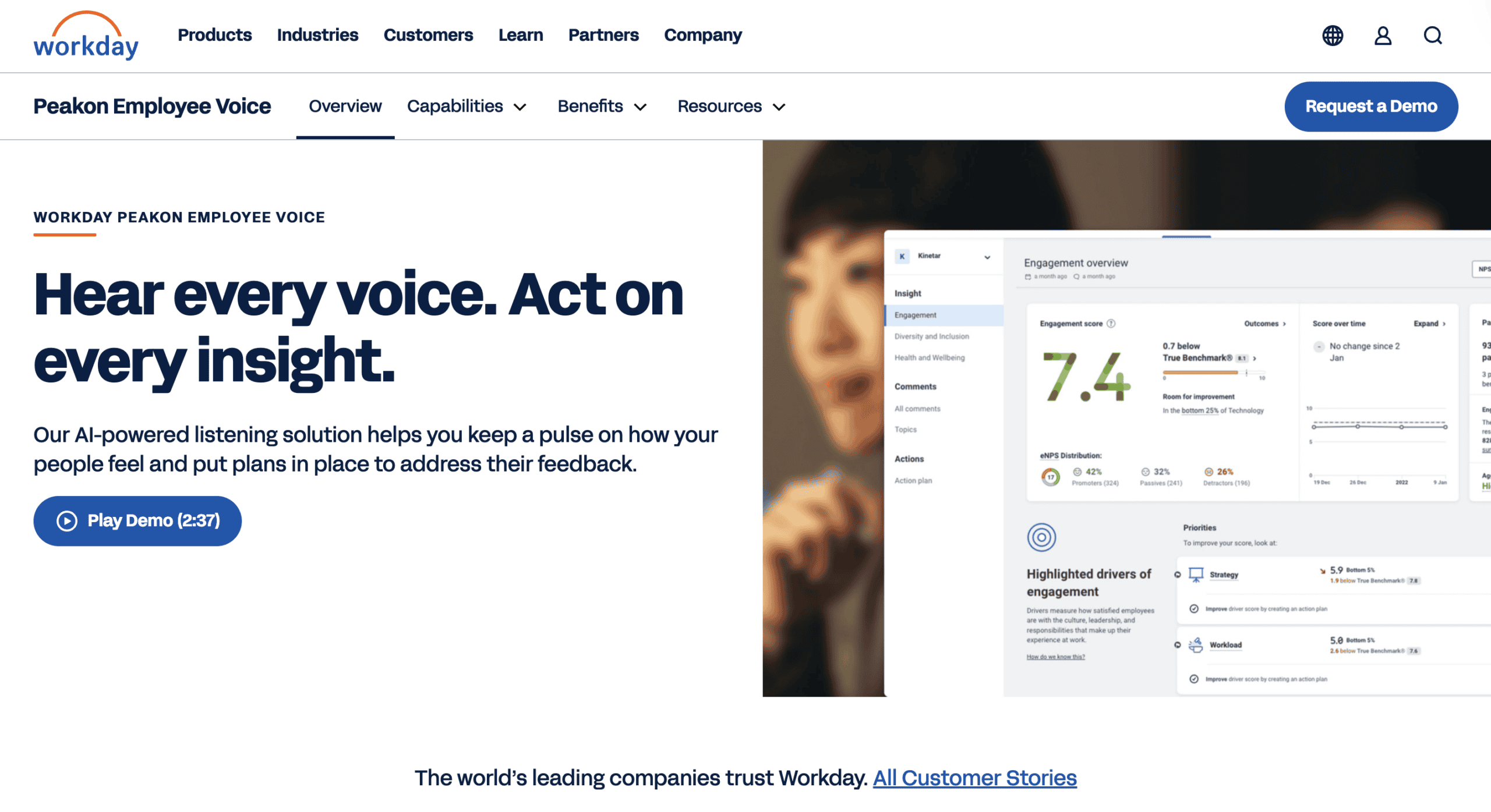
Peakon, acquired by Workday, specialises in continuous employee listening and real-time workforce insights. Rather than relying solely on annual surveys, Peakon enables organisations to gather ongoing feedback and monitor engagement trends over time.
The platform provides automated analytics, employee sentiment tracking, benchmarking, and manager-focused action planning tools that help organisations respond quickly to workforce concerns.
6. Microsoft Viva Glint
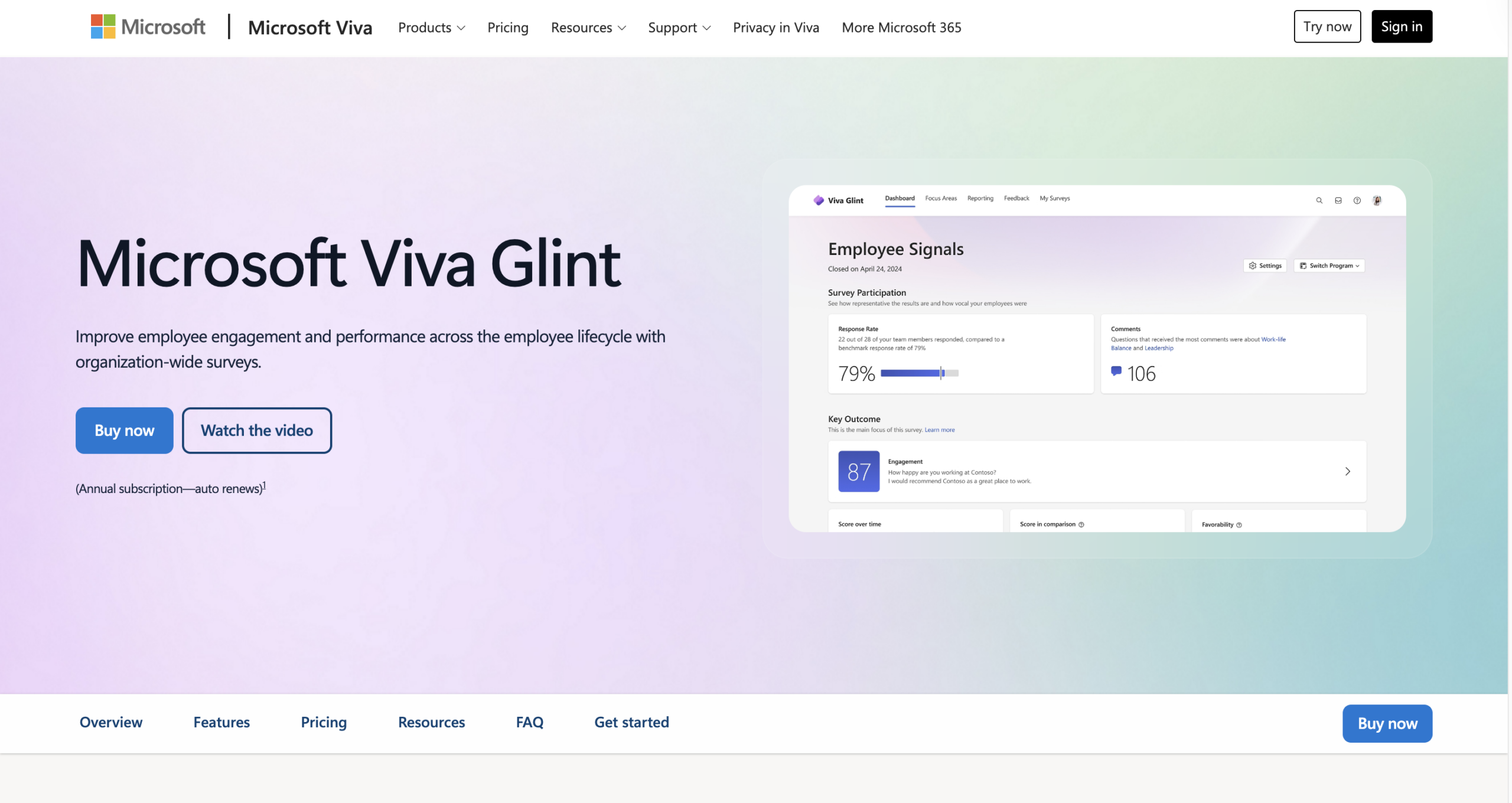
Microsoft Viva Glint is an employee engagement and listening platform that helps organisations understand workforce sentiment through continuous feedback programs.
Integrated within the broader Microsoft Viva ecosystem, it offers engagement surveys, employee lifecycle insights, sentiment analysis, and AI-powered recommendations. Organisations can use the platform to identify engagement drivers, improve employee well-being, and support leadership decision-making through data-driven insights.
Turn Employee Feedback Into Action With Staffino!
Collecting employee feedback is only the first step. The real value comes from turning insights into meaningful action.
Staffino’s Employee Experience module helps organisations capture frontline feedback through employee surveys, employee performance tracking, and engagement initiatives designed specifically for frontline environments.
By giving employees a simple way to share feedback, organisations gain visibility into workplace challenges, operational inefficiencies, and opportunities for improvement. More importantly, these insights help leaders understand how employee experiences influence customer outcomes.
Ready to improve frontline employee experience and strengthen your customer experience at the same time? Try Staffino’s free demo and see how employee feedback can be transformed into actionable insights with Staffino EX products.

Get a First-Hand Experience Today!
Staffino is the perfect tool for creating engaging surveys, tracking performance, responding to customer feedback, and rewarding top employees. Get started today with our FREE demo!
FAQ
Voice of Employee (VoE) is a structured approach to collecting, analysing, and acting on employee feedback through surveys, pulse checks, and continuous listening tools. It helps organisations understand employee needs, improve engagement, and strengthen the overall workplace experience.
The employee experience impact on customer experience refers to how employees’ engagement, satisfaction, and working conditions directly influence customer interactions. Engaged frontline employees deliver better service, solve problems faster, and create more consistent customer experiences, while disengaged employees can negatively affect customer satisfaction and loyalty.
The best employee experience platform depends on organisational needs, but leading solutions include:
- Staffino
- Qualtrics EmployeeXM
- Culture Amp
- Workvivo
- Peakon (Workday)
- Microsoft Viva Glint
These platforms typically offer employee surveys, engagement tracking, sentiment analysis, and actionable insights to improve workforce experience.
Voice of Employee is important because it helps organisations identify issues early, improve employee engagement, and build trust through transparent communication. When employees feel heard, they are more likely to contribute positively to both workplace culture and customer experience.
Frontline employee feedback improves CX by highlighting real-time operational issues and customer pain points that may not appear in customer surveys. This allows companies to fix problems faster, improve service quality, and reduce recurring customer frustration.
Employee voice programs help organisations improve engagement, reduce turnover, and strengthen communication between employees and leadership. They also enable faster identification of workplace and customer-facing issues, ultimately leading to better business performance and higher customer satisfaction.