An effective employee experience strategy connects employee feedback with business goals and concrete workplace improvements. External EX consulting helps organisations map the employee journey, identify the most important pain points, and prioritise initiatives that improve the employee experience while supporting retention, engagement, and employee performance.
In this article, we explain how to design an employee experience strategy with external consulting, from employee journey mapping and feedback collection to segmentation, prioritisation, and measuring results. We also explore what an effective employee experience strategy framework should include, how to assess EX maturity, and which common mistakes organisations should avoid.
What Is an Employee Experience Strategy?
An employee experience strategy is a plan for shaping and improving the experiences employees have throughout their relationship with an organisation, from recruitment and onboarding to development and departure.
It goes beyond engagement scores or workplace perks. It considers the conditions that shape everyday work, including leadership, communication, workload, technology, employee recognition, and opportunities for growth.
A strong strategy connects three elements: what employees experience, what the organisation wants to achieve, and what needs to change. External employee experience strategy consulting can help bring these perspectives together, particularly when HR teams lack the time, expertise, or internal alignment to lead the process alone.

Unlock Your Team's Full Potential with Staffino's EX Products
Our EX platform can help you attract and retain top talent, track employee performance, and improve engagement and productivity – so your team can reach their highest potential.
How to Design an Employee Experience Strategy With External Consulting
Building an employee experience strategy requires more than collecting feedback. It involves understanding the employee journey, identifying the underlying causes of problems, and assigning responsibility for improvements.
1. Map the Employee Journey
Start by mapping the employee lifecycle, including recruitment, onboarding, daily work, career development, internal mobility, and exit. Identify the moments that have the greatest influence on employees’ perceptions, such as a first performance review, a change of manager, or access to new workplace technology.
External consultants can bring an independent perspective, challenge internal assumptions, and help identify friction points that employees may have normalised or managers may overlook.
2. Establish Meaningful Feedback Channels
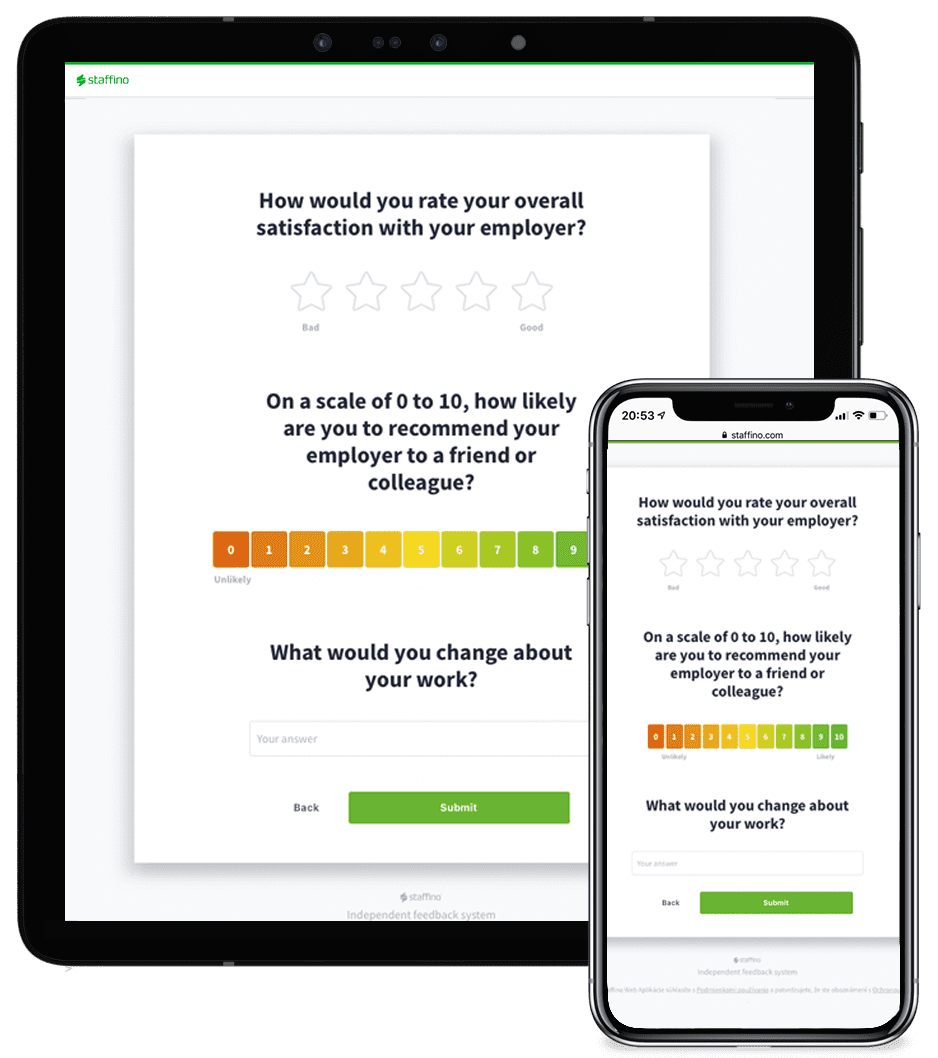
Use a combination of employee engagement surveys, pulse surveys, interviews, focus groups, and relevant HR data. Each method serves a different purpose: surveys help identify patterns, while qualitative feedback provides context.
A consultant can help determine what to measure, how often to ask, and how to avoid survey fatigue. Feedback should lead to visible action; otherwise, employees may become less willing to participate.
3. Segment Employees and Prioritise Improvements
A global employee experience strategy should account for differences between locations, departments, roles, and working arrangements. The same policy or technology may work well for office employees but create friction for frontline teams.
Segment feedback where appropriate, then prioritise issues based on employee impact, business relevance, feasibility, and urgency. Trying to fix everything at once usually spreads resources too thinly.
4. Assign Action Owners and Communicate Progress
Every priority needs an accountable owner, a defined action, and a timeline. HR may coordinate the strategy, but improvements can also depend on IT, operations, leadership, or individual managers.
Communicate what employees said, what the organisation plans to change, and what cannot be addressed immediately. Closing the feedback loop demonstrates that employee input has a purpose.
5. Measure Outcomes and Refine the Strategy
Track progress using relevant employee experience KPIs, such as engagement, retention, onboarding feedback, absence trends, and employee perceptions of workload or management. Where appropriate, connect these measures with employee performance outcomes without treating performance data as a direct measure of employee wellbeing.
Repeat key measurements over time to understand whether changes are working.
What Should an Employee Experience Strategy Framework Include?
A practical employee experience strategy framework should translate findings into clear responsibilities and measurable outcomes. An employee experience strategy example framework might include:
Component | What to include |
Objectives | Desired employee and business outcomes |
Journey map | Key lifecycle stages and friction points |
Listening plan | Feedback channels, frequency, and ownership |
Employee segments | Relevant differences between roles, locations, or teams |
Priority initiatives | Selected improvements, rationale, and expected impact |
Action owners | Responsibilities, deadlines, and resources |
Communication | How findings, decisions, and progress are shared |
Measurement | Baselines, success indicators, and review dates |
For example, an organisation discovering that new employees struggle during onboarding could introduce structured manager check-ins, clarify training responsibilities, and collect feedback at 30 and 90 days. The strategy would define who owns each change and how success will be assessed.
How Mature Is Your Employee Experience Strategy?
An EX maturity model helps organisations understand their current capabilities and determine what to develop next. The following four levels provide a practical starting point:
- Level 1 – Reactive: Feedback is collected inconsistently, and action usually follows individual complaints or urgent problems.
- Level 2 – Measured: Regular surveys and basic EX metrics exist, but initiatives are often fragmented.
- Level 3 – Integrated: Journey mapping, employee segmentation, action planning, and measurement are connected across teams.
- Level 4 – Strategic: Employee insights consistently inform organisational decisions, and EX improvements are evaluated and refined over time.
External employee experience consulting can help assess the current level, identify capability gaps, and create a realistic roadmap. Not every organisation needs to begin with advanced analytics; strong ownership and follow-through are often more important than sophisticated tools.
Common Mistakes When Building an EX Strategy
Even well-intentioned initiatives can fall short when organisations:
- Focus on surveys instead of action. Collecting feedback without visible follow-up can undermine trust.
- Treat every employee the same. Different roles and locations may face very different challenges.
- Try to fix everything at once. Too many priorities dilute resources and accountability.
- Measure activity rather than impact. Counting surveys or initiatives does not show whether the experience improved.
- Overlook managers and communication. Employees need to understand what is changing and how leaders will support it.
External consultants can help challenge these patterns, align stakeholders, and keep the strategy focused on meaningful improvements rather than isolated initiatives.
Build an Employee Experience Strategy That Delivers
A successful employee experience strategy is not a one-off HR project. It is an ongoing process of understanding the employee journey, listening to different groups, prioritising improvements, and measuring their impact.
Staffino helps organisations collect and analyse employee feedback, giving HR teams and managers better visibility into the experiences that shape engagement and performance. Our expert EX consultants can provide the structure, independent perspective, and facilitation needed to turn collected feedback into an actionable plan. When responsibilities are clear, and progress is communicated, organisations can create better working conditions while supporting engagement, retention, and employee performance.
Does your organisation need help connecting employee feedback with practical improvements? Discover how Staffino can support your employee experience initiatives.
Get a First-Hand Experience Today!
Staffino is the perfect tool for creating engaging surveys, tracking performance, responding to customer feedback, and rewarding top employees. Get started today with our FREE demo!
FAQ
It is a structured plan for improving employees’ experiences across the employee lifecycle, using feedback, defined priorities, accountable owners, and measurable outcomes.
External consultants bring an independent perspective, specialist expertise, and a structured process for identifying priorities and aligning stakeholders.
Review progress regularly against defined measures, with more comprehensive strategy reviews at least annually or when significant organisational changes occur.
Look for relevant industry experience, a clear methodology, strong employee listening and journey-mapping capabilities, and a practical approach to implementation and measurement. The right partner should help build internal capabilities, not just deliver recommendations.